Late, A Cowboy Song – Review
OLYMPUS DIGITAL CAMERA

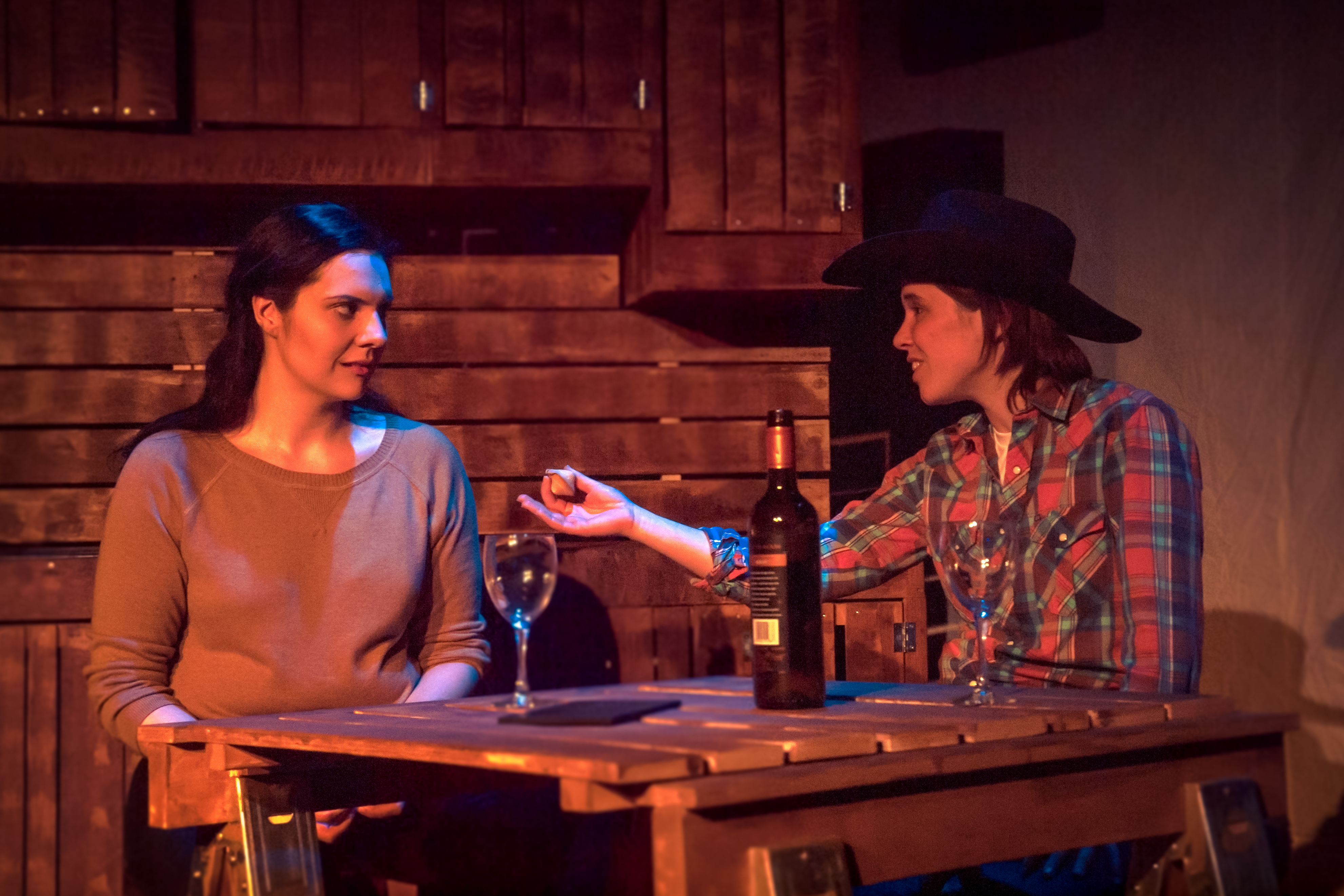
(L to R) Carly Mckee as Mary and Geneviève Paré as Red. Photo Credit Jason Ho.


Late: A Cowboy Song

March 12 – 22, 2014

EPCOR Centre Motel Theatre

http://www.epcorcentre.org/WhatsOn/ShowDetails.aspx?show_id=2B670994-6808-4B3D-AE14-419B4F612CC7


In love since grade two, Crick and Mary are a young couple that share a birthday and nothing else in common. Crick can spend hours looking at works of art, Mary thinks the more you look the less interesting a painting becomes. Mary clears her head by taking walks and making soup, Crick watches old movies. Mary is a bundle of worries and wonders and Crick finds solid footing in his obsessive love of holidays and a desire for a happy nuclear family. In Late:  A Cowboy Song, an unconvincing and messy work directed by Alyssa Bradac, both Crick and Mary get to play out their opposing natures. Crick convinces a pregnant Mary to marry him and raise the baby as husband and wife. Mary allows all her worries and wonders to run full speed when she becomes intensely drawn to Red, a lady cowboy who lives on the outskirts of town.

Late:  A Cowboy Song, is the early work of playwright Sarah Ruhl, (whose later plays went on to be recognized by almost every prestigious theatre award around) and is very much the effort of an immature writer. In Mary (Carly McKee) and Crick (Kyall Rakoz), Ruhl gives us a couple so ill-matched and affectionless (save for some creepily awkward post-fight sex) that any belief in their supposed love flies out the window within the first scenes of the play. Not helping matters in this production is the casting of Rakoz as the petulant husband Crick who just wants Mary to see things his way. I know it’s stomping on a minefield to say that certain actors can’t pull off an against-type role such as female playing male, old playing young or white playing black. Especially when acting is all about becoming someone you are not. But with a rather effete delivery and total lack of chemistry with McKee, Rakoz’s Crick (who is supposed to be deeply in love and lust with Mary) reads as gay to the audience. So much so that had the plot not already been known to me, Rakoz’s decent but miscast performance would have led me to assume that Crick’s sexuality was to be the ultimate narrative twist in the play.

But of course its Mary’s attraction to the androgynous Red that is the real story and here Ruhl gives us a few gems. Red (splendidly played with charismatic cool and a confident simplicity by Geneviève Paré) is the opposite of Crick – unshowy and comfortable in her silences. It’s no wonder that Mary is attracted to her. Through Red’s affecting ease and ability to calm Mary’s anxieties, Ruhl gives us many engaging sexually charged but platonic scenes between the two women.  As Mary spends more time with Red, she finds it harder to leave her company and becomes perpetually late in returning home to her increasingly jealous/angry husband and infant daughter.

But while the scenes with Red distract from the show’s shortcomings for a while, they come back to bite us as soon as we go back to the Mary and Crick gong show. It’s here that Ruhl’s narrative style can’t figure out whether it wants to be an eccentric comedy or a heavy-handed drama.  Director Bradac had the opportunity to favour one style or the other, but instead allowed the play to wean haphazardly between overwrought and quirky. When Mary and Crick’s baby turns out to be a hermaphrodite surgically altered to become a girl, the show takes a distinctly serious turn into gender politics, parental responsibility and metaphoric storytelling. But then a mere seconds later the audience is treated to one of Red’s interstitial musical interludes which has her strumming her guitar singing witty allegorical songs about being blue and having your cactus dry up and die. This style switch continues throughout the play with Crick and Mary taking divergent turns at eccentric humour and big D drama. The result is that neither style feels suitable in this all over the place production.

Visually however, the show looks splendid. At least in Leon Schwesinger’s cowboy-feeling set design of slatted wood constructed as a kitchen, living room and a table that doubles as a restaurant and Red’s place. Schwesinger’s lighting is less successful with its cliché imposition on the action taking literal colour cues from the dialogue. In a whirlwind holiday cycle scene Schwesinger lights the stage pink for Valentine’s Day, green for St. Patrick’s Day, Orange for Halloween etc. In other instances his lighting is overly moody or too bright, unfortunately fitting in with the schizophrenic nature of the entire production.


RATING

For the occasional theatre goer – This is a play that operates in metaphors, unspoken longings and quirks. That is when it works at all. You might not be able to put your finger on why the show feels wrong, but you will know that it was wrong for you. SKIP IT

For the theatre junkie – For those that like to see the work of prominent playwrights before they found their groove, this show will fulfill that desire. There is also great pleasure in seeing Geneviève Paré’s subtle but precise performance. But the messy writing, indecisive direction, miscasting of Crick and just plain all over the place-ness of the production as a whole swiftly negates whatever pleasure can be found. SKIP IT

The Real McCoy – Review

McCoy

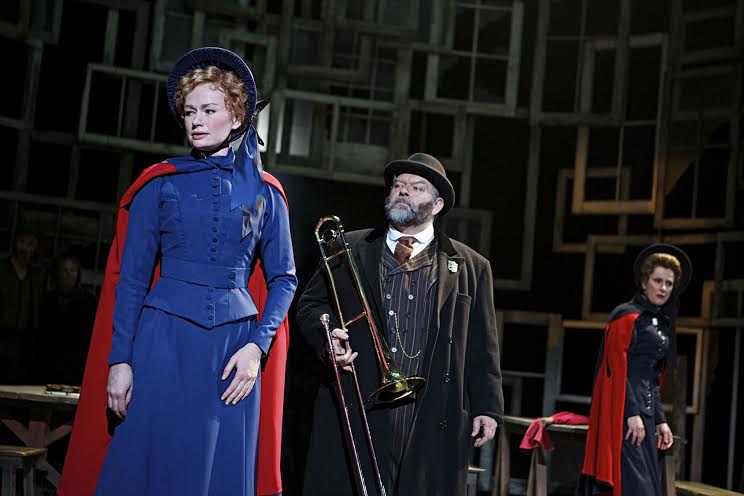
Chris Clare as Elijah McCoy. Photo by Nancy DesLauriers.


The Real McCoy

March 7 – 22, 2014

Canmore Opera House

http://ellipsistree.ca/season/real-mccoy-event-details-coming-soon/


In the almost three years I’ve been reviewing theatre in Calgary, I can count on one hand the amount of black actors I’ve seen on the stage in this city. The truth is that while Calgary’s offering of new and unique work grows stronger each year, the amount of diversity on the stage remains wanting. Therefore, it was with great delight that I digested the news that a new theatre company, Ellipsis Tree Collective, was about to change all that by producing the inaugural Black Canadian Theatre Series featuring stories by Afri-Canadian playwrights about Black Canadian life over the last 150 years. However, good intentions don’t necessarily result in good plays, and unfortunately the first show out of the gate from this fledgling company misses the mark on a number of fronts.

Set in the late 1800’s, The Real McCoy, by Andrew Moodie tells the story Elijah McCoy, the Afri-Canadian engineer who invented (among other things) a lubricating device that revolutionized the way steam engine trains operate. Based loosely on the real life of McCoy (who is the source of the expression ‘the real McCoy’), the play under Edward Ogum’s direction, attempts to show how the colour of Elijah’s skin prevented him from ever getting the recognition or financial success he deserved. But while the play provides many instances for the audience to experience moral indignation, Moodie’s script with its flashcard historical story telling and very little interest in the character’s inner lives, makes the production a slog.

It’s the downfall of many writers who try to cram too much of a life into one script – the quick succession short scenes certainly tell you what happened but don’t let the story breath enough for anyone to really care. Here Moodie takes us from McCoy’s boyhood days in Canada with his father and nanny where it’s quickly established that Elijah is something of a boy genius to his happy university days in Edinburgh to the racist reality of America where McCoy invents his device but is robbed of his ability to claim credit or profit. He experiences love twice, great heartbreak and loss and many white business associates continually take full advantage of his position, yet not once does Moodie allow us inside McCoy’s head to really understand how he felt. Instead Moodie has the adult McCoy narrate the action of his younger self and the young Elijah provide some inner voice narratives of his adult self. Having never been a fan of this script tool, here it felt even more problematic as both old and young Elijah simply move the story along without bringing any true insight or emotion to the narrative.

Adding to our sense of disconnection from the story is Ogum’s direction which often has actors speaking away from the audience leaving us straining to follow the dialogue in spots. If projection issues weren’t enough to cause frustration, Ogum’s staging which in no way considers the level floor seating, ramps the vexation up many notches. Having much of your action take place on or close to the stage floor when this viewpoint is impossible for any audience member sitting beyond the first few rows, is a directorial mistake this already problematic play cannot afford.

Despite all this, the cast does a noble job. Chris Clare as McCoy brings some weight to the role even if he is often hampered by the woodenness of the script and unfortunate direction. The rest of the cast takes turns in multiple roles with greater or lesser success. Among the more substantial performances are Chad Hackett as Elijah’s black co-worker, Janelle Cooper and Norma Lewis as Elijah’s wives, nanny and maid and Kevin Rothery who corners the small humour market in the play as McCoy’s Scottish professor.

But even some decent performances can’t bring the drama back to this ultimately dull play. Truth be told, it was trying to find the theatre that provided the only real drama of the evening. Located within the boundaries of Heritage Park, the Canmore Opera house is difficult to find. The security guard tasked with opening the park gates and providing directions was missing and even once inside the park, there was no signage locating the theatre. Organizers tell me that better signage will be set up for future productions which audience members will be grateful for. However, no matter how much easier the theatre is located; the missed opportunity to tell an important story in an affecting way will remain onstage.


RATING

For those wanting to know more about Black Canadian History – Elijah’s story is both compelling and important and the play does a decent job presenting the facts. But facts alone don’t tell the true complexity of a story and in this respect The Real McCoy falls short in its ability to engage and inform us. MAYBE SEE IT

For the occasional theatre goer – No fancy set or grand production to dazzle you here. This is a rather bare bones show, which would be perfectly fine if the story being told had true emotional life. Instead the play feels like a dull history lesson with only occasional glimpses of fire. MAYBE SEE IT

For the theatre junkie – It’s hard not to think of this play as a series of missed opportunities. Moodie had the chance to inform and entertain us yet the script only accomplishes the former. Ogum had the chance to bring the action to life on stage and breathe some much-needed emotion into the story yet his staging decisions only added to our feeling of disconnect. The cast was by and large decent but were almost universally hampered by script and direction from connecting with the audience. We end up knowing the story, but we don’t feel it. SKIP IT


Camp Victoria – Review

Camp V

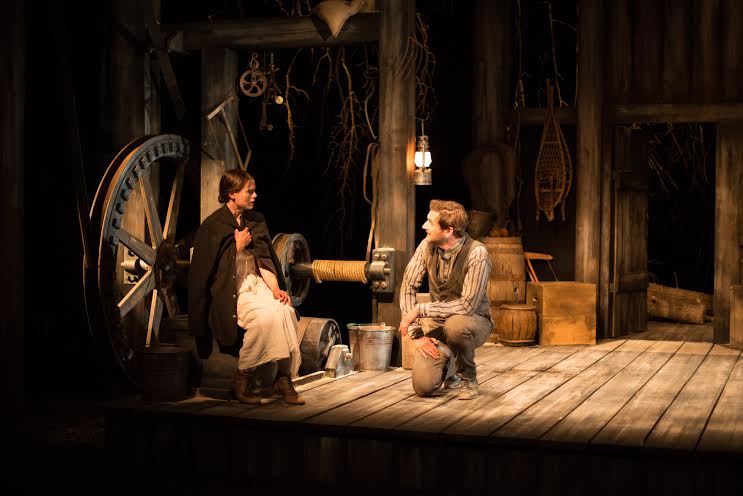
Lindsay Burns as Faith Fenton and Julie Orton as Maggie Payson in Camp Victoria. Photo by Benjamin Laird


Camp Victoria

March 3 – 22, 2014

Lunchbox Theatre

http://lunchboxtheatre.com/camp-victoria.html


Nothing brings to mind the 1898 northern wilderness of the Yukon less than the muted, pastel-toned abstract paintings of Georges Braque. Yet these seem to be the inspiration for Erin Gruber’s ill-fitting backdrop images for Rosemary Rowe’s equally poorly constructed play Camp Victoria. Inspired by the true story of Canadian journalist Faith Fenton and the Victorian Order of Nurses who, along with a military battalion, hiked the Klondike towards Dawson city, Rowe’s play under the direction of Glenda Stirling, attempts to imagine what those adventurous women would have talked and dreamed about. Not much if we are to believe what’s presented on stage.

The setup to get the women alone is fine enough. The proper and no-nonsense Nurse Hanna (played with confident correctness by Shawna Burnett) and the more innocent and breezy Nurse Payson (portrayed with a cadence far too modern by Julie Orton) find themselves separated from their soldier guides after stopping to tend a wounded private. The women’s worries about being stranded are momentarily quashed when they realize that Globe journalist Faith (played with humorous pluck by Lindsay Burns) will be back shortly with a map that will allow the woman to catch up with the soldiers. But upon Faith’s arrival, the map is nowhere to be found and once again the women despair that they are stranded in their hostile environment. Between the cold, the lack of food and the howls of wolves, it doesn’t take long for the booze to come out (medicinal they rationalize to get over their belief in temperance) and their lips and attitudes to start loosening.

Had the inebriation revealed pity insights, perhaps the done to death ‘drunk so we talk truth’ arc could have been overlooked. But instead we get mere top notes of what life was like for these women and even less penetration on what they longed for. Yes they are all subject to men in one way or another. Nurse Hanna is tired of answering to doctors who sometimes know less than she does. But Rowe gives Hanna a secret (too easily revealed) that feels both out-of-place with the point of the play and not in keeping with the close to the chest/orthodox nature of her character. Nurse Payson weakly asserts that she likes being in the field so she can just do her job unbothered but her ambition doesn’t fly farther than taking a nice trip with her mother. Rowe here gives us a character that is essentially milquetoast, leaving us wondering why we would waste an hour wanting to get inside her head at all. The spirit of what the play is trying to communicate is best captured through Faith, who turns out not to be the ballsy and famous reporter her melodramatic writing shows her as, but instead a lonely woman trying to navigate her way through a man’s world as best she can.

The misleading marketing for Camp Victoria sells the play as a story of stranded women imagining what it would be like to establish a matriarchal society in the Yukon. In truth, the idea is only brought up near the end of the play, talked about in an inebriated state and then dropped like a hot potato at the show’s conclusion when the women realize that they are not stranded after all. The resulting lack of meaning or substance doesn’t make the show unwatchable, it just makes it forgettable.

Nurse Hannah, Nurse Payton and Faith Fenton are Canadian characters with rich history to tell us. It’s a shame that instead Rowe has given us tipsy talk. Because as anyone who has ever listened in on a drunken conversation knows, it’s only truly interesting and insightful to those doing the drinking.


RATING

For the occasional theater goer – This is a light and easily digestible 60 minute story. You’ll get a very minor glimpse of what life was life for these women and that may be enough for you. Decent to strong performances help bring personality to the story and often a smile and a giggle to the audience. MAYBE SEE IT

For the theatre junkie – Meatless writing, personality-less direction and an incredibly distracting set design make Camp Victoria easy to pass on.  Which is unfortunate as Lindsay Burns does turn in a show stealing performance. SKIP IT

Major Barbara – Review

Barbara

Gretchen Hall (Barbara Undershaft), Dean Paul Gibson (Andrew Undershaft), Jennifer Clement (Mrs. Baines).  Photo by Pak Han.

Major Barbara

Max Bell Theatre

February 11  – March 9, 2014

http://www.theatrecalgary.com/plays/major_barbara/more_info/

Listen to my review from CBC’s Calgary Eyeopener at 

http://www.cbc.ca/eyeopener/columnists/theatre/2014/02/18/jessica-goldman-reviews-major-barbara/

RATING

For George Bernard Shaw fans – The overwhelmingly talented cast bites into Shaw’s language with glee in this slick  production. Yes it’s one of Shaw’s wordier pieces, the second act is a bit of a slog in places and the play’s resolution is a tad improbable. But all that is easy to toss aside in this production with its splendid set design, solid direction and many stand out performances that allow Shaw’s comedic satire to be the real star.  SEE IT

For Shaw newbies – I’ve heard from many people who find this play difficult to like because they simply couldn’t get into the dialogue. To that I say, yes, Shaw’s plays are hard work. They require attention and a good ear to catch the meaning and humour – this one more than other’s due to the wordy nature of the script that lacks in attention-grabbing action. Shaw is worth your time and this production is beautifully cast and presented. Perhaps go with the foreknowledge that you’ll need to keep on your toes, or perhaps wait for an easier Shaw play to start you on your journey with the playwright. MAYBE SEE IT

For occasional theatre goers – You won’t find a more talented cast and as usual, Theatre Calgary’s (in co-production with San Francisco’s American Conservatory Theatre) production is visually splendid. However the satiric nature of the debate-like heavy dialogue may not be your cup of tea. MAYBE SEE IT

For theatre junkies – We don’t get Shaw all that often in Calgary and this production does a terrific job of bringing his work to us. With a killer cast, the best direction I’ve seen to date from Dennis Garnhum and an unexpected but visually striking set design, this is well worth your time. SEE IT

No Exit – Review

No Exit

Joel Cochrane, Tara Laberge, Jennifer Roberts & DJ Gellatly. Photo by Jason Mehmel.

No Exit

February 14 – 22, 2014

Endeavor Arts Gallery

http://www.theatrebsmt.ca/Theatre_BSMT/Whats_On.html


It’s a good thing for me that Hell isn’t seeing No Exit. I’ve seen it in a black box setting, set in an asylum, done with multimedia effects and even staged as a puppet show. But no matter where or how the 1944 Jean-Paul Sartre one-act, existential angsty play is presented, my measure of its success is the same. Does the production convey the claustrophobic atmosphere and revelatory character development/narrative message that Sartre intended? In judging Theatre BSMT’s and VIA Theatre’s production against these criteria, I’m afraid the answer is no.

Director Jason Mehmel ensures all the pieces are there. Set on a stage outfitted with a door, three couches and a sculpture, we meet three newly dead and damned souls — a journalist, Cradeau (Joel Cochrane); a secretary, Inez (Tara Marlena Laberge); and a socialite, Estelle (Jennifer Roberts). Ushered into the space by a formally dressed valet (an overly smiley DJ Gellatly), the three are locked together in a room they come to understand is their permanent place in Hell. What the three also come to realize is that their damnation consists not of thumbscrews and hell-fire, but instead of having to marinate in their own despicable true natures as reflected back to them through the eyes and opinions of the other two characters. While the play’s famous line, Hell is other people, is often misunderstood to mean that the worst torture is the bother of other people, Sartre was instead making a far more disturbing and insightful observation with his play. Hell is other people who see through our façade and expose us for who we really are.

But Sartre doesn’t want the audience to understand this too quickly. The play’s slow reveal takes place through the interaction, argument, confession and ultimate horror of its characters. Cradeau sheds his civilized demeanour, exposing the war deserting coward and wife abuser he really was.  Estelle starts off as a savvy, albeit immodest, flirt.  But the batting of her eyelashes and need for a mirror to check her lipstick soon belies a vanity so evil that no less than a newborn child was murdered to satisfy her wishes. Inez, the smartest of the bunch, is the quickest to admit that underneath her calm bookish exterior, lies a person who would gladly manipulate another (in her case another woman) out of a marriage in order to fulfill her own lustful desires.

Mehmel’s and ultimately his cast’s misstep is that these evolutions are more flatlines than story arcs. Cochrane’s Cradeau projects so strongly right off the bat that any effort at being civilized is overshadowed by a performance that sounds more like yelling than acting. Furthermore, the emotional divide between Cochrane’s portrayal of Cradeau’s initial confidence and what is supposed to be his final dismay at being thought a coward is negligible, rendering his journey impotent. Roberts with her breathy southern-bell-like voice manages to conjure a manipulate vixen well enough but shows no range when Estelle’s true nature is exposed. With a hand always awkwardly placed on her hip and another hand over her stomach (which weirdly brought to mind visions of pregnancy belly-cupping) Roberts makes no effort to advance her character emotionally or physically after her secret is out. In fact, the more she complains that the other characters can’t possibly want her now that she is a baby-killer, the less believable it is as a result of her one-note performance. The bright spot in all this is Laberge’s Inez. An incredibly strong performance in an otherwise lackluster cast, Laberge manages to capture the emotional subtleties of the script and give them flight. As the characters in turn describe events they can still see on earth, only Laberge is able to take the audience on the journey with her. We sit rapt as she describes seeing her love nest being rented out to of all things, a straight couple, and the palpable pain she exudes ensures that our eyes will always be searching for her onstage. The same strength is shown in Laberge’s singular ability to manage the emotional nuances of torturing the others versus being tormented herself.

If the cast performances and direction were lacking, the choice of venue and resulting design didn’t help matters. Set in the Endeavour Art Gallery, the stage made the production problematic right from the outset. Instead of a stark, claustrophobic space, the square stage (which was ‘walled off’ on two sides by the audience) backed onto one wall covered in art and another with semi-curtained ceiling high windows. Hardly the suffocating and oppressive room Sartre called for. That Mehmel had the actors seemingly contemplate the pretty pictures of birds and branches hung on the wall for the first while and then pretend that they weren’t there, made the setting even less ideal. In addition,  a roaring on again, off again noise that I assume was the gallery heating system not only competed with the cast for volume (save the voluminous Cochrane) but was a distinct distraction from the headiness of the dialogue.

Sartre believed that in the end, we should be judged by the sum total of our behaviors which we executed of our own free will. Using this system to judge this production of No Exit, I’d say that overall no malice was done to Sartre’s script, but then very little justice was done to it either.


RATING

For angsty existentialist lovers – Despite one terrific performer, this production suffers from too much blandness and not enough believable tormented emotion. SKIP IT

For Sartre newbies – I do mean it as a compliment when I say that it’s certainly not the worst No Exit I’ve seen. The bones of what makes the play so compelling are there, you just might not get why it’s such a classic from this production. MAYBE SEE IT

For occasional theatre goers – I have to image that your version of hell is a ninety-minute existentialist exploration of the true meaning of damnation. SKIP IT

For theater junkies – The space is problematic, the effect muted and the performances generally lacking. Yes Laberge is a bright spot, but better to tuck her name in your back pocket and look forward to seeing her another time. SKIP IT


West Side Story – Review

West Side

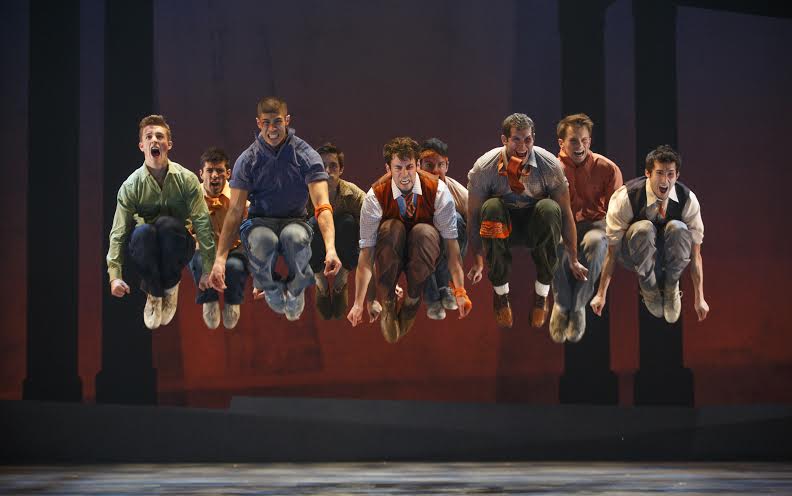
West Side Story Company | Photo: Carol Rosegg


West Side Story
February 11 – 16, 2014
Southern Alberta Jubilee Auditorium
http://calgary.broadway.com/shows/west-side-story-baa2/


When asked to describe the various roles in the classic musical, West Side Story, Stephen Sondheim (the show’s lyricist) was blunt. “There are no characters in ‘West Side,’ nor can there be.” They are and must be, he said, “one-dimensional characters for a melodrama.”

Not exactly the kind of publicity line you want on your poster.

There are lots of other critical things one can say about the famed 1957 musical that takes star-crossed lover inspiration from Romeo and Juliet and transplants the story to mid 50’s Manhattan in the midst of the Latino vs Anglo gang violence. There’s the ridiculously speedy manner in which the show’s leads, Tony and Maria, meet, fall in love and plan to marry all one night. There’s the ill-timed comical “Gee, Officer Krupke” number that sees boys from the American gang, the Jets, joking around about a nuisance cop just hours after their leader is tragically murdered. Then of course there is the fact that all the so-called tough street-gang boys spend most of the musical singing and dancing around in tight pants.

But here’s the thing – despite all these ridiculous elements – it’s almost impossible not to fall in love with West Side Story. Leonard Bernstein’s aggressively emotional music, Sondheim’s clever lyrics and Jerome Robbins’ macho and sexy choreography is just simply a trifecta you can’t argue with. But in the version that opened in Calgary and is presently touring across Canada, some arguing with the original production is going on. Directed by David Saint, this West Side Story is based on the Tony Award winning 2009 Broadway revival by the show’s original librettist, Arthur Laurents. The story is the same, as are the dancing and music, but in this new version there is a language twist that both intrigues and heavily undermines the show’s success.

What Laurents brings to this production is Spanish. Makes sense, right? Half the characters in West Side Story are from Puerto Rico and it’s reasonable to think that they would speak Spanish to each other. It’s an astute addition that would have been very welcome but for its overkill. The audience had no problem following along when the Spanish was kept to incidental banter between Maria, her Sharks gang-leader brother Bernardo and his girlfriend, Anita. Hearing these characters speak in their native tongue adds a gritty reality to the show and gives this 50 plus year old play a welcome kick into modernity. But when the Spanish flowed heavily over into the music, things suffered.

The “America” number where Anita expresses her love of Manhattan and berates a friend for her Puerto Rico nostalgia, fails to be funny because fifty per cent of the song is sung in Spanish which flies over the heads of the audience. Similar issues plague the sweetly charming “I Feel Pretty” number that has Maria in the rapture of love while her girlfriends tease her for it. Adding to this problem is the heavy-handed directorial decision to have all the Puerto Rican women in the cast (except Maria) sing in such heavy accents that even when it is English they are singing it’s often impossible to discern what’s being said. For those who know and love the musical, they could follow along with the sound track that’s been burnt into their brain. However for those that were new to the show or less familiar, I heard a lot of “what were they saying/singing about?” at intermission. Shame, that.

There were triumphs in the production as well. The dance at the gym where the Sharks and Jets uneasily inhabit the same space and set in motion the turf rumble that results in tragedy for both sides is wonderfully slick in its shadowy lighting, stark set design and exciting choreography. The actual rumble is a feat of spectacular direction and violent choreography that still manages to choke us up after all this time.

The cast certainly had its knockouts as well. Michelle Alves as Anita embraced the strong and sexy character and gave her musical numbers more than an extra dose of sassy oomph. Alves also deftly handled the disturbing rape scene at the hands of the Jets with actorly confidence, showing her range. Fluidly masculine in the performance, Michael Spencer Smith as Bernardo had swagger that oozed the testosterone of angry youth. When it came to sweetness of voice and character, no one could top MaryJoanna Grisso as Maria. Not only does Grisso have an angelic voice equally blessed with strength that charmed from the first note, she also managed to bring a realness to Maria, making her far more human than the script usually allows.

The Anglo’s held up their end of the cast well enough, albeit without stand out performances. Jarrad Biron Green as Tony opened strongly with “Something’s Coming”, a number that sets him up as wanting to leave gang life. But the strength and charisma he showed early faded to a somewhat limp performance despite his lovely vocal range. Benjamin Dallas Redding as Riff, the tough leader of the Jets, seemed ill-cast due to his inability to fully embody either toughness or leadership. This combined with dance skills and a signing voice inferior to his other gang members made him a confusing choice for the role.

Not a ticket was left for sale the night I saw West Side Story proving that over half a century later, there is still a healthy appetite for this tale of tragic love amongst urban gang warfare. The version we were served up certainly delivered on the emotional aspects of the story. But in making it grittier and more linguistically real – it felt like all the fun was taken out of the performance. I have never been to a Broadway Across Canada show in Calgary where audiences didn’t jump to their feet and applaud at the end of a performance. For this West Side Story, they sat and clapped. Perhaps it was the language and accent issue. Perhaps some things are better left in memory. Or perhaps we just need a little bit of honest laughter with our violence these days to get us out of our seats.

 
RATING

For West Side Story fans – It’s all there, the music, the dance numbers, the energy. Given that you already know all the lyrics, the heavy accents and Spanish won’t be an impediment. In fact, you may welcome it as a sensible and interesting addition. Then again you may feel the new language twist gets in the way of listening  to the lyrics you fell in love with in the first place. MAYBE SEE IT

For West Side Story newbies – It’s not that you won’t understand the stories or follow the gist of the partial Spanish/heavily accented songs. It’s just such a shame that you won’t get to enjoy this musical to its fullest in this production. Sondheim’s lyrics are a large part of the reason audiences love this show and unfortunately, unless you speak Spanish, you’ll miss some of the best of them. MAYBE SEE IT

For theatre junkies – The gym and rumble scenes alone are worth seeing this production. Both are a perfect confluence of staging, set design and choreography evoking the arrogance and sexual energy of youth and the disturbing nature of racism. SEE IT


A Bomb in the Heart – Review

Bomb

Ishan Davé in Wajid Mouawad’s A Bomb In the Heart. Benjamin Laird Arts & Photo.

A Bomb in the Heart

February 5-8 & 11-15, 2014

EPCOR Centre Motel

http://www.downstage.ca/bomb.shtml

Listen to my full review on CBC’s Calgary Eyeopener at

http://www.cbc.ca/eyeopener/columnists/theatre/2014/02/10/jessica-goldman-reviews-a-bomb-in-the-heart/


RATING

For occasional theatre goers – The non-linear nature of the show in combination with the overly poetic/mystical writing may frustrate and confuse you. Still there is no denying the talent of the performer and the incredible production design. MAYBE SEE IT

For theatre junkies – Frustration may also be your feeling as you  work your way through an overwritten script that tries so hard to be allegorical, it threatens to pull a mystical muscle. However, if you can focus on Ishan Davé’s effortless performance, Simon Mallet’s deft direction and Erin Gruber’s terrific video projections, you’ll be well-rewarded. MAYBE SEE IT

Huron Bride – Review

Huron Bride

Georgina Beaty (as Hazel Sheehan) and Nathan Schmidt (as James Flynn) in the Vertigo Theatre BD&P Mystery Theatre Series production of HURON BRIDE by Hannah Moskovitch. PHOTO by: Benjamin Laird |


Huron Bride

Vertigo Theatre

January 25 – February 23, 2014

http://www.vertigotheatre.com/main/index.php?site=mystery&id=production&production=221

Listen to my full review of Huron Bride on CBC’s Calgary Eyeopener at http://www.cbc.ca/eyeopener/columnists/theatre/2014/02/03/goldman-reviews-huron-bride/


RATING

For those that like to be spooked – The dark set, shadowy lighting and jarring sound design all do well to conjure an eerie effect. But a spooky atmosphere can easily be made mute by unintentionally comical direction that has characters washing the floors in the dark by lantern light. How do you not miss spots? Add to this the over-used desecrated Native burial ground trope and characters so flat there is little possibility of connection to their horror. SKIP IT

For the occasional theatre goer – As usual, the set design at Vertigo is impressive and apart from their horrendous misuse or absent accents, the cast is decent enough. The constant blackouts and shadowy ghost scenes may tickle your fancy and perhaps you won’t be bothered by the lack of originality in the story. MAYBE SEE IT

For the theatre junkie – A Moscovitch/Rose collaboration falling flat? How disappointing. Trust me, I know. But they both failed to follow their own advice as written in the program – “make sure the audience can connect with the characters in order to feel tier horror”. Moscovitch fails to do this by writing flat and senseless characters and Rose nails the coffin with his use of constant blackout direction that only highlights the banality of the scenes in between. SKIP IT

Do You Want What I Have Got? A Craigslist Cantata – Review

Craig

Do You Want What I Have Got? A Craigslist Cantata

January 22 – February 1, 2014

Martha Cohen Theatre

https://www.hprodeo.ca/2014/do-you-want-what-i-have-got-a-craigslist-cantata

Listen to my review from CBC Eyeopener at

http://www.cbc.ca/eyeopener/episode/2014/01/27/jessica-goldman-reviews-a-craigslist-cantata/

RATING

For musical lovers – Be warned, there aren’t any big dance numbers or emotional story arc or lead performers or any plot for that matter. It’s just Craigslist ads (some verbatim, some not) sung to you for 75 minutes. But if you can lay aside the need for a traditional musical format, you’ll find that this gem of a show has much to offer. Comedy, sadness and a peak at human longing – what more could you ask from a musical? SEE IT

For musical haters – Yes this show is all singing, all the time. But unlike the traditional musicals that you might have turned your nose up at in the past, this one doesn’t have any of the hackneyed trappings. No obvious storyline, no melodramatic crooning or mawkish dance numbers and no laughably easy resolution. Instead the show offers an equally funny and sad look at the human condition as evidenced through online ads that will make you laugh and think. SEE IT

For the occasional theater goer – The lack of a plot and main characters will throw you even though I all but guarantee you will laugh heartily throughout the show. Still, this may feel a little to unstructured for you to get all that you should out of it. MAYBE SEE IT

For the theatre junkie – Now THIS is how a plotless play/musical is done. Tons to glean from it while being equally entertaining as it is smart. Streamline direction/choreography and bare minimum set design allow the performers to shine. SEE IT

Munich Now – Review

OYR

Munich Now

January 14 – 25, 2014

Big Secret Theatre

https://www.hprodeo.ca/2014/munich-now

Listen to my review of Munich Now on CBC Eyeopener at http://www.cbc.ca/eyeopener/columnists/theatre/2014/01/20/jessica-goldman-reviews-munich-now/

RATING

For German speakers – I chatted with a German-speaking woman at the show who assured me that the language being spoken was in fact High German and not simply a scambling for the language. In fact, there were different reaction times to the jokes being told as those that understood the language laughed several seconds before the rest of us could catch up with the surtitles. However the delight in hearing your mother tongue so amusingly used in Calgary cannot fully outstrip the play’s deficits of story arc or meaning. MAYBE SEE IT

For occasional theatre goers – Forget the fact that you probably don’t want to read surtitles to understand a play, the fact that this show has no plot or point will frustrate you and far outweigh any amusement you might experience as a result of the absurd sketch-like bits. SKIP IT

For theatre junkies – What the Rabbits are trying to do here is impressive both in terms of the dialogue challenges and the effort to move beyond traditional plot-driven narratives. But in trying to pump this brand of surrealism into the show, they have lost the ability to give us something to hang onto or come away with. We haven’t  any clear idea what the playwright was trying to say therefore, while we may be amused, the giggle quickly fades away into so-what-ness. MAYBE SEE IT