The Pillowman – Review

Pillowman

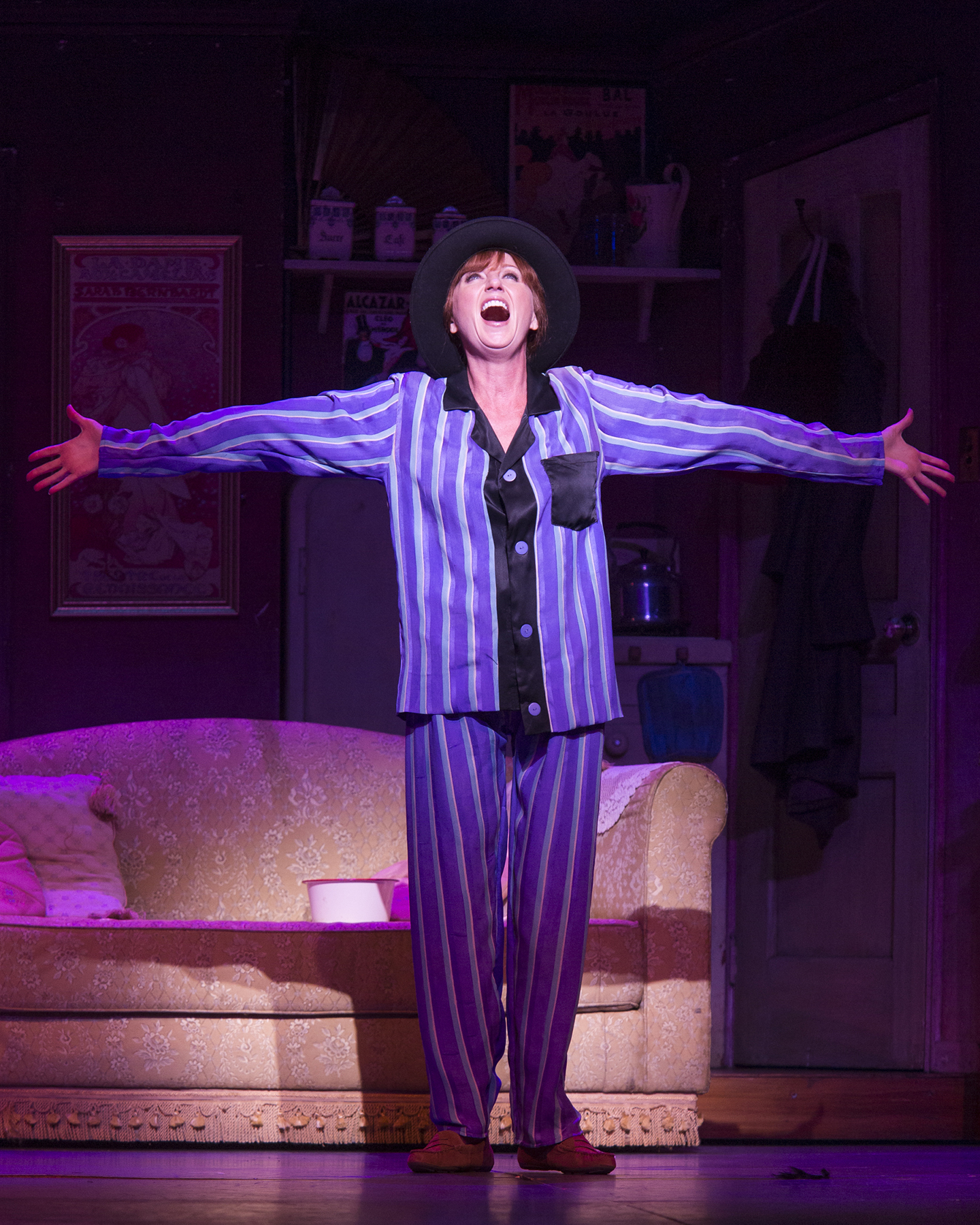
Ariel (Trevor B. Cone)persuades Katurian (Aaron Echegaray) to cooperate with the investigation as Tupolski (Scott Holmes) Looks on. Photo Credit:  Scott McWhirter.

The Pillowman

Written by: Martin McDonagh

Directed by: Scott McWhirter

Company: Theatre Southwest

Run Dates: Oct. 24 – Nov. 15, 2014

“The first duty of a story writer is to tell a story”. This may seem obvious, but when uttered by the protagonist Katurian in Martin McDonagh’s 2003 award-winning play, The Pillowman, the articulation means far more than its tautological surface. Story, who tells it, for which reason and with what consequences is the thing being addressed in this darkly disturbing play, splendidly produced by Theatre Southwest.

Fans of McDonagh’s plays and movies have come to expect disquieting, squirm-worthy comedy/drama and breaths of unfresh air from his work. Plays such as The Cripple of Inishmaan (1997) The Lieutenant of Inishmore (2001) A Behanding in Spokane (2010) and movies like In Bruges (2008) and Seven Psychopaths (2012) all attempted to make us laugh at horrific situations and characters. But while The Pillowman has moments that force us to crack a smile in the face of horror, the play is a distinct left turn away from funny and towards the gravely discomforting.

Katurian (Aaron Echegaray) has been detained in an unnamed dictatorial country by two police officers, Ariel (Trevor B. Cone) and Topolski (Scott Holmes). Through their often sadistic and torture-ridden interrogation of him we learn that he is a writer of short stories which are often about the murder of or the murder by young children. In the next cell over is Michael (Sam Martinez), Katurian’s mentally challenged older brother who the cops claim to also be torturing. At first Katurian rejects any notion that his stories have effect or meaning beyond the page. “I’m not trying to say anything….I have nothing to grind,” he urges. But when the cops tell of copycat child murders based on his stories, Katurian is forced rethink his art and his purpose. Without giving too much away, let it be said that The Pillowman is mercifully far from a formulaic police procedural, instead using this set up to take several surreal twists and turns that at once thrill and disgust us.

Nor is there anything formulaic about Scott McWhirter’s wildly creative yet unsettlingly restrained direction. Upon entering the theater, we see Katurian blindfolded sitting worriedly in an interrogation room with a security camera pointed at him. We see what the camera sees via a live black and white, x-ray like image projected onto a scrim behind him. The effect wonderfully brings us into the feel of the play and is a clever nod indicating that what we see onstage can be reflected separately to provide a different or slightly skewed viewpoint. But McWhirter’s real brilliance in this show is the veil-lifting second act where the audience is given a glimpse at the circumstances that forged Katurian and his brother. Deeply upsetting, this part of the play’s arc could have easily lost its punch by overplaying the absurdist nature of the narrative. However, McWhirter reins the story in and with the help of John Baker’s terrifically eerie lighting and Trevor B. Cone’s cleverly contradictory sound design, provides a suffocating and claustrophobic atmosphere for his cast to creep us out in. It’s a pin drop act and is one of the best iterations I’ve seen.

Direction this strong can often tease out strong performances from less than stellar performers, but there’s little need for that here. Echegaray’s Katurian is a bundle of stammers, hesitation and mumbles expertly conjured and perfectly timed in the face of interrogation. As Katurian’s outrage at incarceration grows followed by horror at what he may have unleashed, Echegaray allows the subtleties of his portrayal to fluidly develop with the circumstances. It’s a remarkably natural performance in the most unnatural of plays. But even more notable is Echegaray’s story-telling prowess as Katurian. Armed with some of McDonagh’s most bleakly brilliant writing in the form of Katurian’s short stories, Echegaray recites several of the dark, murderous takes during the play. Actually recite is too narrowing word. Echegaray dives full body into these stories bringing them vividly to life and ensuring that we can’t take our eyes or ears off him.

That is until our eyes and ears get locked on the equally talented Martinez as Michael. Playing mentally challenged…is…well….a challenge. One that can so easily dip into caricature or hackney portrayal. Instead, Martinez gives us an utterly believable and beautifully crafted character full of ticks and twitches and child-like affectations in a man size body. Michael is a dichotomy of pathetic innocence and unacceptable behavior and Martinez expertly evokes both in his performance. As Michael and Katurian take on the bulk of the play together, it is a joy to watch these two talented actors play off each other and do such justice to the script.

Even with all this praise to toss around, it’s almost impossible to be a critic without at least one quibble creeping in and here it’s laid at McDonagh’s feet. The third and final act in this 90 minute play is simply too long. By the time Katurian and Michael are reunited in the police station, McDonagh has done everything he can to wind us up and light the fuse. We know we are going to be told what happened and why. We are ready and willing to go there no matter how awful it may be. And yes the payoff is good. But McDonagh ambles here too long with dialogue and redundancy, taking a bit of the thrill out of the conclusion. Perhaps he should have taken Katurian’s advice and dispensed with the padding here and just told the story.

RATING

For the squeamish -Don’t. Just don’t. SKIP IT

For thrill seekers – Unlike some of McDonagh’s plays, this one isn’t a violent thrill ride. Instead it’s far more psychological and heady in nature. But put away your need for gore and there is no doubt your sense of darkness will be tickled. SEE IT

For the occasional theater goer – This is a fantastic production all around, however the disturbing nature of the story and what may feel like an elusive moral point to the whole thing might make this one a show you sit out on. SKIP IT

For theater junkies – Should you see this production for the outstanding direction, some incredibly strong performances, killer lighting and sound design or McDonagh’s darkly interesting script? How about yes to all of it? SEE IT
Marie Antoinette – Review

MA

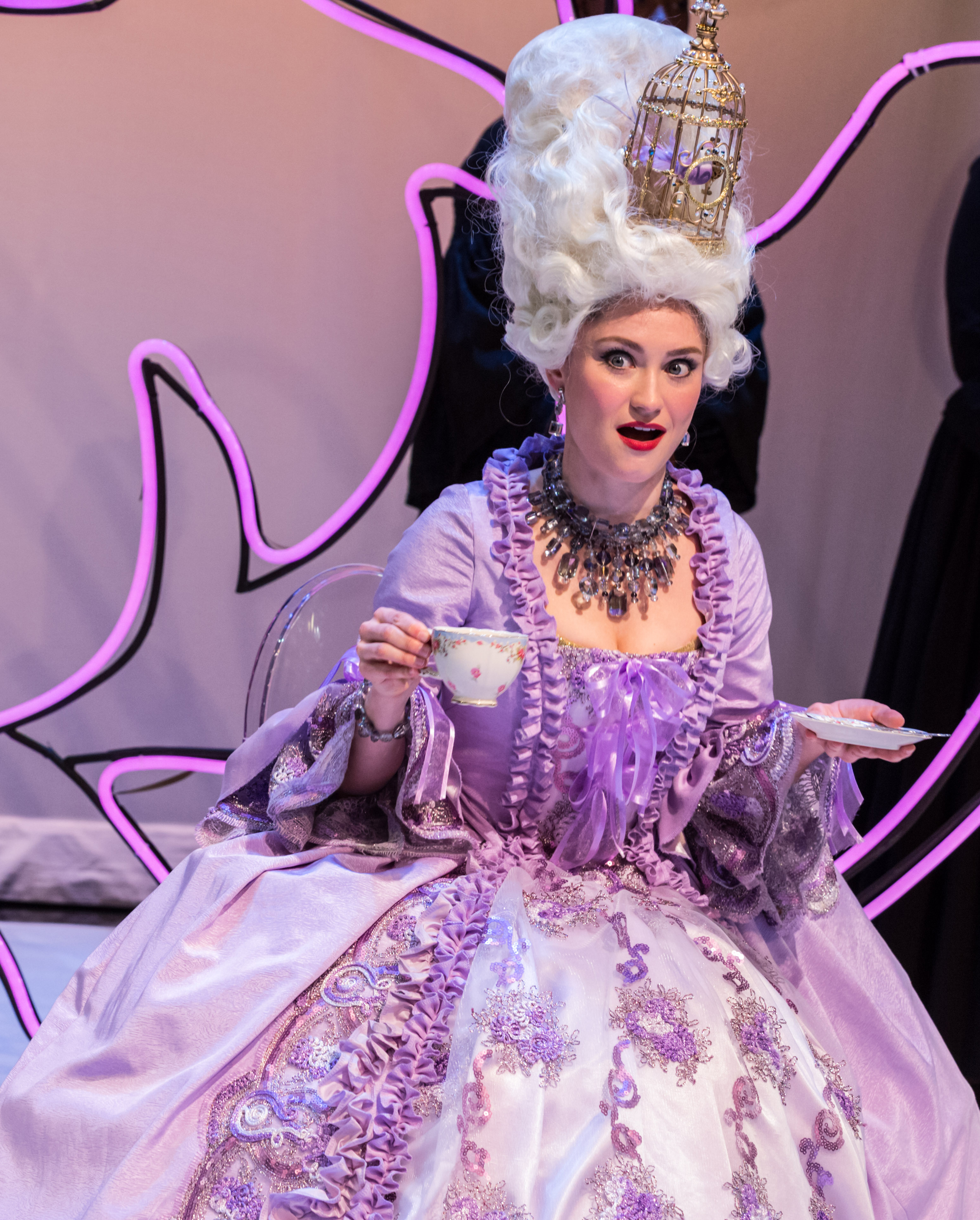
Emily Neves as Marie Antoinette. Photo Credit: Amitava Sarkar.


Marie Antoinette

Written by: David Adjmi

Directed by: Leslie Swackhammer

Company: Stages Repertory Theatre

Run Dates: October 8 – November 9, 2014


How’s this for a theater recipe? Take one part Paris Hilton (OMG/I’m SO much hotter than you), another part Hillary Clinton circa mid 90’s (the decisive and powerful woman often pulling the strings of her ruling husband) and mix in a dash of Legally Blonde’s Elle Woods (the smartest dumb woman in the room) if Elle could also drop F-bombs like a Jersey Shore gal. Now put her in a play that mashes up Baz Luhrmann/MTV-style short, visually assaulting scenes set to thumping club music with uber surrealist anthropomorphism (in the guise of a talking sheep) and a healthy dose of Shakespearean tragedy at its darkest. What you get is Stages Theatre’s wildly inventive production of David Adjmi’s Marie Antoinette. It might sound like one gigantic hot mess on paper, but against the odds and in many instances by the skin of its teeth, Adjmi’s play in Leslie Swackhammer’s astonishingly talented directorial hands, fizzes and pops and ultimately claws  its way into our full enjoyment.

Marie’s story is that of legend. A naïve Austrian royal married off by her mother at fourteen to the King of France as a political manoeuver. Drowning in luxury at Versailles, Marie reacts to her less than ideal husband, strange new home and stunted educational and emotional maturity by engaging in the ultimate and never-ending shopping spree, much to the increasing ire of the starving French people. When the revolution finally comes and the people oust the monarchy in favour of a seemingly more democratic rule, it is Marie that they detest the most and it is she that suffers most greatly for her excesses and insensitivity to their plight. It’s her head they want and ultimately her head they get.

How one see’s Marie’s story is a matter of perspective. Was she an unsavvy and innocent victim of her fate or was she the epitome of selfishness that got what she deserved. Adjmi wants us to believe a bit of both, though it’s clear that his affections outweigh his derision for his main character. Marie Antoinette paints for us a character we can both love and be disgusted by. She is a woman who pays little attention to her son while at the same time whining over the grave damage her own absent mother caused her. She’s a woman who shows great character in turning down an affair because she believes in the sanctity of marriage, but is as quick to tell her husband that she never really loved him. These shades of grey in character study are nothing new and certainly not in the discussion of Marie Antoinette. What makes it work so superbly here is Adjmi’s combination of highbrow/lowbrow, using modern and period piece language to highlight the dichotomy. Marie is just as likely to spew expletives or pronounce, “Intellectuals – blech”  as she is to wax beautifully about being in a ‘canard’ or musing philosophically about her value as a person.

But no matter the amount of delightful brain gymnastics Adjmi gives us, this is a show that relies heavily on a strong creative vision to inject freshness into what is ultimately a well-trod story.  When it comes to vision, Swackhammer and her production team have it in bucketfuls. Set on Ryan McGettigan’s minimal stage beautifully adorned with huge abstract neon doodles and repro Ghost chairs, Swackhammer moves her cast around with casual ease that juxtaposes beautifully against Barry Doss’s gorgeous and ornate costumes. As the pounding dance music suggests, this is not a fussy production and Swackhammer makes sure that the cool vibe never diminishes regardless of the seriousness of the action or dialogue on stage. This is a play that is just as moody and surreal when a talking sheep strikes up an important relationship with Marie (trust me – it took me some time to buy into it, but it works) as it is during the brilliantly staged palace coup that has the rebels literally tearing up the stage in an incredibly genius and simple piece of direction and set design.

The cast reacts to the unique script and production with effervescence and energy all around. Mitchell Greco has the difficult task of playing Louis as a kind of feckless savant child/man more interested in playing with clocks than with his wife or even France for that matter. It’s a terribly unlikeable and annoying character mold, but Greco brings a sweetness to the role that gives the audience a chance to root for him. Emily Neves as Marie is a study in range. This is a character that runs the gamut from bratty spoiled girl to feisty wife and Queen to beaten down woman with nothing else to lose. Neves is more than up to the task. She doesn’t so much change character as effortlessly slips into the changing situations her character finds herself in. Neves takes us on Marie’s journey and when the final moment comes, we are riveted.

We are also relieved. As the final moment in this play, and the entire second act for that matter tends to drag on a bit long. We know where the story is going but it’s as though Adjmi punishes us just a bit for it by keeping us waiting through one too many scenes of imprisonment or dream sequences. While the effect is not quite shift around in your seat frustration, there is no doubt the production would pack a much stronger punch with a good edit nearing the conclusion. Like the talking sheep says to Marie, we all just need to wake up from this dream a little sooner. Again, trust me. It works.


RATING

For the pearl-clutchy – This is not your Marie Antoinette. The music is loud, the swearing profuse and the surreal elements will probably not jive with your idea of a period piece. SKIP IT

For those that want a little rock and roll with your history – The modern cadence, the club music, the music video style staging all serve to freshen and make cool this tragic tale. It’s not modernism for shock sake, rather a blessedly unique take on a story that really didn’t need to be told again. Plus did I mention the sheep? SEE IT

For the occasional theatre goer – Yes, this is a decidedly different kind of production than the safe narrative theater you may be used to. But this show has humour, energy a story that is easy to follow, a terrific cast, costumes that will make you gasp and a set that while minimal is arresting at times. What’s not to like? SEE IT

For theater junkies – The show is in need of a second act edit and contains some dialogue that feels a bit too try-hard and cliché  (“I feel like a bird flapping my wings against the inside of a cage”). But forgive what amounts to minor indiscretions in order to delight in the vision of this production. Even for junkies like you, it’s sometimes hard to discern exactly what a director was going for. Not here. Yes the performances are strong, but it’s Swackhammer’s work that should be your draw here. SEE IT

Red Death – Thoughts

Red Death

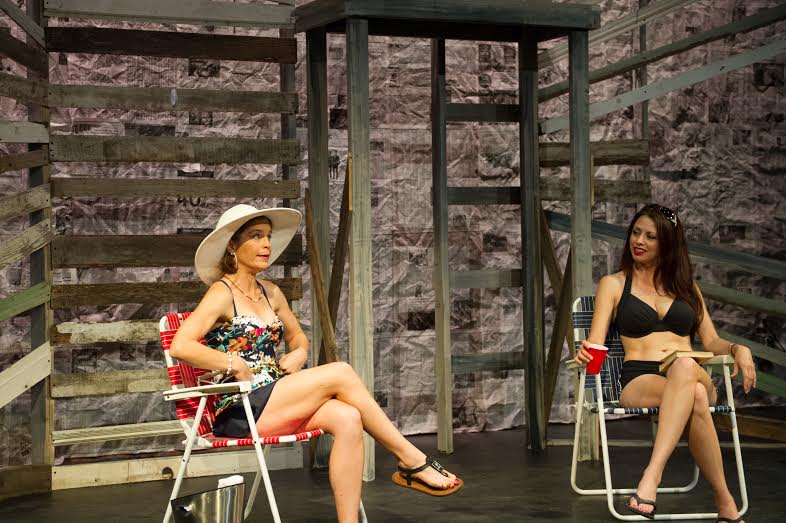
(l to R) Karen Schlag  and Christie Stryk  in Red Death. Photo credit VJ Arizpe.


Red Death

Written by: Lisa D’Amour

Directed by: Jennifer Decker

Company: Mildred’s Umbrella

Run Dates: October 9-25, 2014


For a critic, coming to a show late in the run is fraught with challenges. Firstly, how not to expose yourself to your colleague’s reviews (check!). Then what to do about your own thoughts? With only four more performances left in Mildred’s Umbrella’s production of Lisa D’Amour’s Red Death, does one take a day to craft a comprehensive review or instead offer up musings in the hope that their timeliness will be of use to audiences yet to see the show? In this case, I opt for usefulness as opposed to pretty prose. Especially considering when it comes to this play, I’m not altogether sure anything comprehensive can be said. Which brings me to my first point:


Huh?

There are some plays you understand but don’t necessarily enjoy (I’m talking to you Godot). Then there are plays you don’t fully grasp but the experience is so fantastical you barely care (much of Robert Lepage’s work.) Then there are plays where not only do you not completely get what the playwright is going for, but the enjoyment of the ride waxes and wanes. D’Amour’s Red Death falls into this latter category.

We know going in that the inspiration for the play comes from Edgar Allen Poe’s gothic fantasy, The Masque of the Red Death and it’s quite obvious that hints of Kafka, Vonnegut, Bradbury et al are all at work in the concept.  Director Jennifer Decker even has her main character casually reading Kafka in a beach scene in case we didn’t clue in. But whereas those inspirational stories offer up moral compasses, ethical quandaries and warnings to be heeded, Red Death seems content to simply be cryptic.

Jane Whithers (Christie Guidry-Stryk) is on a quest to find the “origin of evil, the root of denial and the basic human weakness that causes us to fear death”. She’s been charged with this task by an unseeable ‘panel’ that operates outside of federal law and uses any means necessary to get information and instill dread. Jane apparently is supposed to kill childhood acquaintance, Prospero (Jon Harvey) with whom she shares a horrific past. But in nonlinear fashion we also are shown that Jane herself is a target of the panel, either for her own murderous indiscretions or as some sort of master plan that is as ambiguous and frankly uninteresting as a bad X-Files episode.

D’Amour gives us very little to latch onto intellectually in her script. We see the mystery and thriller elements. Will Jane kill her mark? Who else will she take down in the process? How does she know Prospero in the first place? We are given some reprieve from the confusion by the absurdist situations and hints of dark comedy along the way. Of note is the inclusion Prospero’s daughter (Bree Bridger) who makes the term beach slut seem an understatement. But with no way to tunnel down into what it might all mean (Everyone is evil? Everyone is targeted? Our lives are all determined by evil forces? If so, yawn) Red Death becomes a very surface skimming experience that mistakes nebulous existentialism with heady narrative.


However,

 Thanks to Jodi Bobrovsky’s chillingly moody set that seems a cross between wood-slatted sunshine and the shattering of glass, Greg Starbird’s in your face lighting that paints each of the seven short scenes in a distinct wash of colour and Decker’s direction that teases out a few notable performances, Red Death manages to hold our attention more than it should.

Sure, we don’t really get the point, and no, we really don’t much care if Jane is the avenger or redeemer. But as the lights go down in between each small scene and yet another cleverly juxtaposed atmospheric song with sunshine in the lyrics comes on (Good Day Sunshine, Sunny Side of the Street, You are My Sunshine) we can’t help but be mildly intrigued by what will come next.


Especially…..

 If the anticipation doesn’t flow from the story itself, it certainly does from some of the performances. Rod Todd as Jane’s father gets only one small scene in the play, but utterly steals the show with his fumbly naiveté and fatherly worry about his daughter. As the panel detective sent to investigate Jane, Ronald Reeder makes us laugh again and again by simply perfecting the timing of the word, OK. Karen Schlag as Connie, Prospero’s wife, is an eerie simulacrum of nerves gone awry that wonderfully takes up all the oxygen in the theater when she is on stage.


Finally.

My litmus test for a play such as this relies on if I’m still thinking about it or trying to figure it out post curtain. Are there nuggets there to be mined that are worth the effort? If there are, I haven’t found them. Nor was in intrigued enough to spend much time looking.

Should Decker have played up the absurdist elements more, given us a creepier tale or given more room for the humour? Perhaps. But I fear that pushing envelopes in this manner would only have been putting cover-up on a poorly made up face.

Instead I will offer kudos to the production team for doing their best to keep my attention in what I found to be a frustratingly flawed play.

Devil Dog Six – Review

DevilDogSix560

(l to R) Sam Flash), Travis Ammons , Sammi Sicinski , Cheryl Tanner , Jarred Tettey and  Bradley Winkler. Photo credit: Paige Kiliany


Devil Dog Six

Written by: Fengar Gael

Directed by: David Rainey

Company: The Landing Theatre Company

Run Dates: October 3 – 20, 2014


Read my review of Devil Dog Six at Houston Press at http://blogs.houstonpress.com/artattack/2014/10/devil_dog_six.php


Nashville Hurricane – Houston Review

NashvilleHurricane

Chase Padgett as Henry in Nashville Hurricane. Photo courtesy of Chase Padgett.


Nashville Hurricane

Created and Performed by: Chase Padgett

Company: Theater LaB Houston

Run Dates: October 2 – 5th, 2014


Check out my review of Nashville Hurricane for Houston Press at http://blogs.houstonpress.com/artattack/2014/10/nashville_hurricane_review.php


Reefer Madness – Review

TUTS_ReeferMadness_11

Sean McGee as Jimmy, Dylan Godwin as The Lecturer and Ensemble. Photo by Christian Brown, courtesy of Theatre Under The Stars.

Reefer Madness

Book by: Kevin Murphy and Dan Studney

Music by: Dan Studney

Lyrics by: Kevin Murphy

Directed by: Bruce Lumpkin

Choreographed by: Dana Lewis

Company: TUTS Underground

Run dates: September 25 – October 5

Hands up those of you that have had the misfortune of being the only sober person in a room full of dope smokers?  Sure it’s great fun to watch them giggle and eat chips and trail off while being sure they’ve come up with the next great bread slicing invention for a time. But the novelty does wear off and then all you’re left with is a bunch of stoners. Thankfully for the audience at Reefer Madness, the musical comedy that spoofs the 1936 educational (and now cult classic) film made to showcase the negative consequences of smoking marijuana, watching a bunch of pot-heads at the theater proves decidedly more entertaining than not.

On a stage adorned with 1930’s scare tactic posters foretelling all the life-ruining dangers of marijuana, the play opens with a pin-stripe suited Lecturer (Dylan Godwin) warning the audience that the only way to safeguard our children from destruction is keep them away from the dope. In case his words aren’t compelling enough, he presents to us the story of the once clean-cut and promising teen, Jimmy Harper (Sean McGee) and his girlfriend, Mary Lane (Taylor Beyer) as evidence of his caution.

Reminiscent of The Rocky Horror Picture Show, another cult classic story, Reefer Madness sends two square as all get up teen sweethearts in to the hands of depravity. There are no bisexual transvestites here though. Instead the danger is something far more earthly. As the eponymous and cutely ominous opening number, ‘Reefer Madness’ suggests, smoking weed is akin to turning into zombie-like psychopaths a la Michael Jackson’s ‘Thriller’ video. We’re not talking only heavy use here either. Wanting to learn how to dance in order to impress his new girlfriend Mary, Jimmy is naively seduced into the world of drugs by Jack Stone (Nick Henderson) a pusher who seems the epitome of cool. Jimmy is lured back to Jack’s dope den, run by his abused and addicted girlfriend, Mae (Kristin Warren) and populated by the now dope insane former college student, Ralph (Mark Ivy) and the over sexed doper Sally (Brooke Wilson) who keeps forgetting she has a baby. Riffing on the notion that trying pot just once and total addiction are fundamentally entwined strands on our DNA, Jimmy is just one puff away from total destruction. It’s about a quarter of the way through the first act when the number ‘Jimmy Takes a Hit’ is performed with full-out hallucinogenic grandeur including visions of orgies, belly dancers and inexplicably a goat. What follows comprises the rest of the show. Jimmy is hooked and headed for real disaster, Mary is worried and vulnerable, Jack wants to keep growing his dope business at all costs, Mae wants out but can’t give up the dope, Ralph is one step away from utter madness, Sally just wants to smoke and hump and the Lecturer pops in an out to make sure we’re still paying frightened attention.

It would all get quickly tiresome if it weren’t for some fantastically performed campy musical numbers that are as clever as they are comedic. Mae’s lament ‘The Stuff’ about not being able to leave Jack is both deeply disturbing and thanks to a killer delivery by Warren calling up the moody deep recesses of her voice, immensely funny. How else can you explain our laugher at lines like, ‘Sometimes he’s rough

He throws me down the stairs, but deep inside he cares. He buys me lingerie, and the stuff!’ In ‘Lonely Pew’ Mary waits at church for Jimmy to show up but is once again disappointed at his absence. ‘The wafers now don’t taste so great. They won’t transubstantiate. Without you near the gospel choir sounds askew. Jimmy, come back and fill my lonely pew!’ Beyer in her Shirley Temple curls, blonde wig and skirt of respectable length, brings splendid contrast to the dope-induced madness around her with her naïve and sweet delivery that is totally oblivious to just how funny she’s being. Or how close she is to falling prey herself. But by far the knock out number it the show belongs to Jesus. Just when you think Reefer Madness can’t get any more over the top – they go right to top and bring in the son of God himself to convince Jimmy to straighten out. Played with casual lounge singer confidence by Henderson, Jesus clad in nothing but a gold lame sarong addresses Jimmy directly with delicious lyrics such as, ‘I’m here to help you, Jimmy, and return you to the fold. Try filling your lungs with God, and not Jamaican Gold’ and my personal favorite, ‘All the cherubim say you gotta. Trust the man with the stigmata!’

Bruce Lumpkin’s direction and Dana Lewis’ choreography play up the camp of the twenty musical numbers with obvious glee and the talented cast is more than game for the ridiculous portrayals. The music itself is boppy and bright and ironically in defiance of the scourge it depicts. Ryan McGettigan’s set design, employing illustrated black and white askew cut-outs of  doors, couches, windows, stairs and even a piano and soda shop bar are in smart but simple contrast to the insanity that going on around it. But by the time intermission comes, the ravings and psychotic physical spasms of the dope fiends tend to wear a little thin. As does a narrative that while always able to find its way back to an amusing moment, feels overly repetitive in places and padded in others. This isn’t Pinter after all. We know where the story is going save for some hilariously gruesome late show developments. It’s ok to take us there faster. In fact, it would have been better to. But then I suppose who has ever been successful at goading a doper into quicker action? Never mind….pass the chips.

RATING

For pearl-clutchers – No, just no. Politically incorrect, tongue firmly in cheek and while not necessarily an advocate of smoking pot, certainly not in opposition, this play will offend you on just about every level. But you knew that already, right? SKIP IT

For lovers of camp – Yes, just yes. This is camp done right with more than a helping of smarts thrown in. Vulgar, exaggerated self-parodying – it’s all there wrapped in rollie waiting for you to take a toke. SEE IT

For musical lovers – This talented cast plays the hell out of the upbeat music and wonderfully comedic lyrics. The dancing impresses as does the decision to employ performers of all body types to take the stage. At twenty songs long, it might be overkill, but you’ll be hard pressed to find a number you dislike. SEE IT

For theater junkies – Yes this could have easily been a 90 minute production. One that you’d be much happier with.  But put your edit stick aside and just enjoy some silly fun for an evening with a talented cast, comedic musical chops and direction that mercifully keeps the camp just this side of unhinged. SEE IT

Now and Then – Review

alienjim560.jpg

Photo credit: Jim Tommaney


Now and Then

Written and Directed by: Jim Tommaney

Company: Edge Theatre

Run Dates: September 25 and 26. 2014


Read my review of Now and Then at Houston Press at http://blogs.houstonpress.com/artattack/2014/09/now_and_then_doesnt_shine_at_the_fringe_festival.php

Victor Victoria – Review

TUTS_VictorVictoria

Anastasia Barzee in Victor Victoria. Photo by Bruce Bennett


Victor Victoria

Book by: Blake Edwards

Music by: Henry Mancini

Lyrics by: Leslie Bricusse and Frank Wildhorn

Directed by: Richard Stafford

Company: Theatre Under the Stars

Run Dates: September 18 – 28th, 2014


If pedestrian lyrics like, “As a man, I would not need to feel like an also-ran. Though I know I never can, ever be a man” or “Paris makes me horny, it’s not like Calinfornie”, make you roll your eyes with contempt, then get set for lots of ocular gymnastics watching Theatre Under the Stars production of Victor Victoria. The musical, based on the 1982 Oscar-nominated  movie written and directed by Blake Edwards for his wife, Julie Andrews, made its way to the stage in 1995 with music by Henry Mancini and lyrics by Leslie Bricusse and Frank Wildhorn. But even with the talent behind the production (Edwards once again directed and Andrews reprised her role) no one ever accused the stage version of the gender bending story to be a great work of theatre. Fast forward almost 20 years and the same is true for this production despite some wonderful performances, lush set design and direction that delights in spots.

The story aims to take the piss out of the standard drag queen trope by instead introducing the idea of a woman donning the drag persona. It all begins when the avuncular, gay, French club singer Toddy (Tony Sheldon with no hint of a French accent whatsoever) befriends down on her luck Victoria (Anastasia Barzee) after she walks into a small Paris nightclub desperate for a job. She’s awfully talented, even shattering glass with her powerful voice, but not the type of singer that goes over big with the club-going Gay Paree set. After listening to Victoria whine about wishing she were a man in order to get ahead and then watching as his ex-boyfriend actually mistakes her for one, Toddy hatches a plan that will elevate both their careers. Victoria is to become Victor, a Polish count and the world’s best female impersonator. A woman pretending to be a man pretending to be a woman. The hitch of course (besides fear of being found out) is love. This is a musical after all. Victoria falls in love with King Marchan (Joey Sorge), a tough charismatic gangster type who is also smitten with her, refusing  to believe that she is a he.

Directed and choreographed by Richard Stafford with a cavalcade of sumptuous moody sets by Robin Wagner and luxuriously cheerful costumes by Willa Kim, Victor Victoria is delightful to look at even if it doesn’t always work as an interesting or even credible musical tale. Of particular note is Stafford’s direction of the farcical near miss scene set in a hotel where everyone is busily sneaking into everyone else’s room to spy on their goings on. In a terrific chess piece style of direction, Stafford orchestrates what his cast sees and doesn’t see and how they hide and reveal themselves with panache.

It’s moments like this that make the play far more engaging than any of the musical numbers. In addition to the constant roll call of cringe-worthy lyrics, the music, save for the signature number, Le Jazz Hot, is utterly unremarkable despite the lovely effort put forth by the live orchestra.  Many of the eighteen numbers drone on far too long, often to compensate for the complicated male to female costume changes required backstage.

Yet still, even with all the issues inherent in the show, one can’t help but kinda like it. The credit for this disconnect lands squarely on the shoulders of the talented cast who manage to push through the tedium and distaste and end up charming the pants off us. Sheldon as Toddy, despite his lack of accent and a voice that does well but never amazes, oozes warmth and loveliness. When he himself gets a chance at love our hearts burst with happiness for him. Sorge as Marchan strikes a sultry machismo figure that never falls down the rabbit hole of stereotype. It’s his musical number, King’s Dilemma, where he struggles with the notion that he may in fact be in love with a man, which is the standout moment in the show. Angel Reda, as King’s buxom, breathy, sexually charged and vengeful girlfriend Norma, is equally good at taking a character that is woefully over the top and taming her into a wonderfully funny role that we can’t help but feel affection for. As the starring role, Barzee navigates the androgynous thing to her advantage, cultivating a vulnerability that has us rooting for her throughout. Add in her beautiful voice and she captures us even more. My only issue with Barzee’s performance was her lack of dance ability. Cast in front of the talented chorus, it’s clear that Barzee is not at the same level.

This was made even more apparent in her two night club act scenes where Stafford keeps Victoria oddly stationary while dancers flit wildly all around her. A little more physicality in her act would have gone a long way in helping us believe that Victor was in fact the toast of the town. As it is, we have to take their word for it, but with characters will like so much, that’s a pill that isn’t too onerous to swallow.


RATING

For musical fans – No one can claim this musical is top-tier in terms of music, lyrics and dancing. But thanks to a hardworking cast and a beautiful set, Victor Victoria is a fun addition to your playbook. Don’t expect to walk out wanting to buy the soundtrack or pull up YouTube clips of other performances and you’ll have a perfectly good time. SEE IT

For the occasional theatre goer – While the subject is somewhat sexual, this is gender bending light. No uncomfortable moments here. In fact the story is nothing but easy-going throughout and despite musical numbers that drag on too long (you didn’t expect me to get through this review without a drag joke, did you?) the clip is fairly fizzy. With such a sumptuous production you’ll certainly feel like you’ve got your money’s worth. SEE IT

For theatre junkies – Horrible lyrics, implausible and undercooked plot, forgettable music. Not exactly a recipe for your enjoyment. Yes the performances are great and will garner affection from you. But really, affection is not the sum total of what you are after in your theatre experience. SKIP IT

Women in the Pit – Review

Pit

(l to r) Wayne DeHart, Byron Jacquet, Jason Carmichael, James West. Photo Credit, David Bray.


Women in the Pit

Written by: Joyce Sylvester

Directed by: Eileen J. Morris

Company: The Ensemble Theatre

Run Dates: September 18 – October 12, 2014


When Mt. Zion’s church secretary, Patricia, asks to take time off to attend a free breast cancer screening clinic, the cantankerous and distinctly old-fashioned Elder Block crabs, “That’s a perfect example of why don’t want a woman in the pulpit, too much stuff….mammograms….menstruation….menopause.” It’s a line that gets the entire audience at Joyce Sylvester’s Woman in the Pit laughing and perhaps thinking that this kind of light comedy will bear the weight of the play. But while Woman in the Pit, a story of a flailing traditional black Baptist church considering hiring a female pastor is terrifically funny in parts, Sylvester’s narrative is not altogether a laughing matter. In fact it’s quite serious and even dire in parts. The result is a play that is both refreshingly surprising yet at times overstuffed with ideas and asides that nevertheless grabs our attention throughout.

Like many modern-day houses of worship, Mt. Zion is having a hard time engaging its dwindling congregation and failing miserably at bringing in new members. The fact that the church has not had a regular pastor for the last several years certainly hasn’t helped. The play opens with the male leaders of the church meeting to vet the latest round of candidates for the job. Deacon Reed (played with smooth dexterity by Jason E. Carmichael) is the modern of the bunch. The year is 2008 and Reed is strongly in the Obama camp and ready for real progressive change in the church. Deacon Bonds (the instantly likeable James West) lands somewhere in middle ground. Bonds is cautious but open to hearing all sides. In grand juxtaposition to the Deacons is Elder Block (Wayne DeHart, a pitch perfect study in petulance) who has no time for interpretation of the word of God especially if it challenges his traditional and even misogynist views. Everyone’s capacity for change gets tested when Elder Mason (strongly played with warmth by Byron Jacquet) announces that the late edition candidate, the one with the best qualifications on paper, is in fact a woman. A woman,  Elder Mason insists they must interview and allow an audition sermon at their pulpit during Sunday services.

Thus sets up Sylvester’s tension and arc of the play. Relying heaving on biblical passages to pepper the dialogue and inform the debate (staring with 1 Corinthians 14:34-35 which states that women must stay silent in the church, right through to several new testament examples of women preaching the word), Woman in the Pit is as much a debate in Christian gender and race politics as it is an intriguing story. Smartly, Sylvester doesn’t let her play bog down in to “issue” mode and instead employs humour and more than a few unexpected twists and turns, including the biggest one early in the play (no spoilers here!) to keep the audience on their toes.

By the time the men have met Reverend E.R. George (Lisa Thomas-Morrison) and debated her merits as a pastor, a woman and her fit with the church, we’ve been treated to several zigs and zags in the storyline that send us from laughter to serious thought. One can’t help but notice that in a play about preaching, and one that in fact does have a message to convey, we never really feel we’re being preached to thanks to some nimble writing.

Therefore it’s a shame that Sylvester had to go and overcook the stew by throwing in an excessively complex and unnecessary side story to the play. Without giving anything away, Reverend George has some skeletons in her closet that she and her daughter Mira (Rachel Hemphill Dickson) bicker about in several scenes throughout the play. While we can appreciate Sylvester’s attempt to give the Reverend’s character context and then to tie it back into the conclusion of the play, the messiness of this second narrative often felt like this was two plays stuffed into one. Not helping matters was the utter lack of mother/daughter energy between the two performers. Not once did their interaction feel genuine or meaningful which was a sharp contrast to the almost liquid ease of the rest of the play’s action.

A great part of that ease is thanks to Eileen J. Morris’s direction which teases out authenticity from the men and the interview scenes. Her staging here is minimal and generously allows her cast equal time to flash their comedic timing and adeptness at heavier dialogue. What she couldn’t muster from the mother daughter scenes, she more than makes up for with the rest of the play. James V. Thomas’ set is perhaps too bathed in 70’s harvest gold for a church in 2008 but is serviceable to the story nonetheless. The small apartment he crafts for the Reverend and Mira brings some needed colour and warmth to the set.

Much to the chagrin of religious literalists, modern believers pick and choose the parts of the bible they wish to follow. Perhaps then this is the way to view Women in the Pit. Sure there are some parts that don’t quite resonate or feel necessary. But the parts that do, well when it comes to these elements in this play, I have faith.


RATING

For non-Christians – The debate about the place of women in positions of religious power is something that every religion (or non-believer) can relate to. Sylvester has employed Christian faith and biblical passages to push her narrative, but the story is intriguing and germane regardless what you believe in. SEE IT

For traditionalists – While it could be argued that Woman in the Pit skews more strongly with the

‘yes, women should be preachers’ side of the divide; this isn’t a liberal free for all. Elder Block (who by the way gets most of the funny lines in the play) is given just as much room to voice his opinions as the others. You may not like that a woman at the pulpit is even being discussed, but since the discussion is happening, perhaps watching it unfold onstage will be of interest. MAYBE SEE IT

For the occasional theatre goer – The side story here makes this play more complex than you probably bargained for.  This isn’t light entertainment with some issue stuff thrown in. But the production is slick, there are some outstanding performances and it’s an opportunity to laugh and think. SEE IT

For theater junkies – Overcooking a play is a tough pill to swallow. Especially one as promising as this. Then there’s the balance between the great and not so great performances. Still, taking the bad with the good in this play nets out to a perfectly entertaining production. And there is nothing wrong with that. SEE IT


Peace in Our Time – Review

Peace

L-R: Albrecht Richter (Fritz Dickmann), Lyia Vivian (Elizabeth Marshall Black), George Bourne (Joe Kirkendall), Nora Shattock (Celeste Roberts), and Chorley Bannister (Joel Sandel). Photo Credit: RicOrnelProductions.com


Peace in Our Time

Written by: Noël Coward

Directed by: Rebecca Greene Udden

Company: Main Street Theatre in collaboration with the University of Houston School of Theatre and Dance

Run Dates: Sept 13 – Oct 19, 2014


“We got licked. We lost the battle of Britain”, announces bar owner Fred Shattock unnecessarily to the British patrons in his pub who are all too aware of the occupation they find themselves under. The year is 1940 (at least at the start of the play) and this alternative universe where Nazis occupy England, Churchill has been shot and the Isle of Wight is now a POW camp, is uncharacteristically courtesy of Noel Coward and his rarely produced 1947 play, Peace in Our Time. Coward, known for his fizzy drawing-room comedies that cast a satiric eye on London’s upper classes, here sets aside his trademark genre and instead delivers a ‘what if ‘scenario focusing on working class men and women who have very little to laugh at indeed. It’s an interesting scenario, this switching masters narrative, and one that Coward was by all accounts quite interested to explore. But sometimes there’s a reason a play is rarely produced and sometimes it seems even a great writer falls flat when stepping too far outside of his wheelhouse. Peace in Our Time is a clunky bore of a show made even more bereft of any resonant emotion thanks to some slipshod direction, sloppy acting and a set design that doesn’t quite gel.

To examine how an occupied Britain would react to their new reality, Coward sets his play entirely inside Shattock’s bar. The set up allows for a stream of patrons (24 actors in total) to come and go in flashcard like fashion spanning several years (1940 to 45), ostensibly representing the developing views of the people over time. Instead what we get are snapshot clichés. Oh look, there’s Mr. and Mrs. Grainger (Carl Masterson and Lisa A. Williams) the couple who suffers in silence over their missing son. Over there is Lyia Vivian (Elizabeth Marshall Black) and George Bourne (Joe Kirkendall) the wealthy couple not all that perturbed by the turn of events. Then there is Chorley Bannister (Joel Sandel) the magazine editor with sycophantic leanings towards his German conquerors. It’s not that these characters wouldn’t have existed in Coward’s imagined scenario that’s the problem. It’s that they are thinly drawn as nothing more than the description on the page. Inner lives or any sense of development/motivation gets utterly dismissed by Coward’s preachy heavy-handed writing that is far more obsessed with boasting the stiff upper lip and ultimate patriotic resistance of the English than it is in examining that it might have actually felt like for these people. And if the characters aren’t feeling, the audience can’t be expected to either. When Shattock and his wife Nora (Rutherford Cravens and Celeste Roberts) miss their son and eventually experience the worst kind of parental tragedy, dry eyes abound. We don’t really know these characters and by the time we are asked to respond to their grief, we’re bored from trying.

While it is true that an artist can only do so much with what is on the page, Director Rebecca Greene Udden does little to bring gravitas to the action. Instead she often has her cast scrabbling about like chickens on the small stage resulting in an unfortunate comedic effect during many of the play’s more serious moments. Actors run in and out, fall on the floor, slam doors, and gather together etc. in an unattractive and gawky fashion making it seem at times like the only stage direction was “go!”

Similarly the cast in general does the play no favours save for Pamela Vogel as Janet Braid, the plucky middle age patron not afraid to stand up for England in public. Vogel manages to rise beyond the script’s shortcomings and brings as nice amount of warmth and interest to her character. The rest of the cast varies from passably forgettable to egregiously ill-accented. In the mouths of more than one performer, poorly executed trills of Cheerio and Right-O were enough to make your teeth itch. The German characters fair no better with their, “Pahaps zey vill lehrn.” But accents aside, it’s an age divide that really separates the fine from the not so fine in this production. As part of the collaboration with the University of Houston’s Theatre and Dance department, several emerging performers have been cast into the mix. As a reviewer, I am hesitant to comment on student actors as I feel that they should generally be immune to the critic’s eye until they are more fully fledged and have had time to play, make mistakes and learn. But this is a professional production and it would be remiss not to point out that the younger cast members here just aren’t up to the task despite some overly eager efforts.

With the script and the performances lacking, it would have been a welcome distraction if Claire A. Jac Jones’ set had been anything interesting to look at. Instead the pub’s unadorned interior with large horseshoe-shape bar and wooden tables and chairs takes on a minimal look fairly befitting occupation. What was distracting in a problematic way however were all the empty ashtrays strewn throughout the set. Empty because no one was smoking. This is England in 1940, how could no one be smoking? Somewhere it seems Jac Jones’ and Green Udden got their wires crossed in what I imagine could have been a “smoke or not to smoke” conversation resulting in yet another sloppy imagining of a play that to my mind, should had been left on the shelf.


RATING

For Noel Coward fans – This is not Coward the way you know and love him. Nor is it a side of Coward you need to see. Neither well written nor entertaining, you can stay away with your love of the great writer intact. SKIP IT

For the occasional theater goer – At around two hours with little dramatic arc or tension or anything to really grab hold of, this play is a slog. One that you might appreciate for the idea, but not in execution. SKIP IT

For theatre junkies – There seems to be a trend these days of companies producing early or little known works of great playwrights. And while it can be interesting to see a writer’s first attempts or side steps, there is also much to be said for leaving the not so great stuff out of your canon. SKIP IT