The Old Friends – Review
Alley Theatre-Old Friends

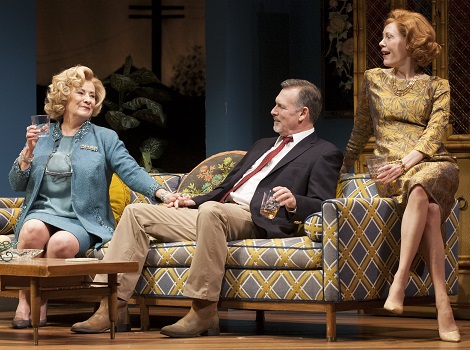
(L-R) Betty Buckley as Gertrude Hayhurst Sylvester Ratliff, Cotter Smith as Howard Ratliff and Veanne Cox as Julia Price in the Alley Theatre’s production of The Old Friends. Photo by John Everett.


The Old Friends

Written by: Horton Foote

Directed by: Michael Wilson

Company: Alley Theatre

Run Dates: August 20 – September 7, 2014


Is there anything more delicious than stories about Southern family dysfunction? Unlike it’s northeastern counterpart which whines and naval gazes with New York-esque neurosis, southern family feuds seethe and claw while cloaked in the humidity of comportment, raising the stakes even higher by the duality of purpose. Beloved American Dramatist and Texas native Horton Foote, surely knew this when he sat down to write The Old Friends in the mid 1960’s. The play, which lingered on the shelf and in re writes for several years until its first professional (and posthumous) production Off Broadway in 2013, is now on offer with largely the same cast and production at the Alley Theatre’s temporary location at the University of Houston. It’s an early effort by Foote to be sure although he apparently kept working on it up until his death. The writing is overly brash at times and the characters a tad too tactless to fully absorb, but none of that really matters in this wonderfully performed comedic and visually striking production that milks more enjoyment from its audience that the play probably deserves.

The plot is one of bruised egos and rivalries and loves not realized all set in a small town just outside Houston in the 1960’s. And just like every good feud, there is a conflict at the heart of it. Actually there are several. Matriarch Mamie Borden (a fantastically put upon Annalee Jefferies) lives miserably with her thoroughly unlikeable and selfish daughter Julia (Veanne Cox wonderfully oozing greed in all things) and her nasty, loveless husband Albert (Jeffrey Bean). While Julia barely gives her mother one thought now that she’s secured all of the inheritance, Albert seems to revel in expressing his inexplicable and over the top hatred for Mamie. When the play opens they are all waiting for daughter in law Sibyl (a perfectly taut Hallie Foote) to return from many years abroad with Mamie’s ill and unsuccessful son, Hugo. None of them of course realize that Sibyl comes with upsetting and life changing news. While they wait, the wealthy and permanently booze soaked family friend/enemy Gertrude (Betty Buckley giving an uproarious larger than life performance) pops by with her dead husband’s younger brother Howard (played with superlative subtlety by Cotter Smith) who now manages her farm and possibly other more intimate matters. At least that’s the way Gertrude would have it. She’s as determined to chase Howard’s love as she is her next drink, despite his assurance that whatever may be between them physically, he will never love her. His love, we come to know, is reserved for Sibyl who he was set on marrying before she let her own ego get in the way and instead set off with Hugo. Complicating matters in this ‘conflict abounds in every corner plot’, is the fact that Gertrude’s father cruelly bankrupted Sibyl’s father when he forcibly took possession of her family’s farm.

Director Michael Wilson nicely balances the soap opera nature of the story with unshowy staging. Downplaying the grandeur of the drunken brawls and cruel barbs, broken hearts and bad behavior. Wilson rarely has his characters speak directly to one another, instead keeping each one seemingly locked in their own little solipsistic world. It’s a nice touch that thankfully gets put aside the few times when kinder hearts prevail in the dialogue. Jeff Cowie’s gorgeous set design also plays opposite to the chaos. Whether it’s his peacocked-walled and mustard furnishing of Mamie’s house or the sumptuous billowing greys and pale blues of Gertrude’s mansion, Cowie brings beauty and calmness to an otherwise crackling stage.

But really it’s the performances that make this production such a kick. To say that this is a fantastically talented cast is an understatement, especially given the general lack of character development or meatiness in the script. Of particular note is Smith’s Howard who seems to speak with a disembodied voice that grows stronger and stronger as he figures out what kind of man he’s going to be. Howard is the least flamboyant of the bunch and is a character that could have easily been trounced by the hysterics, but Smith elevates him to centre stage by allowing his trepidation to linger and his confidence to grow organically. Julia on the other hand doesn’t seem to know what subtle is and in Cox’s expert hands we are thankful for it. Her Julia literally slithers around the stage in dance and flirtation provoking everyone in her path.  Employing a deep-throated drawl with killer comedic timing, Cox gives us a woman we can laugh with despite our hatred of her as a person. However, it’s Buckley in the pivotal role of Gertrude that steals the show most often. Drunk, spoiled, insecure, spiteful, besotted and prone to temper tantrums, Gertrude is a whirlwind that Buckley embodies fully and without apology. She staggers  and flirts and belittles and embarrasses herself constantly with misbehaviour but Buckley ensures that Gertrude never loses the command of a woman who by virtue of wealth is able to demand and get.  The only misstep in her performance is a late scene drunken and destructive tantrum that feels stiflingly planned and lacking in emotion. It’s perhaps here that Wilson’s unshowy direction could have eased up to let Buckley truly lose composure as she tears apart her surroundings.

Because after all, tearing apart is what The Old Friends is about in the end. In one of her more lucid moments, Gertrude declares, “Isn’t it wonderful! Nobody is mad at anybody else!” It may be true at the time, but we also know that peace in Foote’s script is a fleeting thing that will end as soon as the next drink is poured or past moment revisited. But as melodramatic as the script may be, in the end no one is really happy. Foote’s characters may be larger than life or lacking in dimension, but he has the good sense to let them spin and leave the audience to wonder. Wonder may also be the appropriate word to describe our feelings on whether this script or these characters will stick with us much past leaving the theatre. Probably not. But thanks to such a terrific production and a cast with talent for days, we happily enjoy the time we’ve given them.


RATING

For Foote fans – Certainly from a canon point of view it’s incredibly interesting to see an early piece that was tinkered with almost up until the writer’s death. No, it isn’t as developed as his other works and it does veer towards serial storytelling, but there’s still that Foote magic in the way small town life bleeds into our behaviour and interactions. SEE IT

For Foote newbies – Are there Foote newbies in Texas? Kidding of course. This is a light comedic intro to Foote’s way of seeing things. An amuse bouche if you will for his more poignant and subtle inquiries. But you’ll laugh with at this terrific cast and enjoying your first Foote play is a gateway drug to see more, which is a good thing. SEE IT

For the occasional theatre goer – This is a value for the money type play. Undemanding yet full in its production values and wonderful talent, you’ll feel like you spend a solidly entertaining night at the theatre. SEE IT

For theatre junkies – Yes some of the writing will irk you. Why is Albert so angry at his mother in law and why did Foote have to take Gertrude so far over the top in places? But just calm down and focus on what these performers are achieving on stage. Then revel in a gorgeous set and direction that helps underplay the scripts failings. Manage that and you’ll be swept up just like the rest of the audience. SEE IT


Full Gallop – Review

Stages_FullGallop

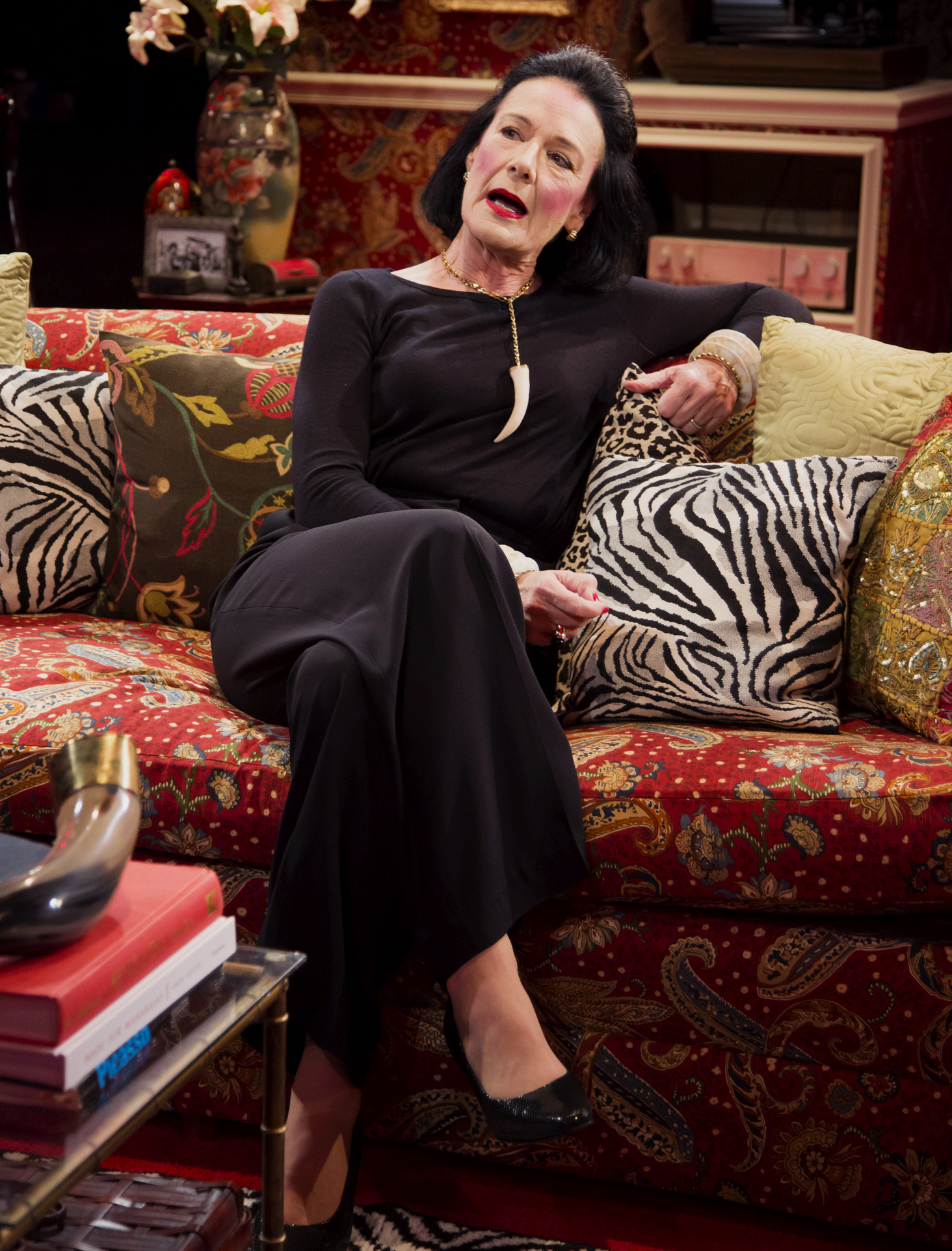
Sally Edmundson as Diana Vreeland. Photo Credit: Bruce Bennett.


Full Gallop

Written by: Mark Hampton and Mary Louise Wilson

Directed by: Kenn McLaughlin

Company: Stages Repertory Theatre

Run Dates: August 6 – September 14, 2014


“Vulgarity is marvellous! We all need a splash of bad taste. No taste is what I’m against”. So says the recently deposed Vogue Editor in Chief, Diana Vreeland about halfway through Mark Hampton and Mary Louise Wilson’s 1995 one woman show, Full Gallop, about Vreeland’s post magazine career move. It’s a marvellously brassy line, one of many, in this somewhat rambling two-act play that lives or dies on the force of the Vreeland performance. Thankfully, Stages Theatre under the direction of Kenn McLaughlin, has made sure the fashion icon’s shoes are filled to the brim. Reprising the role (which she played on the same stage in 1999), Sally Edmundson chews the set with her portrayal of the ballsy dame of high fashion and delivers a performance that more often than not compensates for a script that has a tendency to veer into dullness.

We meet Vreeland in 1971 in her ornately decorated, red-hued New York apartment wonderfully created on set by Jodi Bobvrosky. She has just returned from several months abroad in Europe to lick her wounds after unceremoniously and with no explanation being dumped from Vogue. Such is life in the fashion business Vreeland tells us. One day you are in, the next you are out. But out doesn’t mean down. At least not yet. Clad in her signature black clothing with war paint rouge, Vreeland is planning a dinner party where she is hoping that a notoriously oily backer will come to her rescue and somehow reinstall her position in the fashion industry. Or at least her assistant Yvonne is planning it. Vreeland barks orders at the put upon French woman (voiced by Maria Edmundson) via an intercom in her living room with great bluster despite the ever crumbling circumstances of the evening. Vreeland’s cook fails to show up, the food she ordered won’t arrive, even if it does she can’t pay for it and worst of all, the rich oily gentleman will not be joining them. But then the dinner party really isn’t the point of the play. Hampton and Wilson use the evening instead to unleash Vreeland on the audience, allowing her to pontificate directly to us as though we were a confidant. Or at least an arm’s length one.

The script works best when Vreeland treats us to the juicy inner workings of the fashion world. The time that cosmetic magnate Helena Rubenstein and Coco Chanel had a tete a tete in her apartment. The method by which Vogue Editors get canned. The frustration of shopping at Bloomingdales. In the one genuine emotional moment, Vreeland describes the death by cancer of her beloved husband and this too draws us in. But amidst all the bon mots and gossip is endless name dropping, self-aggrandizing  and pedantry about other minor people and places that may very well be faithful to the true nature of the woman, but it doesn’t make it all that interesting to listen to despite Edmondson’s formidable performance. Also not helping matters (at least on opening eve) was the straining we needed to do to hear the full breadth of the monologue. Working in a theater in the round configuration, Edmundson’s voice at times seemed to be swallowed up by all the signature red brocade in her apartment often giving a muffled tone to her words.

By the close of the play, Vreeland’s dinner party is a bust, but not her career thanks to a new opportunity taken that those in the fashion know will nod their heads approvingly at.  And despite our minds wandering and our eyes glazing at times, we can’t help but be captivated by this larger than life character brought vividly to life by such a talented performer. “It’s not the clothes, it’s the people who wear them”, says Vreeland. In the case of Full Gallop, it’ not the script, it’s the actress who delivers it.


RATING

For fashionistas – Although you will wish for more inner workings of the fashion industry as told by Vreeland, there is lots of good gossip and talk of designers and clothing and style and taste to keep you happy. SEE IT

For the style averse – Make no mistake, this is an insider play where if you don’t know your Bunny Mellon from your Balenciaga you will be left if the dust. Still, Edmundson plays Vreeland with such unironic bombast that it’s hard not to be amused even if you’re not exactly sure what she’s talking about half the time. MAYBE SEE IT

For the occasional theatre goer – Solo performances are often hard to love due to their talkiness and general lack of action in the plot. And Vreeland certainly talks up a storm in this show. But it’s wonderfully funny in spots and terrifically performed despite meandering at times. MAYBE SEE IT

For theater junkies – This is one of those bio-plays you will refer to as a confection. Fun to look at and certainly entertaining for the most part, but lacking any real substance or character examination. No one will walk out of Full Gallop truly understanding what made Vreeland tick. And yes, the script needs a good edit. But Edmundson is a delight to watch and her talent mostly trumps the failings of the play. MAYBE SEE IT


Pollywog – Review

Polly

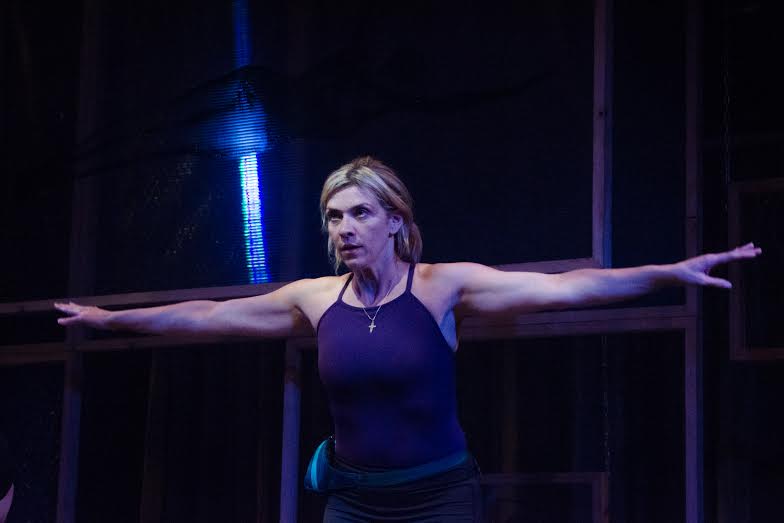
Courtney Lomelo as Polly. Photo Credit – Gentle Bear Photography.


Pollywog

Written by: Keian McKee

Directed by: Matt Huff

Choreographed by: Jennifer Wood

Original Music: Andy McWilliams

Company: Mildred’s Umbrella Theatre Company

Run Dates: July 31 – August 16, 2004


It’s a blissfully exciting feeling when you first hold your breath and open your eyes underwater. A world opens up where what you see and how you feel is completely different from your normal waterless existence. But stay down there too long and your eyes start to sting, your lungs ache and all your instincts scream for foot on dry land. It’s a similar experience watching Keian McKee’s ambitious, at times wonderfully creative but ultimately water-logged new play about one woman’s journey to deposit her dead mother’s ashes and say goodbye. Upon first blush, the play’s delights are many but spend some time and those delights get betrayed.

Pollywog, getting its premiere at Mildred’s Umbrella Theatre Company under the direction of Matt Huff, introduces us to Polly (Courtney Lomelo), an adult woman struggling to move past her beloved stroke-victim mother’s recent death. Taking a cue from the hours and hours her mother spent teaching her (with drill sergeant obsession) to swim, Polly embarks on her first open water swim, carrying her mother’s ashes along the way. It’s a dangerous endeavour, one that most swimmers wouldn’t attempt alone and one that most likely would have made for a rather dull solo performance. Instead, McKee sends ghosts from the past to occupy Polly (and the audience) as she attempts to make it across. In a series of flashbacks, we meet Polly’s mom, Jule (Celeste Roberts) in her pre and post stroke state and Mort (James Belcher), Polly’s father and get a glimpse into the relationship dynamic the three shared. Also along for the journey as allegorical guides and touchstones are famed swimmer/movie stars Esther Williams (Autumn Clack) and Johnny Weissmuller (Jason Duga), heroes of Jule’s and Polly’s.

It’s an interesting construct setting the play inside of Polly’s head either in real-time or as she mines her past. But despite Huff’s incredibly nimble time warping direction, Jennifer Wood’s wonderfully athletic choreography that mimics all manners of swimming with great gusto, moody and effective lighting courtesy of Greg Starbird and strong performances from everyone in the cast, McKee’s script fails to resonate. Part of the issue lies with the language. Much of the script plays like spoken work poetry rather than actual dialogue. Verbs are tossed out. Nouns too. Not always together. It’s an effect meant to simulate memory and flashes of insight, but more often than not, it feels laboured and affected.

Far more problematic is McKee’s lack of interest in the inner lives of her characters. We see Jule as little more than a woman hell-bent on teaching her daughter to swim. Yes, we know Polly loves her, but we’re left to question why when there seems to be so little warmth or breadth to the relationship. We are spoon fed Polly’s grief yet we know nothing about her outside of the pool. Mort’s depiction is even more knotty. Shown as a man far more interested in getting it on with his wife than forming a relationship with his daughter, he is at best dismissive and worst, cruel to Polly. And ultimately both to Jule when her body betrays her. The ‘bad guy’ character satisfies the need for tension to be sure, but it’s a hollow and distancing effect due to lack of context. At no point is the curtain pulled back to show Mort’s motivations or Jule’s for being with him or the emotional core of the mother daughter connection.  We certainly feel for young Polly when her father forces her to eat the tadpoles she caught as some kind of power play punishment. Watching Polly try to impress her mother by mastering a new stroke has its uplift as well. But empathy or engagement beyond a moment by moment level is almost impossible when we aren’t given anything substantive to hold onto. A grief-stricken woman swimming with her mother’s ashes is just an idea unless you’re made to care.

But while the emotional demands of the script weren’t justified, the production still manages to shine thanks in large part to the visual splendour that the Esther and Johnny characters bring to the stage. Whether it’s assisting Polly in her strokes (holding arms and legs to create effect or spinning her on a stool to simulate direction change) or creating ballet-like pairs water moves while spouting swimming theory, Clack and Duga execute Wood’s demanding choreography with an ease that belies the physical intensity involved. It was these scenes that elicited smiles and approving gasps from the audience and ultimately brought a kind of creative magic to the production.

As exciting as it is to see a play in its premiere production, especially a risk-taking show like Pollywog, it’s rare that first incarnations of these kinds are problem-free. McKee has a compelling idea with her show and a production team that can obviously do wonders with it on stage. My hope is that with another examination of emotional engagement and some script tweaking, Pollywog can wriggle back onto the stage at some point and provide the experience that was lacking this time round.


RATING

For the occasional theater goer – This certainly isn’t conventional story-telling but with such broad strokes (no pun intended) the play isn’t all that demanding either. Most probably you will greatly enjoy the physical acrobatics of Esther, Johnny and Polly but that may not make up for the lack of heart-pulling attachment to the characters or their situations. MAYBE SEE IT

For the theatre junkie – There is no harm in seeing a new play to pull from it what works. And there is a lot on the production side that does. A uniformly strong cast, great choreography, visually complex direction and the seed of an idea that certainly intrigues. But in the end, there’s only so much that can be done with a script that just isn’t there yet. Taking the plunge on Pollywog at this stage mean being ok with its deficits. MAYBE SEE IT