The Mountaintop – Review

Mountaintop

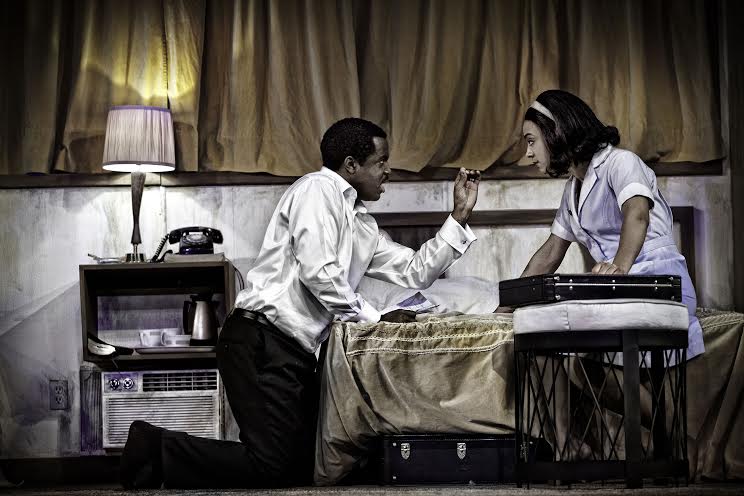
KEVIN HANCHARD (Martin Luther King, Jr.) and BERYL BAIN (Camae) in The Mountaintop. Photo by Trudie Lee.


The Mountaintop

March 25 – April 20, 2014

Max Bell Theatre

http://www.theatrecalgary.com/plays/the_mountaintop/more_info/

Listen to my review on CBC’s Calgary Eyeopener at 

http://www.cbc.ca/eyeopener/columnists/theatre/2014/03/31/jessica-goldman-on-the-mountaintop/


RATING

I’m far too conflicted about this one to break it down into neat categories. So instead let’s look at the positives and negatives of this show:

On the plus side – Killer performances are the major draw for this production. Both actors tear up the stage and are thrilling to watch despite the script betraying them in the end. The  first 50 minutes or so in this fictional account of Dr King’s last night on earth is an entertaining (if a bit thin) piece of theatre deftly directed by Jan Alexandra Smith that while not revelatory, has several satisfying themes and arcs to keep our attention.

Where it falls apart – After the BIG plot twist is revealed, things go downhill quickly. Once the surprise wears off, the play begins to drag seemingly not knowing how to wind down. Then when it does end, it is such a mess and so out of step with the rest of the show that it almost makes us forget what we liked about the play to begin with. Here we have writing that lacks confidence and direction that is both overly dramatic and shallow.

SEE IT or SKIP IT? – The good is great, the bad is awful. Enjoyment of this show depends on how full you view your half glass.


Closer – Review

closer

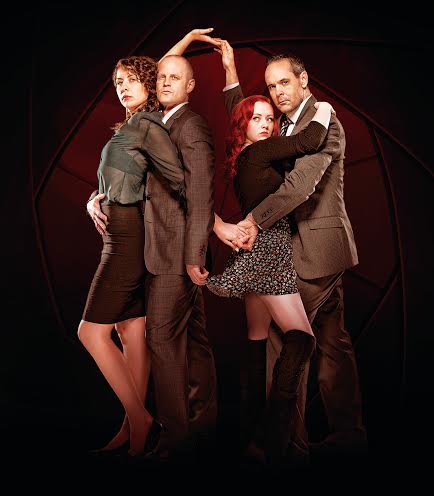
(l to R) Alana Hawley, Ryan Luhning, Allison Lynch and Curt McKinstry. PHOTO CREDIT: Trudie Lee


Closer

March 21 – April 5, 2014

Studio at Vertigo Theatre

http://www.groundzerotheatre.ca/


On the benefits of honesty, Mark Twain famously said that if you speak the truth, you don’t have to remember anything. But had Twain been able to see Patrick Marber’s play, Closer, he may have revised his thinking to add that telling the truth can also come back to bite you. And shock you in the process. Marber’s 1997 play which won the English playwright London’s most prestigious awards including the Critics’ Circle, the Evening Standard, and the Olivier, is marketed as the expletive-ridden, ribald story of four intertwined characters and their sexual indiscretions. But while the play is rife with words you still can’t say in polite company, it isn’t the language or even the promiscuity that makes Closer a scandalous type of story-telling. Rather, it’s the frankness with which the characters discuss their bad behaviour and true adulterous desires that makes the script worth noting. Add to this Kevin McKendrick’s brand of elegantly economic direction and you have a production worth noting. At least parts of it.

Dan (Curt McKinstry) is a wannabe novelist who works as an obituary writer at a local paper. He meets a beautiful young stripper, Alice (Allison Lynch) when she is hit by a car and he takes her to the hospital to bandage her leg. That act of kindness (and a crustless sandwich) is all Alice needs to fall head over heels in love with Dan. Initially Dan returns her affection. He leaves his girlfriend and is so enchanted with Alice that she inspires him to write a novel based on her life. But eventually it becomes clear that while he fancies Alice, love is not something he feels for her.  Love comes to Dan when he meets Anna (Alana Hawley), a photographer hired to take his head shot for the jacket of his novel. Instantly attracted to Anna’s maturity and confidence, Dan hits on her unsuccessfully but lays the seeds for a fire that will grow between them. However, inadvertently through an extremely funny and wonderfully staged cybersex prank, Dan introduces Anna to Larry (Ryan Luhning) a dermatologist who also becomes besotted with Anna and the two marry. Despite the marriage, Dan can’t let go of Anna, Anna is still bewitched by Dan and Alice and Larry are the poor saps who watch the destruction of their relationships and take their own brand of sexual and emotional revenge.

In Marber’s script, very little of this wanting and having another goes unspoken. It’s as if the characters have some kind of mental disorder that renders them unable to lie or even soften the blow. So an exchange between characters typically goes like this:


Larry: I slept with someone in New York. A whore. I’m sorry. Please don’t leave me.

Anna: Why?

Larry: For sex. I wanted sex. I used a condom.

Anna: Was it good?

Larry: Yes.


But while Marber’s characters demand and give honesty freely, it seems that not a one of them can take it with neutrality or be truthful about what they really want to know or hear. Watching each one of them blurt out these pivotal/hurtful truths and in turn be hurt themselves, is certainly interesting and even shocking for a time. However with two acts spanning three years of this kind of behaviour, the play becomes less zesty in a moment-by –moment way and begins to feel like a wash-rinse-repeat type of storytelling.

Still, supported by Cimmeron Meyer’s minimalist, stark white set design with mercifully restrained use of video projection, the play certainly has its outstanding moments. The aforementioned online sex prank is pretty much worth a ticket as are a number of exchanges between characters including Larry and Anna’s divorce signing and Anna and Alice’s discussion of male behaviour. “The dog loves the owner and the owner loves the dog for doing so,” says Larry bitterly to Anna.  “We arrive with our baggage and they are fine with it for a while. They are baggage handlers,” says Anna to Alice. These may be truths blurted out, but at least here Marber is trying to comment on something more substantive than who wants to jump into bed with whom, next.

Also of issue with the production is the uneven casting/character development. Alice and Larry are the fuller-drawn characters and both Lynch and Luhning give fantastic all-in performances as the cuckolded partners capable of inflicting damage of their own. Without a doubt, it’s the scenes featuring only these two where the real heat and discomfort of the plot gets turned up. Conversely, Dan, the man both women are supposed to be gaga over is written as a whiny wet blanket without one ounce of sexual appeal. Faced with a problematic character, McKinstry does little to bring much-needed charisma to Dan which results in a forgettable performance. Coupled with Costume Designer Rebecca Toon’s decision to dress him in old man brown corduroy-looking pant and jacket, I can’t imagine anyone in the audience could understand his appeal to the ladies. Similarly under-drawn is Anna with her lacklustre personality and zero sexual energy. Here Hawley seems unsure how to play her. Uptight and cool one minute, looser and almost girly by the end. Toon again seems to have missed the chance to make us see why Anna is so universally desired. Clad in mumsy clothes (nude stockings with granny wedges) and her hair in an old-fashioned bun, Hawley’s Anna is about as appealing as a dry piece of toast.

In the end, Closer, is more than just shock theatre about people behaving badly. It’s about how even in the purest truths we tell; there are still elements of deceptions when it comes to romantic love. To others or to ourselves. To riff on Oscar Wilde’s belief that “the truth is never pure and rarely simple”, this production of Closer is never perfect but occasionally excellent.


RATING

For sensitive ears/tastes – Don’t….just don’t. There isn’t enough of an important take away here for you to spend 2 hours offended by language and plot. SKIP IT

For occasional theatre-goers – The jumping around from one year to the next and pivotal point scenes filling in for comprehensive storyline might feel too skittish to you. Add to that four totally unsympathetic characters behaving deplorably and there isn’t much for you to hang your hat on here.  However the scandalous nature of the story is certainly not boring and that might be a change you welcome. MAYBE SEE IT

For theatre junkies – McKendrick’s direction is as always a joy to watch even if half of his cast feels lost or miscast. While this type of staccato, shock-type narrative might not be new to you, it’s intriguing to note that a 17-year-old play still has the power to shake us awake in moments. Also of note is the decision to set the play not in London, but in Vancouver, ridding the cast from having the attempt accents of any kind. It’s a smart move in a production that had enough smart moves to warrant some attention. MAYBE SEE IT


Travel’s With My Aunt – Review

Travels

Christopher Hunt (top) and Stephen Hair (bottom). Photo by Ben Laird.

Travels With My Aunt

March 8 – April 6, 2014

Vertigo Theatre

http://www.vertigotheatre.com/main/index.php?site=mystery&id=production&production=222

It’s not quite accurate to say that I didn’t know Simon Mallet had it in him. A director whose work I’ve come to admire, Mallet usually plies his trade in the small confines of the Motel space at EPCOR Centre. In the past I’ve used words such a deft and taut to describe his ability to make thoughtfully  intimate stories visually arresting without much room to move them  about. So it was somewhat of a surprise to learn that Mallet was to direct Travels With My Aunt, a globe-hopping comedic caper based on Graham Greene’s novel and adapted for the stage by Giles Havergal. But I suppose, considering Mallet’s staging strengths, it should be no surprise that this show is gorgeous top to bottom, even if the story itself is a little lacklustre.

The play, set in 1969, tells the story of Henry Pulling, a 55-year old retired straight-laced bank clerk who seems to have no interests or passions outside of tending to his dahlias. Yes, there’s an equally boring woman who seems to want to marry him, but Henry is ambivalent to the whole thing much as he is towards life in general. It isn’t until his Mother’s funeral all this changes thanks to meeting his flamboyantly unconventional Aunt Augusta who promptly informs him that his mother wasn’t actually his mother after all. It seems that Henry’s father was a notorious playboy who saddled Henry’s now deceased step mother with him before taking off some years later and mysteriously dying. Tempting Henry with the mystery of his real mother and drawing him in to what increasingly seems like her involvement in a litany of illegal for-profit activities with a bunch of colourful characters, Aunt Augusta whisks Henry around the world from one adventure to another with the police never far behind. You can easily guess the rest – Henry is transformed, his mother is revealed, any tragedy is swept aside in the zaniness and it all works out in the end.  It’s too long, overly obvious and just not all that interesting despite the twists and turns and occasional laughs the play throws at us. But this one of those rare productions where the story itself can take a back seat thanks to Mallet, his design team and a foursome of talented performers.

The biggest ace up the sleeve in Travels With My Aunt is Havergal’s call for rotation and interchange of actors and roles. Each actor in the show (the dream team of Stephen Hair, Braden Griffiths, Christopher Hunt and Michael Tan all dressed alike in suits and hats) take turns at playing Henry, sometimes simultaneously. Additionally the actors are given many other characters to play with each one taking ownership of a key role. Hair delightfully conjures his best Auntie Mame in Aunt Augusta, Tan plays Augusta’s much younger valet/boyfriend Wordsworth, Griffiths plays O’Toole the undercover CIA agent and Hunt plays Mr. Visconti, the con-artist love of Augusta’s life.

All this back and forth and changing characters, often in mid-sentence could have been a jumbled mess, but Mallet flows the men through the shape shifting comedic narrative with elegant dancerly-like staging. For their part, the actors helped the transitions with their effortless slips in and out of characters. However it should be noted that while the men on stage were able to bring many great personalities to life, their prowess at some of the accents left much to be desired. Freetown-born Wordsworth often sounds Jamaican, Turkish police come off as Slavic and if that’s what an Italian accent sounds like, I’ll eat my shirt.

But again and surprisingly, all this is generally forgiven, especially when the lapses in accent are offset by our besotted obsession with Anton De Groot’s set design. Consisting of a two level structure made of suitcases, hidden compartments and peep holes, DeGroot’s set is as useful to the narrative as it is arresting to look at. Throw in the clever use of bell hop carts as cars (with a Flintstones driving technique that I admit made me laugh every time) and even when the story lagged, we were kept alert waiting to see what the set could do next.

Production over substance has rarely rung my bell. Take all the glitter away, I still want my theatre to grab me one way or another. But while Travels With My Aunt may not amuse enough to sufficiently tickle or intrigue enough to sit up and pay attention, it’s one of those production where maybe it doesn’t need to in order for it to be enjoyable.

RATING

For Mystery Lovers – Since Vertigo is a mystery theatre, some will come to this production expecting a Who Done It. But this play is more a comedy with a caper thrown in. Relax though, it’s still a fun ride and there’s enough of a reveal in the play satisfy you.  SEE IT

For occasional theatre goers – At intermission I heard several folks talking about being confused at times with all the character changes. Still no one seemed to dislike the play. Consider this one where you might need to pay more attention than you are used to in order to have the good fun. MAYBE SEE IT

For the theatre junkie – This is not a show that NEEDS to be part of your canon. But if you can forgive the story and the accent issues you will luxuriate in some terrific direction, gorgeous set design and the efforts of four talented actors. MAYBE SEE IT

Tomorrow’s Child

Ghost River

l to r – Tomorrow’s Child Co-Adaptors / Co-CreatorMatthew Waddell and Eric Rose. Seated: Evan Medd (Assistant Director). Photo by David van Belle.


Tomorrow’s Child

March 17 -22, 2014

2007 10 Ave SW

http://www.ghostrivertheatre.com/


“Is not life a hundred times too short for us to bore ourselves?” It was this quote from Nietzsche that came to mind upon receiving the news that innovative Calgary theatre company Ghost River Theatre was embarking on what they call their SIX SENSES SERIES, a series of six plays, each one based on a single sense with sound being the focus of the first production. This is not to suggest that traditional theatre is boring. I still easily get goose bumps seeing a fantastically produced/performed conventional piece of work. It’s just that too much of the same, even good customary theatre, can become routine after a while. Therefore companies trying to push boundaries and offer theatre-goers new experiences are always of interest to me. With Tomorrow’s Child, Ghost River’s audio-only play, not only has this company given us something different, they’ve delivered a stimulating performance that engages the audience deeply and rewards them with an intriguing immersive experience combined with compelling storytelling.

Adapted from celebrated science fiction author Ray Bradbury’s 1948 short story Tomorrow’s Child, the play, conceived and co-created by Eric Rose and Matthew Waddell and directed by Eric Rose, tells the story of a couple whose child is born into another dimension. Through mechanical malfunction of a futuristic birthing machine (ironically set in 1986) Polly (voiced by Anna Cummer) and Peter’s (Tyrell Crews) baby boy Pi is born looking in this dimension like a blue pyramid with tentacles. Dr. Wolcott (David Van Belle), the attending physician explains that in Pi’s dimension he is a normal baby but technology hasn’t advanced enough yet to crack the dimensions and bring Pi the human-looking baby back to Polly and Peter. The couple has no choice but to go home and look after their pyramid-infant while the doctors/scientists try to come up with a solution.

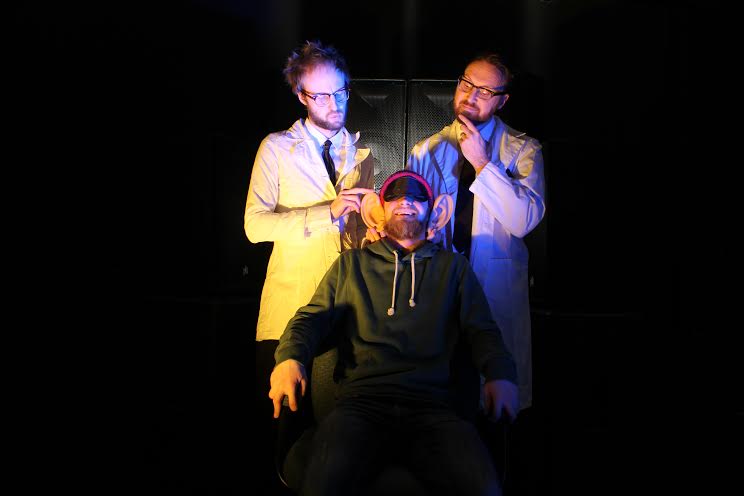
But it’s the telling of the story here that is the real point of the production. Reimagined as a purely sonic experience, audience members are blindfolded and taken individually into the theatre space and placed in swivel chairs by performers in white lab coats. It’s in total blackness upon entering that we are bombarded with the 360 effect of happy playground noises. It’s a familiar and delightful sound no doubt designed to soothe what can be at first an anxiety inducing experience. Once everyone is seated, the playground titters fade away and the sci-fi story begins.

Using 10 speakers and 3 subwoofers that boom, echo, whisper come at you from different spaces in the dark and often feature concurrent dialogue or sound effects, Sound Designer Waddell brings to life the feel of Tomorrow’s Child. This production may only operate on one sense, but to us it feels distinctly multisensory. No, we can’t see the action being describe to us, but Waddell’s effects are so comprehensive and complex that we can’t help but see, feel and become committed to the tale. At times the soundscape feels like dreaming (when sound is the only offering) at times it’s like having and e-book read to you in the dark (dialogue portions of the play) and at times it felt markedly like an art installation a la Janet Cardiff’s celebrated piece The Forty Part Motet.

Of particular note were Waddell’s plot advancing montages that featured a cacophony of ideas all at once. A scene where Peter and Polly decide on Pi’s name is beautifully illustrated by a litany of boy’s names ringing out around the space in whirlwind-like fashion. Fast forwarding the everyday realities and hardships of taking care of Pi is sounded out through overlapping sounds including, “Is he down? Here comes the choo choo…mmmm! I can’t do this all by myself!”, that any new parent can relate to. Equally smart was the imagining of what Pi’s voice would sound like to his otherly dimensional parents. Part squeaky toy filled with sand with just the inkling of baby coos, Pi sounds human enough that we are made to care about him and his parents plight.

Less successful are the moments Rose and Waddell become too enamoured with their own soundscape, lingering on effects for too long and perhaps overestimating the audience’s ability to listen to machine malfunction or alarmist tone-setting effects. Here Waddell’s sound was reminiscent of the drug addled days when Led Zeppelin would take the stage and do nothing but wail vocally and instrumentally for an hour before taking off. But thankfully these moments are few.

In the final moments of the production where the surreal solution to the dilemma in Tomorrow’s Child is revealed and the audience is invited to take off their masks, we are gently brought out of our mind’s eye to finally see the space we’ve inhabited. With full senses back and a feeling of having experienced something remarkable, we leave the theatre just a little more tuned into our imagination and aware of what listening can bring us. And isn’t that what all theatre ought to aim for?


RATING

For Ray Bradbury Fans – You’ll be happy to know that Mr. Bradbury’s estate blessed this production and I do believe that the great author himself would be intrigued by the treatment of his work. What the soundscape experience affords is the ability for a theatre company to stage a sci-fi production without worrying how to create grand visual effects worthy of the narrative. Plus, those of you who have enjoyed visualizing the world’s Bradbury created will be able to hold onto your vision of Polly, Peter and Pi. SEE IT

For the sci-fi averse – If the story/genre turns you off so much that you aren’t even curious about the soundscape experience than this one isn’t for you. But if you are willing to take in a story that might not be your first choice in order to experience an intriguing production, than go for it. MAYBE SEE IT

For the occasional theatre goer – This is a big leap from watching Jersey Boys or Shirley Valentine. And if it’s these easily digestible, lightly entertaining show’s you’re after, then better to give this one a pass. SKIP IT

For theatre junkies – The ability to challenge how you experience a play is always intriguing and this show rewards on many levels. Yes it might have been nice if the story told was original as opposed to a well-known Bradbury short story. Not already knowing the plot might have enhanced the experience. But give this company credit for moving the conversation forward, if not completely, more than enough to be paid attention to. SEE IT

Legend Has It – Review

Legend Has It-

L to R Renee Amber, Jamie Northan, -Audience Hero- Mark Meer. Photo Brian Harder.

Legend Has It

March 6 – April 5, 2014

Martha Cohen Theatre

http://www.atplive.com/2013-2014-Season/Legend/index.html

Listen to my review from CBC’s Calgary Eyeopener at 

http://www.cbc.ca/eyeopener/columnists/theatre/2014/03/17/legend-has-it-review/

RATING

For Fantasy Story Lovers – All the elements you love in these kind of adventure stories are present. Mythical land? Check. Evil Lord? Check. Adorable innocent good guys? Check. Now just add in a large dollop of humour, great costumes and an experience that’s  different every night and your fabulous geek meters will blow off the scales. SEE IT

For Fantasy Story Haters – You don’t need to love Lord of the Rings et al to enjoy this show. The fantasy world simply kicks natural laws to the curb making it possible for the improvisers to explore all sorts of scenarios. Besides, you’ll be laughing too hard to remember that Evil Lords, Trolls and Elf-like creatures are eye-roll worthy. SEE IT

For occasional theatre goers – There was a distinctly younger crowd at this show. Lots of teens either with their parents or in packs and they were having the time of their lives. I sat in front of a group of 13-year-old girls who literally SQUEALED with laughter the entire show. Not that Legend Has It is only for teens. This is a smart, innocent fun, totally unique night in the theatre that can be enjoyed by anyone open to something different. SEE IT

For theatre junkies – Yes Northan and her cast are incredibly talented comedic  improvisers, but more importantly this is a show that gleefully pushes boundaries of what theatre can be. Do we want all our theatre to be like this? No. But how refreshing and exciting  to see something unique. When the show tours to great success (which I have no doubt it will) you can say you saw it here first. SEE IT

Games – Review

Games

L  to R Geoff Pounsett, Richard Lee Hsi, Daniel Maslany. Photo Brian Harder.

Games – Who Wants To Play?

March 7 – April 5, 2014

Martha Cohen Theatre

http://www.atplive.com/2013-2014-Season/Games/index.html

Everyone is playing some kind of game in Linda Griffiths new zeitgeisty play, Games – Who Wants to Play? Mom Marion (Kate Newby) is playing the cool parent, when really she wants her son Zach (Daniel Maslany) to go back to being the sweet little boy she once knew. Dad Dan (Geoffrey Pounsett) plays the disciplinarian when in fact he wants the underage Zach to drink while watching hockey with him. Zach’s friend Micky (Richard Lee Hsi) flexes his muscles as a confident kid but really he’s ashamed of his immigrant family and is looking for surrogate parents to befriend. But it’s Zack’s kind of play as a basement-dwelling, video game obsessed teenager that Griffiths is the most interested in as she explores the impact and possible dangers of gamer culture on a family.

Sharply directed by Amiel Gladstone, Games, opens with the news that one of Zach’s gamer friends, Michael Ferguson, has been found dead. In a manner that could have easily come from one of the violent virtual reality games that Zach enjoys, Michael has fallen into a gorge and been eaten by wild animals. According to Marion, this was all set into motion when Michael’s parents forbade him to game any longer. Zach will later reveal that he believes differently, but regardless of what really happened to propel Michael into the gorge, one thing is certain,- Zach’s parents are at once concerned about the amount of time Zach is spending gaming yet afraid to do anything about it. That is until Marion lets slip to Dan that Zach is failing all his classes. The resulting ban on video games launches Zach’s behaviour in several different directions that at once confirm his parent’s fears of the negative impact of gaming yet also shows that the only evil in gaming is people’s fear of it.

By giving us this ambiguous ending to the play, Griffiths smartly leaves the audience asking questions without succumbing to the preachy tropes so often found in issue plays. In fact the takeaway from Games is not so much what happens in the end, but rather what takes place along the way. Here Griffiths, supported visually by Gladstone’s simple yet effective staging, gives us scene after scene of dilemmas to work through.

The wonderful gaming moments with Zach and Micky (played with genuine teenage posturing and insecurity by Maslany and Hsi) have us asking if brutal video game violence is harming the boys or is it simply the new tribalism by which young men bond and establish themselves. Conversely, when faced with Zach’s parents’ less than stellar behaviour which includes Zach’s mom flirting with Micky and Dan blaming his son for his own sexual inadequacies, we wonder if the games the adults play aren’t far more harmful that anything a video screen can cause.

But it’s the inclusion of Keira,(a wonderful Katey Hoffman) the virtual online sex doll that Zach is in love with that provides the most interesting dilemma. “Would you like to talk dirty? Play in the hot tub? Would you like to play the banana?” These are the questions Keira asks to everyone who accesses her program online. But rather than sex, Zach reaches out to Keira for love, writing her poems and sending her flowers and Keira responds by calling Zach her “only boyfriend.” As we watch the two interact we can’t help but marvel at the innocence of Zach’s intentions and loveliness of his affections. Surely we tell ourselves, this is a good kid. But never far from our minds is the creepiness of the situation and Zach’s obvious inability to socialize with any woman not of the virtual world. Eventually his ‘relationship’ to Keira is discovered by his father who is convinced his son is engaging in online porn and attempts to put a stop to it via a piece of spyware. But even this seemingly sensible piece of parenting is undermined by more game playing from Dan who shows himself to be far creepier than his son ever was.

Accompanying the questions raised and revelations offered in Gladstone’s visually taut production are Scott Reid’s Tetris-like building block set and Corwin Ferguson’s smartly chosen video game projections that pixilate whenever Zach and Micky are playing so as not to compete with the actors onstage. Here is an example of where multi-media makes sense in a production and Games is a show that never goes overboard with its video wall gimmicks. Humanity both in the story and on the stage is the real star.

RATING

For gamers – Your love of gaming is going to take a bit of a hit in this show as does the gamer personality.  But pay attention and you’ll see that Griffiths isn’t simply writing your passion off as unhealthy or dangerous.  Instead she’ s asking  questions about obsession and what it means to grow up well-adjusted in a world where gaming is the norm. SEE IT

For non-gamers – You don’t need to be up on the latest games or game technology to find your way into this story. Young men have always found something to be obsessed about whether it was cars or music etc. and parents have always been worried about whether their son’s passions were ‘healthy’.  The larger questions of what is normal and what is harmful are handled without cliché and that makes Games relatable to everyone. SEE IT

For the occasional theatre goer – There are no answers or neat ending in this production and that might make you uneasy. Right and wrong don’t really factor as certainties in Games and these shades of grey may not be to your taste. MAYBE SEE IT

For the theatre junkie – Exhale – this is not your usual issue play where preachy dialogue and obvious characters rule the narrative. Griffith has created a subtle condemnation of all everyone involved and in doing so leaves us with much to ponder. Maslany and Hsi as the two teens knock it out of the park with genuine performances genuine that are spot on. SEE IT

You Will Remember Me

You will remember me-Duval Lang, Maureen Thomas photo by Brian Harder

L to R Duval Lang and Maureen Thomas. Photo Brian Harder.

You Will Remember Me

March 13 – April 6, 2014

Martha Cohen Theatre

http://www.atplive.com/2013-2014-Season/Remember/index.html

 Listen to my review of You Will Remember Me from CBC’s Calgary Eyeopener at http://www.cbc.ca/eyeopener/episode/2014/03/14/jessica-goldman-reviews-you-will-remember-me/

RATING

For those attracted/repelled by the dementia storyline – One of the most interesting things about this play is that neither the writing or direction veers off  into heartstring pulling manipulation when dealing with the main character’s dementia. In fact, it’s quite matter of fact about the whole disease using Edward’s memory loss to metaphorically comment on modern society’s dismissal with the past and obsession with the now. For those that want an intimate Alzheimer story, there is plenty in the play to connect with emotionally and for those that bristle against stories about dementia for whatever reason, there is a palpable smartness and sense of humour to the story that saves it from being one note. SEE IT

For the occasional theatre goer – You won’t like all the characters and may be shocked by some of their decisions, but this is a story that is beautifully told with many smart, funny, bittersweet, touching moments. SEE IT

For the theatre junkie – Yes some of the character motivation is weak in Archimbault’s narrative, the cast is uneven and the first 30 minutes or so feels like slippery writing and direction, but all this is easily overlooked by what this play ultimately has to offer – An unsentimental, emotionally complex and metaphorical look at a man losing his memory. And what a man he is thanks to the talent of Duval Lang. If you’re already a fan of his work, you will not be disappointed. If this is your first time seeing Lang act, welcome to the fan club. By far the best thing you’ve seen come out of playRites in some time. SEE IT

Late, A Cowboy Song – Review

OLYMPUS DIGITAL CAMERA

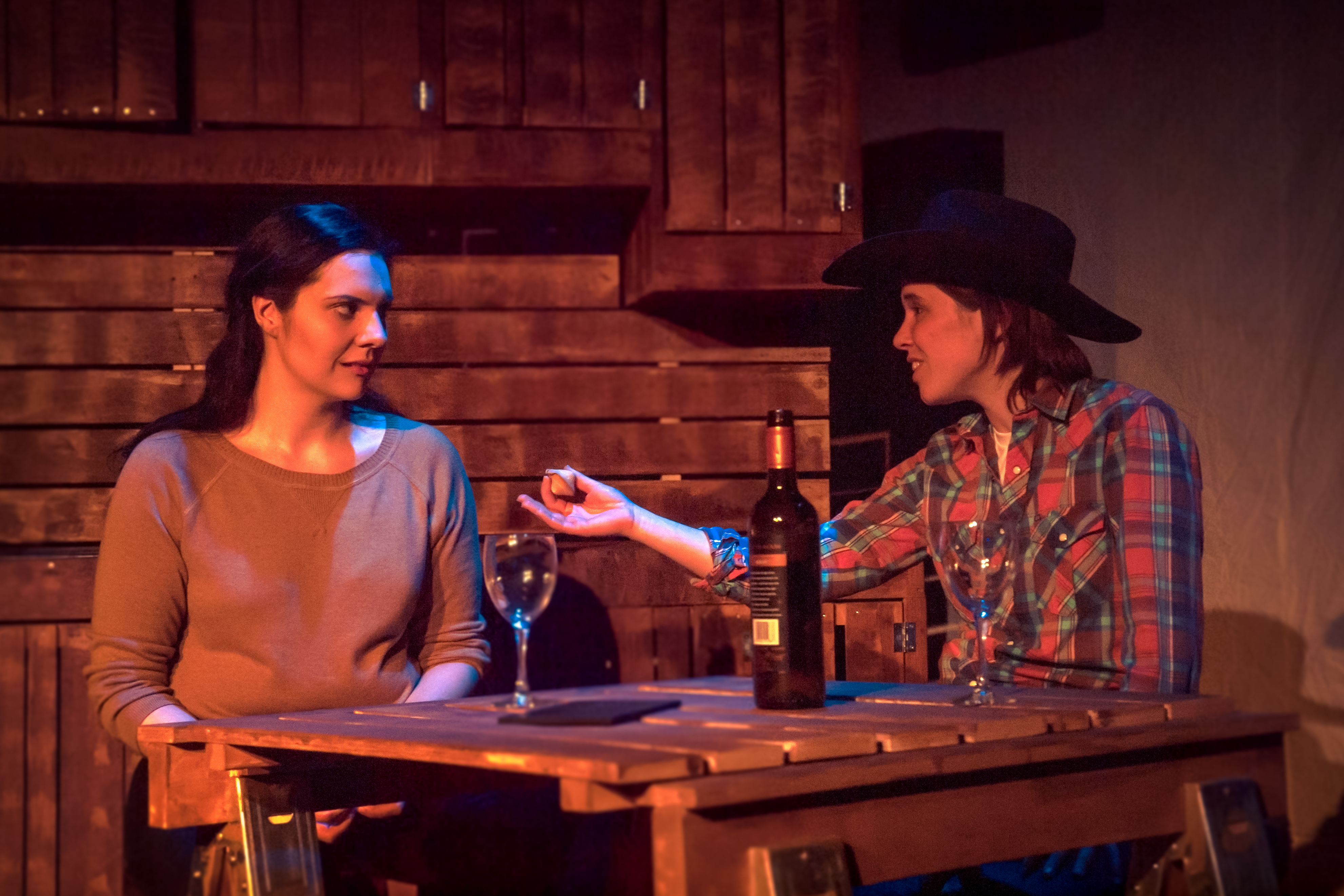
(L to R) Carly Mckee as Mary and Geneviève Paré as Red. Photo Credit Jason Ho.


Late: A Cowboy Song

March 12 – 22, 2014

EPCOR Centre Motel Theatre

http://www.epcorcentre.org/WhatsOn/ShowDetails.aspx?show_id=2B670994-6808-4B3D-AE14-419B4F612CC7


In love since grade two, Crick and Mary are a young couple that share a birthday and nothing else in common. Crick can spend hours looking at works of art, Mary thinks the more you look the less interesting a painting becomes. Mary clears her head by taking walks and making soup, Crick watches old movies. Mary is a bundle of worries and wonders and Crick finds solid footing in his obsessive love of holidays and a desire for a happy nuclear family. In Late:  A Cowboy Song, an unconvincing and messy work directed by Alyssa Bradac, both Crick and Mary get to play out their opposing natures. Crick convinces a pregnant Mary to marry him and raise the baby as husband and wife. Mary allows all her worries and wonders to run full speed when she becomes intensely drawn to Red, a lady cowboy who lives on the outskirts of town.

Late:  A Cowboy Song, is the early work of playwright Sarah Ruhl, (whose later plays went on to be recognized by almost every prestigious theatre award around) and is very much the effort of an immature writer. In Mary (Carly McKee) and Crick (Kyall Rakoz), Ruhl gives us a couple so ill-matched and affectionless (save for some creepily awkward post-fight sex) that any belief in their supposed love flies out the window within the first scenes of the play. Not helping matters in this production is the casting of Rakoz as the petulant husband Crick who just wants Mary to see things his way. I know it’s stomping on a minefield to say that certain actors can’t pull off an against-type role such as female playing male, old playing young or white playing black. Especially when acting is all about becoming someone you are not. But with a rather effete delivery and total lack of chemistry with McKee, Rakoz’s Crick (who is supposed to be deeply in love and lust with Mary) reads as gay to the audience. So much so that had the plot not already been known to me, Rakoz’s decent but miscast performance would have led me to assume that Crick’s sexuality was to be the ultimate narrative twist in the play.

But of course its Mary’s attraction to the androgynous Red that is the real story and here Ruhl gives us a few gems. Red (splendidly played with charismatic cool and a confident simplicity by Geneviève Paré) is the opposite of Crick – unshowy and comfortable in her silences. It’s no wonder that Mary is attracted to her. Through Red’s affecting ease and ability to calm Mary’s anxieties, Ruhl gives us many engaging sexually charged but platonic scenes between the two women.  As Mary spends more time with Red, she finds it harder to leave her company and becomes perpetually late in returning home to her increasingly jealous/angry husband and infant daughter.

But while the scenes with Red distract from the show’s shortcomings for a while, they come back to bite us as soon as we go back to the Mary and Crick gong show. It’s here that Ruhl’s narrative style can’t figure out whether it wants to be an eccentric comedy or a heavy-handed drama.  Director Bradac had the opportunity to favour one style or the other, but instead allowed the play to wean haphazardly between overwrought and quirky. When Mary and Crick’s baby turns out to be a hermaphrodite surgically altered to become a girl, the show takes a distinctly serious turn into gender politics, parental responsibility and metaphoric storytelling. But then a mere seconds later the audience is treated to one of Red’s interstitial musical interludes which has her strumming her guitar singing witty allegorical songs about being blue and having your cactus dry up and die. This style switch continues throughout the play with Crick and Mary taking divergent turns at eccentric humour and big D drama. The result is that neither style feels suitable in this all over the place production.

Visually however, the show looks splendid. At least in Leon Schwesinger’s cowboy-feeling set design of slatted wood constructed as a kitchen, living room and a table that doubles as a restaurant and Red’s place. Schwesinger’s lighting is less successful with its cliché imposition on the action taking literal colour cues from the dialogue. In a whirlwind holiday cycle scene Schwesinger lights the stage pink for Valentine’s Day, green for St. Patrick’s Day, Orange for Halloween etc. In other instances his lighting is overly moody or too bright, unfortunately fitting in with the schizophrenic nature of the entire production.


RATING

For the occasional theatre goer – This is a play that operates in metaphors, unspoken longings and quirks. That is when it works at all. You might not be able to put your finger on why the show feels wrong, but you will know that it was wrong for you. SKIP IT

For the theatre junkie – For those that like to see the work of prominent playwrights before they found their groove, this show will fulfill that desire. There is also great pleasure in seeing Geneviève Paré’s subtle but precise performance. But the messy writing, indecisive direction, miscasting of Crick and just plain all over the place-ness of the production as a whole swiftly negates whatever pleasure can be found. SKIP IT

The Real McCoy – Review

McCoy

Chris Clare as Elijah McCoy. Photo by Nancy DesLauriers.


The Real McCoy

March 7 – 22, 2014

Canmore Opera House

http://ellipsistree.ca/season/real-mccoy-event-details-coming-soon/


In the almost three years I’ve been reviewing theatre in Calgary, I can count on one hand the amount of black actors I’ve seen on the stage in this city. The truth is that while Calgary’s offering of new and unique work grows stronger each year, the amount of diversity on the stage remains wanting. Therefore, it was with great delight that I digested the news that a new theatre company, Ellipsis Tree Collective, was about to change all that by producing the inaugural Black Canadian Theatre Series featuring stories by Afri-Canadian playwrights about Black Canadian life over the last 150 years. However, good intentions don’t necessarily result in good plays, and unfortunately the first show out of the gate from this fledgling company misses the mark on a number of fronts.

Set in the late 1800’s, The Real McCoy, by Andrew Moodie tells the story Elijah McCoy, the Afri-Canadian engineer who invented (among other things) a lubricating device that revolutionized the way steam engine trains operate. Based loosely on the real life of McCoy (who is the source of the expression ‘the real McCoy’), the play under Edward Ogum’s direction, attempts to show how the colour of Elijah’s skin prevented him from ever getting the recognition or financial success he deserved. But while the play provides many instances for the audience to experience moral indignation, Moodie’s script with its flashcard historical story telling and very little interest in the character’s inner lives, makes the production a slog.

It’s the downfall of many writers who try to cram too much of a life into one script – the quick succession short scenes certainly tell you what happened but don’t let the story breath enough for anyone to really care. Here Moodie takes us from McCoy’s boyhood days in Canada with his father and nanny where it’s quickly established that Elijah is something of a boy genius to his happy university days in Edinburgh to the racist reality of America where McCoy invents his device but is robbed of his ability to claim credit or profit. He experiences love twice, great heartbreak and loss and many white business associates continually take full advantage of his position, yet not once does Moodie allow us inside McCoy’s head to really understand how he felt. Instead Moodie has the adult McCoy narrate the action of his younger self and the young Elijah provide some inner voice narratives of his adult self. Having never been a fan of this script tool, here it felt even more problematic as both old and young Elijah simply move the story along without bringing any true insight or emotion to the narrative.

Adding to our sense of disconnection from the story is Ogum’s direction which often has actors speaking away from the audience leaving us straining to follow the dialogue in spots. If projection issues weren’t enough to cause frustration, Ogum’s staging which in no way considers the level floor seating, ramps the vexation up many notches. Having much of your action take place on or close to the stage floor when this viewpoint is impossible for any audience member sitting beyond the first few rows, is a directorial mistake this already problematic play cannot afford.

Despite all this, the cast does a noble job. Chris Clare as McCoy brings some weight to the role even if he is often hampered by the woodenness of the script and unfortunate direction. The rest of the cast takes turns in multiple roles with greater or lesser success. Among the more substantial performances are Chad Hackett as Elijah’s black co-worker, Janelle Cooper and Norma Lewis as Elijah’s wives, nanny and maid and Kevin Rothery who corners the small humour market in the play as McCoy’s Scottish professor.

But even some decent performances can’t bring the drama back to this ultimately dull play. Truth be told, it was trying to find the theatre that provided the only real drama of the evening. Located within the boundaries of Heritage Park, the Canmore Opera house is difficult to find. The security guard tasked with opening the park gates and providing directions was missing and even once inside the park, there was no signage locating the theatre. Organizers tell me that better signage will be set up for future productions which audience members will be grateful for. However, no matter how much easier the theatre is located; the missed opportunity to tell an important story in an affecting way will remain onstage.


RATING

For those wanting to know more about Black Canadian History – Elijah’s story is both compelling and important and the play does a decent job presenting the facts. But facts alone don’t tell the true complexity of a story and in this respect The Real McCoy falls short in its ability to engage and inform us. MAYBE SEE IT

For the occasional theatre goer – No fancy set or grand production to dazzle you here. This is a rather bare bones show, which would be perfectly fine if the story being told had true emotional life. Instead the play feels like a dull history lesson with only occasional glimpses of fire. MAYBE SEE IT

For the theatre junkie – It’s hard not to think of this play as a series of missed opportunities. Moodie had the chance to inform and entertain us yet the script only accomplishes the former. Ogum had the chance to bring the action to life on stage and breathe some much-needed emotion into the story yet his staging decisions only added to our feeling of disconnect. The cast was by and large decent but were almost universally hampered by script and direction from connecting with the audience. We end up knowing the story, but we don’t feel it. SKIP IT


Camp Victoria – Review

Camp V

Lindsay Burns as Faith Fenton and Julie Orton as Maggie Payson in Camp Victoria. Photo by Benjamin Laird


Camp Victoria

March 3 – 22, 2014

Lunchbox Theatre

http://lunchboxtheatre.com/camp-victoria.html


Nothing brings to mind the 1898 northern wilderness of the Yukon less than the muted, pastel-toned abstract paintings of Georges Braque. Yet these seem to be the inspiration for Erin Gruber’s ill-fitting backdrop images for Rosemary Rowe’s equally poorly constructed play Camp Victoria. Inspired by the true story of Canadian journalist Faith Fenton and the Victorian Order of Nurses who, along with a military battalion, hiked the Klondike towards Dawson city, Rowe’s play under the direction of Glenda Stirling, attempts to imagine what those adventurous women would have talked and dreamed about. Not much if we are to believe what’s presented on stage.

The setup to get the women alone is fine enough. The proper and no-nonsense Nurse Hanna (played with confident correctness by Shawna Burnett) and the more innocent and breezy Nurse Payson (portrayed with a cadence far too modern by Julie Orton) find themselves separated from their soldier guides after stopping to tend a wounded private. The women’s worries about being stranded are momentarily quashed when they realize that Globe journalist Faith (played with humorous pluck by Lindsay Burns) will be back shortly with a map that will allow the woman to catch up with the soldiers. But upon Faith’s arrival, the map is nowhere to be found and once again the women despair that they are stranded in their hostile environment. Between the cold, the lack of food and the howls of wolves, it doesn’t take long for the booze to come out (medicinal they rationalize to get over their belief in temperance) and their lips and attitudes to start loosening.

Had the inebriation revealed pity insights, perhaps the done to death ‘drunk so we talk truth’ arc could have been overlooked. But instead we get mere top notes of what life was like for these women and even less penetration on what they longed for. Yes they are all subject to men in one way or another. Nurse Hanna is tired of answering to doctors who sometimes know less than she does. But Rowe gives Hanna a secret (too easily revealed) that feels both out-of-place with the point of the play and not in keeping with the close to the chest/orthodox nature of her character. Nurse Payson weakly asserts that she likes being in the field so she can just do her job unbothered but her ambition doesn’t fly farther than taking a nice trip with her mother. Rowe here gives us a character that is essentially milquetoast, leaving us wondering why we would waste an hour wanting to get inside her head at all. The spirit of what the play is trying to communicate is best captured through Faith, who turns out not to be the ballsy and famous reporter her melodramatic writing shows her as, but instead a lonely woman trying to navigate her way through a man’s world as best she can.

The misleading marketing for Camp Victoria sells the play as a story of stranded women imagining what it would be like to establish a matriarchal society in the Yukon. In truth, the idea is only brought up near the end of the play, talked about in an inebriated state and then dropped like a hot potato at the show’s conclusion when the women realize that they are not stranded after all. The resulting lack of meaning or substance doesn’t make the show unwatchable, it just makes it forgettable.

Nurse Hannah, Nurse Payton and Faith Fenton are Canadian characters with rich history to tell us. It’s a shame that instead Rowe has given us tipsy talk. Because as anyone who has ever listened in on a drunken conversation knows, it’s only truly interesting and insightful to those doing the drinking.


RATING

For the occasional theater goer – This is a light and easily digestible 60 minute story. You’ll get a very minor glimpse of what life was life for these women and that may be enough for you. Decent to strong performances help bring personality to the story and often a smile and a giggle to the audience. MAYBE SEE IT

For the theatre junkie – Meatless writing, personality-less direction and an incredibly distracting set design make Camp Victoria easy to pass on.  Which is unfortunate as Lindsay Burns does turn in a show stealing performance. SKIP IT