Bashir Lazhar – Review

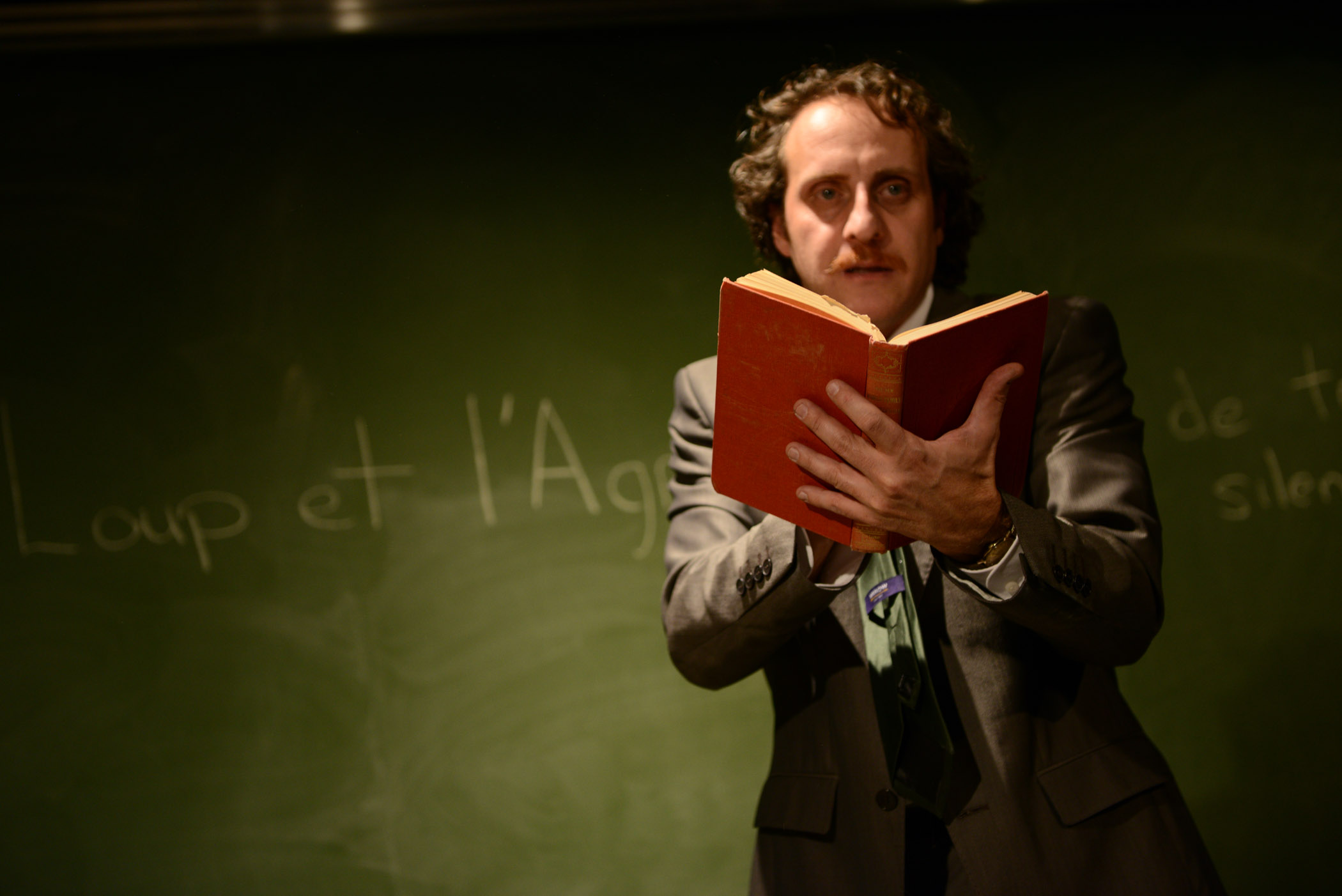
Haysam Kadri as Bashir Lazhar. Tim Nguyen/Citrus Photography

Bashir Lazhar

October 23 to November 2, 2012

EPCOR Centre Motel

http://www.downstage.ca/bashir.shtml

I went to see Downstage’s production of Bashir Lazhar this evening as a patron, not a critic. Not because I didn’t think the show worthy of my professional attention. But rather because I had one night to see the play and it was the eve before I was to leave town for Toronto first thing in the morning. In other words, I simply had no time to spend researching and crafting the kind of reviews I like to provide. So quite happily I went to the performance, without my note pad, revelling in the fact that for once I would be able to simply watch a play for pure pleasure and not have to analyze or write anything post curtain.

However, after what I just saw tonight, it would be utterly remiss if I did not try to put down at least a few remarks on what I feel was one of the best written, performed, directed and realized productions I’ve had the pleasure to see in a long while.

The play, written by in French by Canadian playwright Evelyne de la Chenelière and translated into English by Morwyn Brebner (later adapted into the Oscar nominated film, Monsieur Lazhar ) tells the story of Bashir Lazhar, an Algerian immigrant to Canada who takes a job as a substitute teacher after the regular instructor hangs herself in the classroom. Running in parallel to this tragedy is Lazhar’s own horrific  past that slowly is revealed in a series of innovated flashback scenes throughout the play.  Despite a rocky start with his class, Mr. Lazhar comes to earn the respect and admiration of his students, but his style of teaching and personal demons find him in hot water with the school’s administration in the most unclichéd and nuanced classroom story one could ask for.

Beautiful writing for the stage only truly comes alive through great performances and Haysam Kadri’s turn as Bashir is pure perfection. At times funny, at times heartbreaking, Kadri penetrates his character with such ferocious intensity that I often found myself holding my breath waiting for his next move. Bashir’s monologue is actually a conversation with several unseen characters throughout the play and Kadri affects the emotion and details so strongly in these moments you could swear upon hearing the other, silent side of the discussion.

Originally written as a one-man show, the Downstage production introduces a second person into the action in the form of a girl whose purpose is mostly movement and illustration of the narrative with the occasional lines to speak.  I’ve seen this effect done well and I’ve seen it fail, but I have never seen it so seamlessly and interestingly used in a production. Lara Schmitz as the Girl is fluid and expressive in her movements, strong in her dialogue and always interesting to watch even when her role is to simply sit in the audience as one of Bashir’s students or doodle on the wall sized blackboard panels that back the stage.

Action in the audience and the use of the whole small Motel theater space is just one of the reasons Simon Mallet’s direction is such a joy to watch. Seated around a desk on a raised and sloped stage cleverly designed by Anton de Groot, the audience becomes Bashir’s silent classroom and Mallet takes full advantage of this set up to confidently move his actors around the theatre. But it’s the interaction between the Bashir and the Girl that make this such an achingly beautiful production to watch. Part dance, part struggle, part embrace, Mallet brings these two performers together in movement and dialogue that so enriched the performance, I can’t imagine the show without this element.

For seventy-five minutes I was made to laugh, make to think and had my heart-broken in ways that I live for the theater to do. I can think of no better way to send me back to my hometown than with the knowledge that this kind of exciting production is going on right here, in my new home city of Calgary.


RATING

For the guys and the girls – Laugh, cry feel. What more could you want out of a production? SEE IT

For the occasional theater goer – The story unfolds through layers that are complicated and not always clear. And the storytelling is unconventional. Might be too much for your taste MAYBE SEE IT

For the theater junkie – This is a must all around. SEE IT

Rock of Ages – Review


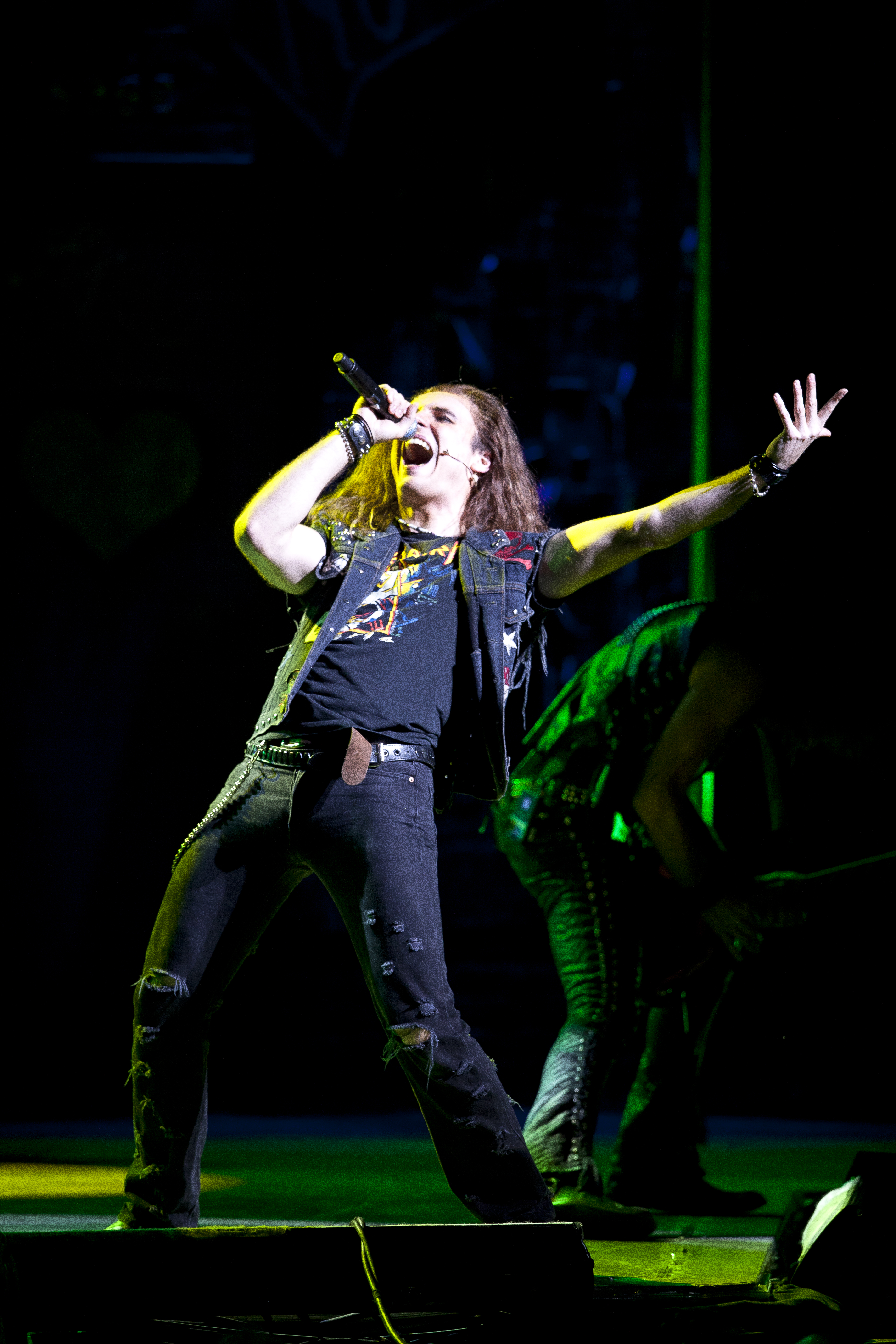
Dominique Scott as DREW in the Broadway Across Canada presentation of ROCK OF AGES.  | CREDIT: Scott Suchman


Rock of Ages

October 23 – 28, 2012

Southern Jubilee Auditorium

http://www.ticketmaster.ca

Listen to my live review from this morning on CBC Eyeopener at http://www.cbc.ca/eyeopener/columnists/theatre/2012/10/24/theatre-review-rock-of-ages/


Like it or not, jukebox musicals like Rock of Ages are here to stay and it’s not hard to see why. They work, because producers know there’s an audience out there that already loves the music. And if you’re already into the music, you’re halfway home to liking the musical. So if you’re a fan of 80’s Rock there’s a good chance you’ll be drawn to Rock of Ages, and with no less than twenty-eight classic rock tunes in the musical, you are certainly going to hear a lot nostalgic hits in this production. But with so many poor performances and a predictable and thin storyline, it’s a fair bet to say this show isn’t going to blow anyone’s mind.

At its core, Rock of Ages is a  is a love letter to the good old days of the 1980’s Los Angeles Sunset Strip era – an era of arena rock and big hair and power ballads and yes, the dreaded acid wash.  To be sure, the musical gets at this story through a fairly thin and spoofy narrative that leaves no cliché unturned. Narrated by Lonny, the Bourbon Room sound guy affecting a Jack Black persona that is just as obnoxious and not funny as Mr. Black himself, the show takes no time setting up the pieces of the musical.

Drew is a shy wanna-be rocker who sweeps the floors at the legendary Bourbon Room, a rocker club on the Sunset Strip. One day he meets Sherrie, an aspiring actress with dreams of Hollywood stardom and faster than they can trade hair products, the two are in love, but can’t bring themselves to tell each other. Then of course there’s the requisite bad guy in the show, a villainous greedy German developer bent on demolishing the Bourbon room to build commercial properties. In an attempt to save the club, Bourbon Room owner, Dennis, hatches a plan to save the place by hosting a monster farewell concert with legendary rockers Arsenal, while at the same time giving Drew his big break as the opening act.

However all sorts of things go wrong , not only might the club not be saved, Sherrie gets seduced by the Arsenal lead singer and Drew’s musical career takes left turn. It’s this tension that the rest of the musical deals as the actors continue to sing and dance and act their way through the story.

Well, not act so much. Rock of Ages is really all about the singing and dancing and surprisingly for a production of this caliber, the performances weren’t that great. Obviously this is an issue in any musical, but especially in a show like this where the enjoyment comes mainly from hearing those songs you know so well (and maybe love) and wanting them to sound like the originals or at least delivered with compelling, strong voices. However both the leads in Rock of Ages had major voice problems that interfered greatly with the show’s appeal. Dominique Scott as Drew, suffered from both a terribly weak voice and what can only be described as occasional tone deafness. When it was his turn to sing the Journey song ‘Oh Sherry’, there were so many wrong notes it was actually painful to listen to causing many patrons in my row to laugh in discomfort.  Shannon Mullen as Sherrie had a stronger voice, but strong and flat is never a good thing. Especially when it botches songs like Pat Benetar’s ‘Harden my Heart’ which otherwise could have been a great number if it were not for Mullen’s dropped notes. There was one standout singer in the cast, one that got huge applause every time she sung a number and that was Amma Osei, who played a strip club owner. Hers was the only voice clear and powerful enough to stand up to the powerful energy of the rock songs and often during the show I found myself wishing everyone would just clear the stage and let her do her stuff. Other than that, everyone else in the cast was passable as individuals and far stronger as an ensemble. In fact the cast was terrific in all their collective song and dance numbers, particularly a fantastic rendition of Whitesnake’s ‘Here I Go Again” to close out the first act. But a warning should given everyone with young kids here, not only is the dialogue and story line intended for a distinctly mature audience, much of the dancing consists of writhing pelvic thrusts and stripper pole routines, so basically what you’d expect from a story about the Sunset Strip – but not what you’d want to necessarily take your children to see.

From a design angle, Rock of Ages looked the part. Practically all the action takes place inside the Bourbon club and they do a good job of creating a gritty rock and roll feel to the space. The walls are covered with posters and pictures and stray bras and panties that look like they were flung and forgotten. There’s the ubiquitous video screen that we see again and again on stage – it’s like you can’t have a show these days without projecting video – and here they show mostly LA backdrop images which is all fairly benign. What’s really fun about this set though is that there is a live band on stage at all times. In order to make this work, the musicians are cast as the backup band at the Bourbon, so they are always on stage ready to play. While it seemed to me that some of the music might have been recorded, I believe most of it was coming from the live band and while it’s VERY loud, they do sound great in an 80’s blow your eardrums off kinda way.

I’d be lying if I didn’t admit that I was singing along in my head to all the songs during the show, even though I have NO idea how I know all the words. All I can say is they must have unbeknownst to me seeped into my brain in the 1980’s and never left. But that alone doesn’t make a great show. I think if the performances were stronger I’d be able to squeak some affection out for this production, but as is, I was very happy to go back to 2012 by the end of the show .


RATING

For the guys and girls – You’re enjoyment will depend on how much you like this music. A colleague of mine described it as the Air Transat of shows – it gets you where you need to be, but you’re not sure it was worth the trip. MAYBE SEE IT

For the occasional theatre goer – Again it’s all down to the music. The show is certainly high energy and fun to watch. But that might not be enough. MAYBE SEE IT

For the theatre junkie – If you like the music – you most likely already own it. I’d suggest staying home and have your own 1980’s listening party rather than wasting your night in the theatre seeing it done poorly. SKIP IT

Gretchen’s Nightmare – Review


Gretchen’s Nightmare

October 19 – 31st, 2012

Lantern Church

ocho-rojo.com


When the press release for Gretchen’s Nightmare hit my Inbox boasting that the production was an interactive performance where, “audience members will become part of the action, traveling through a unique experience that blends performing arts with an exciting and frightening participatory adventure”, I was immediately in. I love interactive performance experiences. And I liked being creeped out. It sounded like a fantastic idea. What I didn’t know then however, was that the idea was going to be a flawed one that often got in the way of what could have been a more successful experience.

Based on Goethe’s famous legend of Faust Part 1, (A story in which Faust, a highly successful but unsatisfied scholar makes a deal with the Devil, exchanging his soul for unlimited knowledge, worldly pleasures and the love of a pious girl called Gretchen), Gretchen’s Nightmare created and staged by Javier Vilalta, takes place in the Lantern Community Church. Actually more correctly, the performances take over the Church staging scenes in different areas of the building with audience members (6 at a time only) escorted around to find the action. But first upon entering the church, we are asked to sit in a darkened vestibule lit only by flameless tea lights. Here we are given the instructions for the performance (no talking being the big one), asked to read six descriptions of how we deal with our own nightmares and pick the one that most resonates with us. We are then each given a piece of different coloured cloth corresponding to our answer that we are told we must wear prominently displayed throughout the performance. So far so good as I was intensely intrigued to see how the choice of nightmare coping and cloth colour would play out during the performance and affect each one of us differently. Spoiler alert – the answer was it didn’t and not at all. But as I soon learned, disappointment and missed opportunities would become a constant in the production.

From this point on we were escorted up and down various tea light-lit darkened hallways, staircases and other twists and turns  by eerily hooded or masked actors who led us to each scene in the performance narrative. A narrative that to my mind was flawed right from the beginning and therefore continually disappointing as the performance progressed.

We are told in the first scene by a wonderfully performed Mephistopheles (Devon Dubnyk) that we are to be the Faust character in this performance. That we are in fact manifestations of Faust’s evilness that not only made the pact with the devil, but ultimately destroyed the innocent girl Gretchen and left her caught in a nightmare she cannot escape. Putting aside that there will be audience members who I’m sure will not be fully versed in the Faust myth and will therefore not follow along with this first scene, the quick making of the audience as Faust and expecting us to feel guilt or shame for his crimes fell flat for me. As did the taunting throughout the play of “look what you’ve done” shouted at us by the various performers. I would have much rather been witness to Faust’s crimes in this performance than be forced into a role that felt false and therefore decidedly un-creepy or scary as advertised. So it was with this early disappointment that I embarked on the rest of the performance journey through a series of six main scenes performed by a dozen or so performers that served to immerse us in the Faust myth.

While each scene involves a different piece of the story, there are similar threads and motifs in each segment. Some work very well, others were potential not realised and certain ideas didn’t’ work at all for me.

The Mephistopheles character than opens the performance, resurfaces throughout the experience as a kind of narrator/guide figure. In each instance, the character and the performances were deeply impressive and provided the kind of eerie feeling I expected. In addition to Dubnyk’s tun as Mephistopheles, Kristin Eveleigh does a fantastic turn as a black caped and masked devil figure in what I thought was the only truly moving and disturbing scene of the evening involving an enchanted garden. Similarly, Patrick Quinn does a nice job with his devil character in an otherwise unimpressive let-down of a final scene.

Less successful were any of the scenes involving Gretchen as a speaking character due to a series of weak actresses, the poorly choreographed and performed dance/movement segments and a number of narratives that were either simply boring or laugh-worthy. No matter how wonderfully designed these scenes were with their darkness and shadows and smoke and suspended eyeless- baby doll heads (yeah, you read that right) and fantastically eerie face masks created by Mexican visual artist Jose Rafael Flores, the design simply could not make up for the fact that the substance just wasn’t there.

As the final scene concluded and we were sent out into the cold night to ponder what we had just experienced, the overwhelming feeling I had was that Gretchen’s Nightmare was more a series of missed opportunities than a coherent performance. The bones of a terrifically interesting and unnerving experience are there. But for me, the nightmare was that it wasn’t realized.


RATING

For the guys and the girls – If you have never attended an interactive performance and are curious what it’s like, this may appeal to you. There are some very cool elements to the production despite its defects. And with Halloween coming up, you may be more receptive to the genre than at other times. MAYBE SEE IT

For the occasional theatre goer – Ha! Forget it. Move along. SKIP IT

For the theatre junkie – Interactive performances, when well done, can be some of the best theater experiences ever. This isn’t one of them. SKIP IT


Pride and Prejudice – Review

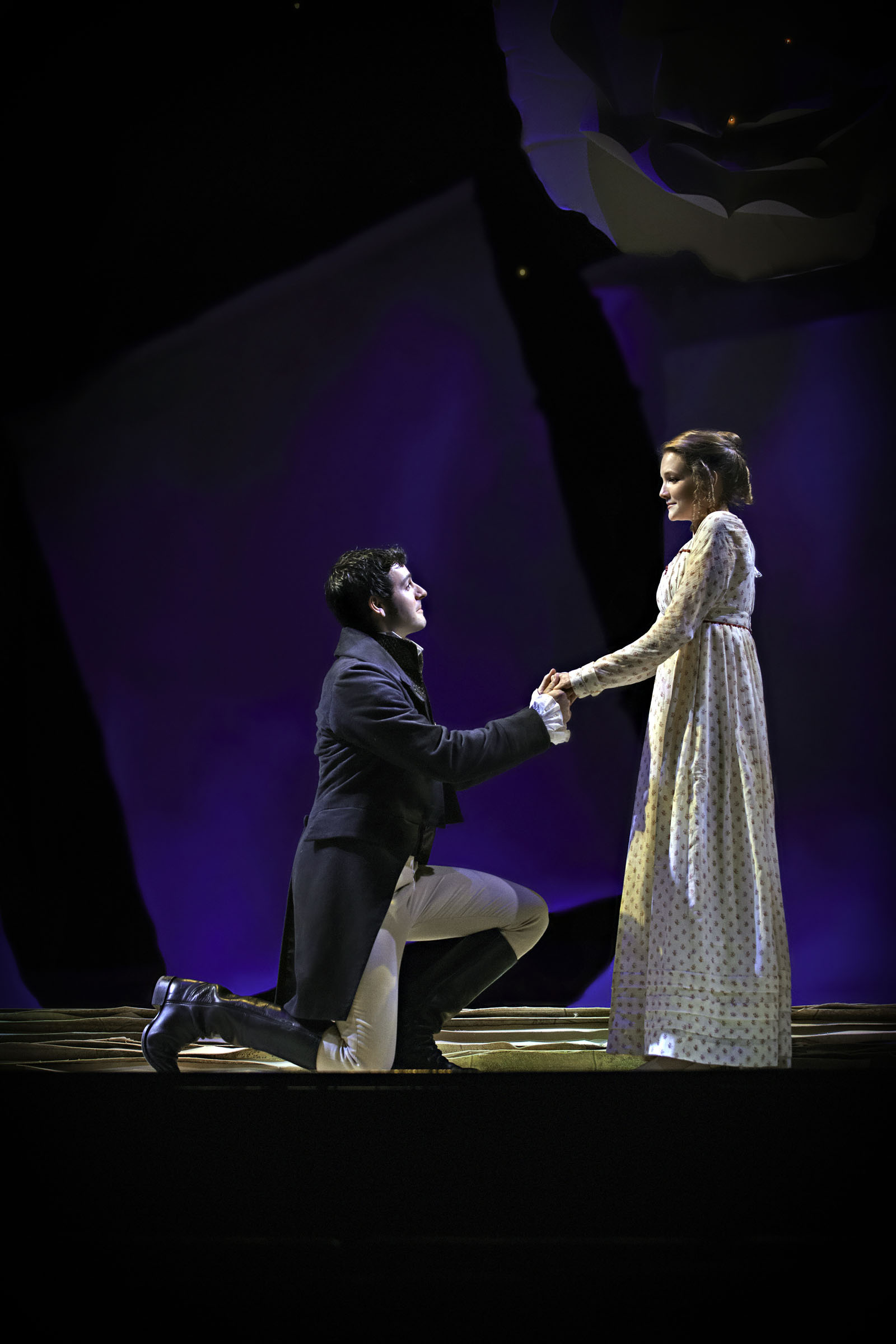
Tyrell Crews as Mr. Darcy, Shannon Taylor as Elizabeth Bennet, photo by Trudie Lee


Pride and Prejudice

October 16 – November 11, 2012

Max Bell Theatre

http://theatrecalgary.com/plays/pride_and_prejudice/more_info/


If there is any doubt about the enduring and alluring power of Jane Austen’s 19th century story, Pride and Prejudice, one need only look at the number of modern adaptations and imitations as proof. From BBC’s television 1995 version which propelled Colin Firth to stardom to the 2001 mega Hollywood hit, Bridget Jones’ Diary  to 2004’s Bollywood musical, Bride and Prejudice, Austen’s story still resonates with us almost 200 years after it was first published.

And now, Theatre Calgary has given this story about manners and class and morality a distinctly Western Canadian makeover. Dissatisfied with the available screenplays for Pride and Prejudice, Theater Calgary Artistic Director Dennis Garnhum hired Victoria playwright Janet Munsil to provide a completely fresh adaptation. The result is a beautifully realized economic reworking where the fat is trimmed from Austen’s prose and narrative, leaving a tightly told story that gives plenty of room for the cast to shine brightly.

The story, very much a product of its setting and time, deals humorously with the issues of class and inheritance in Georgian England. Mr. Bennett is an English country gentleman living surrounded by women – his overbearing wife and five daughters –good and beautiful Jane, the headstrong and clever Elizabeth, the bookish Mary, impish, silly Kitty and wild child Lydia. Having no male heirs, Mr. Bennet’s estate will be inherited by a distant cousin, leaving Mrs. Bennet fearful of what is to become of her and her unmarried daughters. So eager is Mrs. Bennet to marry off her girls and secure their future, that when Mr. Bingley, a rich upper-class gentleman buys a large house next door, she practically orders Jane, her eldest to make haste and see that she capture Mr. Bingley’s affections. But matters are complicated by Mr. Bingley’s companions – his snooty sister Caroline and the extraordinarily wealthy, dashing and proud Mr. Darcy, both of whom see the Bennets as beneath their kind and inappropriate marriage candidates. However despite this elitist backdrop, sparks fly when main character Elizabeth Bennet meets Mr. Darcy. Sparks that manifest firstly as a great hatred for one another but gradually evolve over time into one of the most enduring love stories ever told.

Set on a stage coloured with lovely pale pastel hues, huge papyrus-like background structures and large origami-esque ecru flowers framing the stage, Patrick Clark’s set design mixes the abstract with the romantic making way for many simple but effective prop changes that don’t clutter the actors or the action. And with seventeen cast members and numerous scenes, there is a lot not to get in the way of. Thankfully for the most part Director Denis Garnhum’s adroit and unfussy direction matches Munsil’s efficient adaptation, giving room for the uniformly talented cast to fill the space physically and spiritually. Perhaps Garnhum could have reined things in a bit, omitting a few transitions where flitting about seemed to be employed to cover up scene changes and doing away with the obvious and hackneyed open-shirt scene featuring Mr. Darcy.  But these are small quibbles in an otherwise sure-footed piece of direction.

With the words and the sets and the direction firmly in place, this production of Pride and Prejudice opened the door for the audience to sit back and revel in the performances. While Austen’s characters can be criticized as clichéd or stereotypical, the cast played these stereotypes with such glee, intensity and masterful aptitude that you couldn’t help but laugh at them and with them as you eagerly went along for the ride.

In fact, with so many great performances, I’m afraid this review would drag on far longer than anyone wishes to read if I singled out every cast member. However it would be remiss not to mention the few that particularly stood out in my mind. Alan Morgan and Elizabeth Stepkowski Tarhan as Mr. and Mrs. Bennet brought incredible humanness and much humour to their characters. In Tarhan’s able hands, Mrs. Bennet’s over the top domineering and angst never pushes into overwrought hysteria and Morgan’s expertly played moments with Elizabeth ooze fatherly love that one cannot help being touched by.

Unlike other productions I’ve seen where the lesser Bennet sisters fade away into a melange of one-dimensional background noise, the actresses in this production managed to bring each sister to the forefront and distinguish themselves, if not as fully rounded characters, them something more interesting than a convention. Kitty, the silly easily influenced daughter is perhaps the hardest role to shine in given the character’s superfluous role to play. But even with the narrative challenges, Leda Davis manages to bring an infectious energy to her performance that caused me to feel much greater fondness for the character than I have previously felt. It was a small role, but Davis made it stand out.

Another small role I left the theatre wowed by was Terry Tweed’s double bill as noblewoman Lady Catherine and Mrs. Reynolds, Darcy’s housekeeper. The two characters couldn’t have been more different in everything but age, but Tweed brought each one alive with subtle and particular gestures, cadence and nuance. Perhaps more than anyone in the cast, Tweed showcased that attention to detail and embodiment of a character can elevate a minor role into a masterful performance that I will not soon forget.

Nor will I forget Shannon Taylor as Elizabeth. It’s a role I’ve seen many times before and it’s a pet peeve of mine when the actresses cross the line between being headstrong over to being shrill and even prissy. With Taylor there was no such worry. Playing with confidence and emotional accuracy, Taylor’s Elizabeth took her place firmly at the center of the narrative and provided the perfect tone for her evolving relationship with Darcy. Even if it took a while for us to really root for her. Perhaps collateral damage from such a tight script or perhaps it just took a while for Taylor to warm up enough to win us over, but I found my affection for Elizabeth in this production to be a product of time rather than an instant liking. That said, when it was won, it was won completely.

Then of course there’s the role of Mr. Darcy, played here by Tyrell Crews. Talk about an iconic role – totemic actually! According to a poll done by the esteemed Orange Prize for fiction on what literary character most women would want to be romantically involved with, women across generations overwhelmingly chose Mr. Darcy. And during a quick Google search, I found no fewer than twelve fan-sites devoted to the character not to mention the countless web pages dedicated to the various men that have played the role. In other words, Crews had big shoes to fill. And he did so admirably. His own devastatingly good looks aside, Crews expertly affected the posture of a man who is dashing and knows it, yet dismisses it as beneath him to think about . This in combination with controlled emoting and very good timing clad him well in the Darcy swath and no doubt had more than a few ladies swooning in the audience. It was a shame then that Crew’s Darcy lacked a bit of bite due to an adaptation that seemed to take some of the initial callousness and unpleasantness out of his character. Instead, we get a Darcy that comes across as more antisocial and shy than priggish, making the transition to finally overcoming his pride and prejudice less dramatic. I believe Crews had the ability to take it up a notch, I would like to have seen Garnhum encourage him to do so.

In the end, I have to ask myself, did I really need to see another production of Pride and Prejudice? And while the answer is no, with so many excellent performances in this superbly executed production I am glad I saw this one. It’s a story that keeps winning our hearts again and again and sometimes that’s not a bad thing to look forward to in a night at the theatre.


RATING

For the guys – Yes this story is the ultimate chick flick. But it’s funny and clever and expertly acted and you’ll actually like Elizabeth, both as a character and as a woman. SEE IT

For the girls – Swooning over Darcy should be enough to get you to the theatre, but what will keep you there are the incredible performances and the beauty of the production. SEE IT

For the occasional theatre goer – It’s timeless, funny, romantic and lavish.  A total package. SEE IT

For the theatre junkie – How many times have you seen this? Sure, it’s been done to death. But the joy of seeing an entire cast with this much talent and a production so flawlessly executed might be worth another look. SEE IT
 

Alberta Ballet’s Othello – Comments

Alberta Ballet dancer Kelley McKinlay as Iago with company artists in Kirk Peterson’s Othello

Photo: Paul McGrath PMG


Othello

October 18 to 20, 2012

Jubilee Auditorium

http://www.albertaballet.com/page/othello/1000552


Let me be clear right from the beginning. This is not a review. While I’ve been going to the ballet for years and enjoy it immensely, I am not a dance critic. Nor would I ever insult the talented men and women who are by writing a performance critique. I am of the belief that if you don’t have the expertise or correct language to fully and cogently evaluate a subject, then it’s best to stay silent.

What these musings attempt to be rather, is nothing other than a compilation of my thoughts from the performance of Alberta Ballet’s Othello. Thoughts that can easily be dismissed as just my personal reaction or perhaps thoughts you can use to inform our own feelings about the production. Either way, here they are in no particular order

Hot for Iago

From the minute Kelley McKinlay took the stage at the start of the ballet in a raw, sinister and sensual solo to the last scene where he is strung up and punished for his crimes, I couldn’t take my eyes off him. Whether he was stunning me with his solo work, amazing me in his duets or simply skulking about at the back of the stage, my attention was riveted to him. Was it his uber talented physicality? Or did choreographer Kirk Peterson give him the best moves? Was it his penetrating acting and emoting? I’d say probably all three and for me it was electric. So much so that at one point I leaned over to my friend and said, “is it wrong that I have the total hots for  Iago?” One look from her told me I wasn’t alone.

That said, I’m not sure that this sexy a Iago works for the narrative of Othello. Why would someone so confident, alluring and masterful be so jealous? What’s the motivation? I have no answers to this and truthfully as I sat there watching McKinlay’s performance, I couldn’t have cared less.

Movie Music?

Jerry Goldsmith’s music for Othello struck me as moody, aggressive and at times overly soundtrack sounding. Not that I didn’t enjoy it, I did to a certain extent. But it was music that I think could have very easily been the backdrop to a Hollywood movie just as easily as it was used on stage.

Maleness

How nice to see a ballet that is so male dominated! Not that I don’t adore ballerinas, but my real joy at the ballet is watching the athletic power and elegance of the male dancers do their thing. And boy do you get a lot of it in Othello.  Of particular delight was the regular occurrence of male duets in the program, not something that is often done but something I would like to see more of. They were exciting and sexy and energetic and I loved every minute of them.

Minimalism

Don’t go to Othello expecting to see ornate sets or grand scenes. Alexander V. Nichols’ set design is economic and fairly bare. At times I felt it was too bare, but for the most part it worked for me. But I will say that just as tired as I was of the huge, dated ornate sets of yesteryear, I am equally getting tired of the minimalist sets that designers are turning out again and again for both the ballet and the opera. I’d like to see something new.

Final thoughts

I thoroughly enjoyed the performance. I found the story to be well told and the choreography and performances to be intriguing and entertaining to watch. Very little dragged for me and more than once I was moved. Usually in a swoony way by Iago (did I say that already? ) but also by many of the other emotional elements of the performance.

Lovely way to spend an evening.


Singing in the Rain – Review

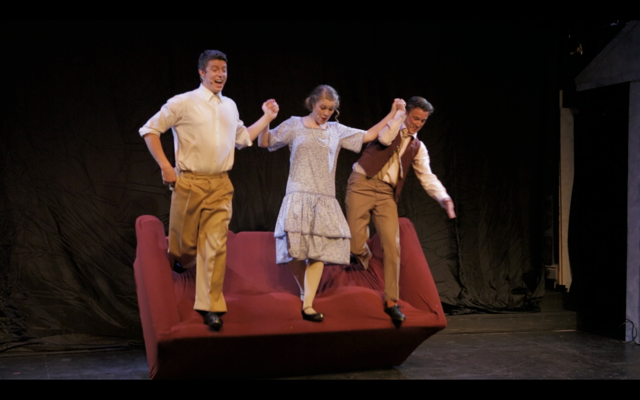
Photo by Mateusz Blach, courtesy of Front Row Centre Players Society. Left to Right; Jarryd Baine, Tanis Laatsch, Graeme Humphrey


Singing In the Rain

October 5 – 20, 2012

Pumphouse Theatre

http://www.frontrowcentre.ca/


A silent-screen leading man finds love while trying to adjust to the coming of sound. No, I’m not giving a description of the recent Oscar-winning movie, The Artist, but rather the 1952 film, Singing in the Rain. And just in case you’re not catching my derisive tone here, I will go on record with my opinion that The Artist was merely a gimmicky imitative version of the far superior Gene Kelly/Debbie Reynolds classic.

In other words, I have fond feelings about the movie Singing in the Rain. Feelings that get rankled when remakes, remounts or retakes are attempted. So it was with some hesitation that I agreed to go and see Front Row Centre’s musical production.

Using the original stage adaptation that spawned the 1983 West End production and the 1985 Broadway run, Front Row Centre’s Singing in the Rain closely adheres to the original plot of the movie. Which is good. But at almost 3 hours running time, the production with its muddy sound, uneven performances and at times soulless efforts, left a lot to be desired. Yes there were some delightfully surprising moments and performances that distracted from the show’s shortcomings for a while. But those shortcomings were plentiful and unfortunately the bright spots couldn’t always make up for what was missing.

The story introduces us to Don Lockwood, a silent film star with roots in musical theatre and his ditzy and untalented beautiful co-star Lina Lamont. While billed as a real couple by the studio to help sell pictures, in real life Don can’t stand Lina, who is convinced that their screen romance is real. The pair and the studio face a crises after the first talking movie, The Jazz Singer, proves to be a smash hit. The studio decides that it has no choice but to produce a talking movie with their own stars, but production issues plague the set and Lina’s hysterically grating voice threatens to ruin not just the film, but the studio itself. After a disastrous first screening, Don’s friend Cosmo Brown comes up with an idea to have Lina lip-sync her part and instead use aspiring actress Kathy Seldon’s beautiful voice in the movie. Lina is furious at the idea, both out of ego and because she knows that Don is falling in love with Kathy. But the overdubbing goes ahead and the movie is a smash success. All seems perfect for the stars and the studio until Lina proves she’s not as dumb as everyone thinks and Don and Cosmo prove that in the end, the sweet and honest characters always have the last laugh in comedic musicals.

Most of the issues I have with this production fall in the lap of Director Jay Newman who seems intent on letting this show run extraneously long and with some serious sound issues. I appreciate wanting to give every single song its due, but with so many superfluous numbers and scenes, the action moved along at a slow jerky pace, often sapping the energy needed in a feel good musical. Half an hour or more could have easily been cut out of the production without affecting the story whatsoever and I was dearly sorry it wasn’t.

However, more problematic was the sound. When faced with a cast that almost uniformly suffered from soft or weak voices, it’s a director’s job to get the actors to project. As my colleague Louis Hobson (Calgary Sun Theatre Critic and director) says to his cast when in the director’s chair, “You can’t make ‘em love you if they don’t hear you!” Too many times during the show the cast was either drowned out by the 16-person live orchestra or could not be heard while simply delivering dialogue. I could have excused this if the production I saw had been a rehearsal or even opening night. But to have these types of missteps halfway through the production is unforgivable.

Not to mention a shame as there were some impressive performances I wish I could have had a clearer picture of. And some I was happy to not have had. Jarryd Baine as Don Lockwood lends a soft, but decent voice to his character and manages at times to exude the charisma required for the role. Baine’s dancing (expertly choreographed by Karen Iwanski) is well executed and while I found his “Singing in the Rain” number to be somewhat soulless in spite of the realistic rain pouring down on him, there is no question that his technical skills are there. Bethany McNab as Lina bites deliciously into her character role, obviously enjoying her turn as the whiny, dumb movie star. McNab really gets to show her stuff in the second act and easily grabbed our attention with her delightfully funny acting and singing.  A serious weak spot in the cast was Tanis Laatsch as Kathy Seldon whose lovely voice could not make up for her stiff and lifeless acting and less than inspired dancing. However, if I only had one performer to talk about, it would be Graeme Humphrey as Cosmo Brown. The most natural and talented dancer/actor of the bunch, Humphrey stole the show with his physically challenging scenes and comedic lines providing the most fun of the night. Whether it was it solo dancing/singing  in the famous “Make ‘em Laugh” number or his duet with Baine in the superbly choreographed and performed “Moses Supposes” musical scene, Humphrey’s combination of nimble dance moves, ease of delivery and comic timing made him the one to watch.

A particular challenge with the stage adaptation of Singing in the Rain is set design. With choppy flash-card scenes and multiple locations to accommodate, sets either need to change dramatically at a rapid-fire pace (which is labour intensive and expensive) or the sets need to be minimal and moveable. It was the latter that Set Designers Bryan Francis and Janos Zeller chose to do with this production, yet instead of being interestingly minimal; the design veered toward looking cheap. Most offensive was the black parachute material curtain used as both a scrim to project the silent and talking movies on and the background for many scenes. Wrinkled as though packed in the bottom of a suitcase and forgotten about for days, the unevenly hung curtain made the projections look amateurish and the scenes it backdropped, unkempt. It was an easy thing to fix and a glaring sore thumb that it wasn’t.

In the end though, Singing in the Rain is really about the songs. Most people know them and love them and go to see the production to hear them all over again. In this regard, the production does deliver nicely. Even with the sound issues and some performance disappointments, the songs were honourably presented and I defy anyone from not singing along in your head or smiling a bit as the favorites play out on stage. If Singing in the Rain was a better show than I’d expected but a less good one then I hoped, well at least I got to hum along with the crowd.


RATING

For the guys – Watching Don and Cosmo horse around and be boys will leave you wishing you could sing and dance. If only the rest was that well done. MAYBE SEE IT

For the girls – The leading lady certainly doesn’t lead in this production. But the boys will charm and you’ll laugh at Lina. MAYBE SEE IT

For the occasional theatre goer – If you loved the movie and want a chance to see the songs done live accompanied by some outstanding choreography, you’re in luck. SEE IT

For the theatre junkie – Keep an eye out for Humphrey in future productions, but stay home and rent the movie if you need a Singing in the Rain fix. SKIP IT


Intimate Apparel – Review

Esther (l) played by Karen Robinson and Mayme (r) played by Abena Malika.  Photo by K&K courtesy of HarderLee Studios.

Intimate Apparel

October 9 to 27, 2012

Martha Cohen Theatre

http://www.atplive.com/2012-2013-Season/IntimateApparel/index.html

Listen to my live review on CBC Eyeopener on Monday October 15th at 7:40 am

http://www.cbc.ca/eyeopener/


If I were asked to create a secondary title for Lynn Nottage’s play, Intimate Apparel, I would call it, ‘Wow it really sucked to be a woman in the early 1900’s’. Black or white, righteous or scandalous, rich or poor, the women in Intimate Apparel are all a deep degree of miserable, powerless, and abused in some form or another. But rather than rising above or striking out at their wretched circumstances, Nottage’s women turn on themselves and each other becoming shallow, weak and frankly pathetic.

This was most certainly not the play I expected to see by a Pulitzer-winning playwright who brags freely that her stories contain strong “warrior women”. If these are the most courageous female characters Nottage can come up with, I would hate to see her take on the frail side of womanhood.

Yet in spite of this tiresome and often times infuriating character development, I couldn’t help but enjoy the production thanks to some superb elements came very close to compensating for an otherwise disappointing whole.

Set in 1905, the play follows Esther (Karen Robinson), a 35-year-old single black woman living in a New York boarding house. To support herself, Esther sews intimate apparel for wildly diverse clients such as Mrs. Van Buren (Julie Orton) a wealthy, white, unhappily married and unloved socialite to Mayme (Abena Malika) a black singer who never realized her dreams of making it big and has turned to prostitution to make a living. Being successful at her job and living a modest lifestyle, Esther has managed to save enough money to open the beauty shop she dreams of owning. But more pressing on her mind is the fact that she is still single, a social status not kindly looked upon for a woman of her age. So when romantic letters start arriving from a Caribbean man named George Armstrong (Andre Sills) who is working in Panama, Esther is quickly smitten. Or as smitten as she can be with someone she has never met. This in contrast to the fact that she’s hiding her affection for a man that she actually knows but can never have, Mr. Marks (Graham Percy) , the Orthodox Jewish fabric salesman Esther buys her materials from. The pair has obvious chemistry and blossoming love for each other, but a more impossible relationship couldn’t exist given the era and their very different religious, ethnic and social backgrounds. Choosing the possible over the desired, Esther agrees to marry George, but is deeply disappointed by the man she finally meets. George, it turns out, is a man who not only shatters her illusions of a happy marriage, but also destroys her ambitions for the future.

Sound depressing? Well, yes sure it is. But that’s not my issue with the storyline. Many of the most lauded plays (and ones I hold dear) have at their centre a dark or gloomy premise. But unlike, say, Death of a Salesman which is depressing in order to address the falsity of the American Dream and the tragic reality of the dysfunctional family, Intimate Apparel says very little via its depression.  Esther is weak and gets taken advantage of, Mrs. Van Buren simply accepts her husband’s abuse and Mayme sleeps with other women’s husbands without compunction because she herself is so broken. All this despair teaches us, is that these women live a victimized spiritless existence with no impetus to change things. While this may have been true for many women of the time, a play that simply snapshots an issue without adding discourse is, to my mind, thin and uninteresting storytelling.

Thankfully however, this can almost be forgotten once you factor in the uniformly outstanding cast, some very deft and creative direction and a set that beautifully allows all the numerous scenes to take place on one, unchanged stage.

Director Nigel Shawn Williams does a fantastic job of moving his cast swiftly and confidently from scene to scene with many details that feel exactly right. Most notable, is his direction of the final scene of Act 1, where Esther and George meet and marry in a matter of seconds with little to no dialogue. It was pure perfection in its elegance and simplicity and a packed a dramatic punch way above its weight class.

There is rarely a time when I am not a fan of Terry Gunvordahl’s imaginative and striking sets, and this is no exception, save for one element. Using only beds and dressing tables and a fantastic representation of a fabric sample shelf stacked high with colour explosion, Gunvordahl creates fully realized separate spaces for the cast to populate.  Shame then about the incongruous modern sunbeam-shaped rod structure that umbrellas the stage. I kept waiting to see if it would become essential or participatory in the action, but was instead disappointed by the fact that it just stood there like a sore thumb you learn to ignore.

Thankfully we don’t wish ignore the fine, hardworking cast in this play. Robinson and Sills as Esther and George both do an impressive job of bringing more depth to their characters than the script actually allows. Kim Roberts as Mrs. Dickson, the boarding house landlady, also manages to give a decent performance  despite having the most clichéd character to work with.  But it was the remaining supporting roles that stole the show in this production.  Orton’s Mrs. Van Buren was a lightning rod on stage commanding and rewarding our attention at every turn. Equal parts entitled and dejected, Orton delivers a character that audiences can guiltlessly hate and love at the same time. Malika’s turn as Mayme is a lesson in ease of intensity and the ability to own a role so fully that one sits in anticipation, waiting to see more of her. Finally, Percy as Mr. Marks is so heartbreakingly sad in his obvious but unexpressed feelings of love for Esther that you literally hold your breath every time he meets her. Percy’s outstanding projection of sweetness and repression was in fact the most interesting thing that happened on stage. If I had my way, Intimate Apparel would have focused far greater on this complicated relationship, giving audiences something more substantial to chew on and a discourse worth having.

RATING

For the girls – You will either spend the play thanking your lucky stars you don’t live in this era or being angered at the weakness and inertness of these female characters.  Your enjoyment will depend on which side of the fence you land. MAYBE SEE IT

For the guys – Women made miserable by men and a male dominated society may not be high on your list of must sees. But the sweet futility of Esther and Mr. Mark’s relationship gives hope that not all men are dogs. MAYBE SEE IT

For the occasional theater goer – The first act drags a bit, but the action is stronger as the play moves along. It’s a very well done production of a simplistic notion that in the end will leave you feeling like you got your money’s worth. SEE IT

For the theatre junkie – Sometimes the joy at seeing an excellent production and outstanding cast trump the fact that the play itself isn’t all that strong. MAYBE SEE IT

Second Chance, First Love – Review

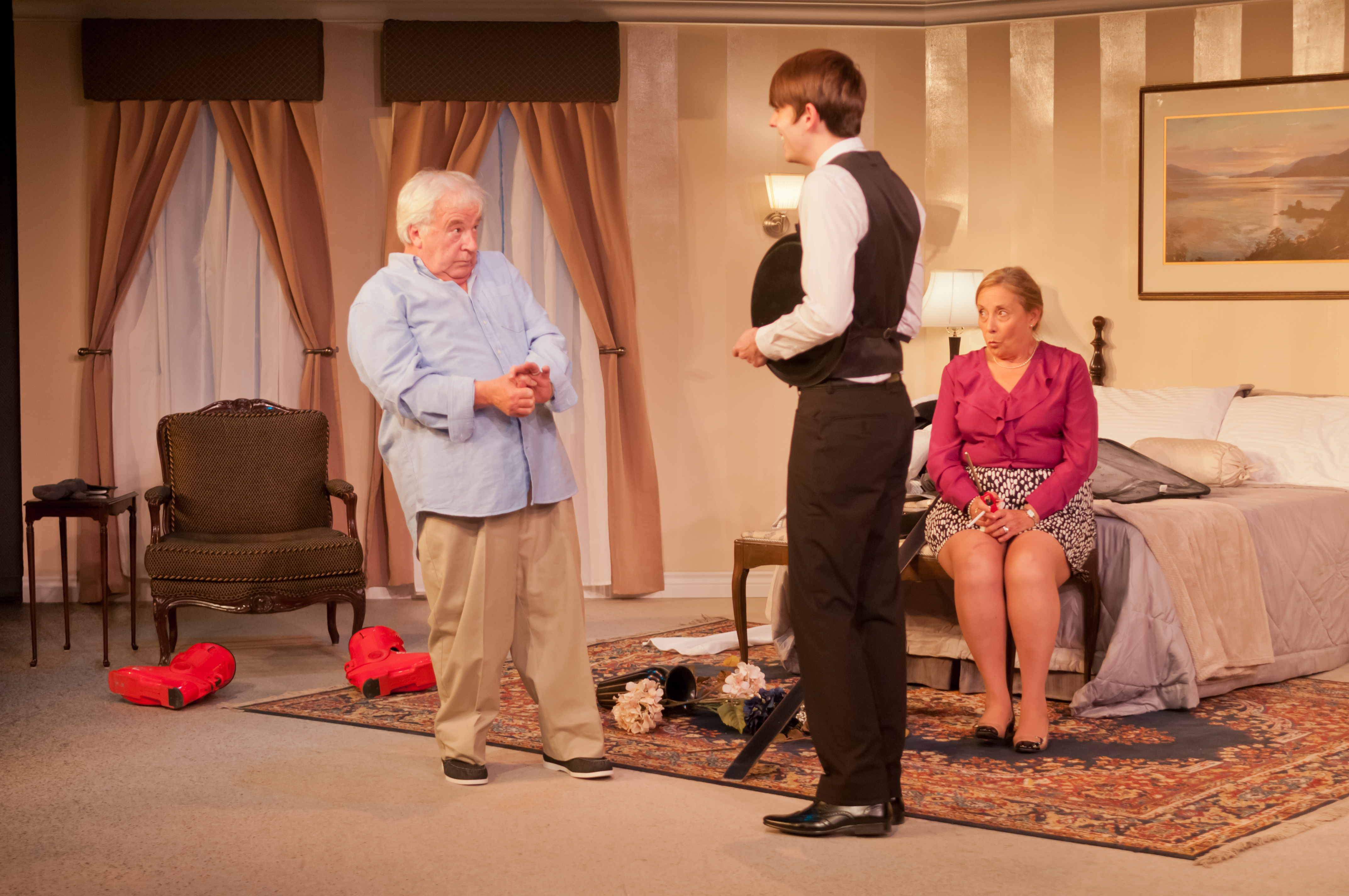
Wes Tritter as Stanley, Adam Beauchesne as Jason and Valerie Pearson as Zelda in Second Chance, First Love by Caroline Russell-King. Photo by Benjamin Laird.


Second Chance, First Love

October 8 to 27, 2012

Lunchbox Theatre

http://www.lunchboxtheatre.com/second-chance-first-love.html


When describing my creative tastes, friends have often remarked that the more disturbing, challenging or dark something is, the more guaranteed I am to like it. And while this is true most of the time, I am by no means immune to the charms of a cute but smart comedy. After all, you’ve gotta lean into the light and laugh once in a while! Happily, Caroline Russell-King’s world premiere of Second Chance, First Loveaffords this pleasure quite heartily through a sweet but intelligent story of former lovers reuniting for a possible return to romance. Actually, when I say heartily I should qualify that the pleasure factor for me rang at high levels for the first 90% of the performance and then distinctly went off the rails at the close of the play – but more on that later.

The story takes place entirely in a room in the Palliser, a swanky hotel in downtown Calgary (designed disappointingly threadbare by Julia Wasilewski). Zelda, a 64-year-old ex-actress has rented the room for her former stage partner, Stanley (a minor acting celebrity also in his sixties) who is in town to perform at the less than critically esteemed Stage West Dinner Theatre. Originally Stanley’s agent had him booked at the downmarket Blackfoot Inn, but Zelda, who has gone on to great wealth due to marrying well, has arranged better digs for her old partner. As she nervously arranges the room and herself for Stanley’s arrival it is apparent that the two were not merely work partners but also romantically paired and that this reunion may not just be Platonic.

It doesn’t take long after Stanley’s arrival at the hotel (which is one of the funniest entrances I’ve seen in years) for the two former lovers/partners to cut through the small talk and expose the raw and sometimes funny truths about their personal lives and theater careers and the possibility of an affair. Or at least an affair for Zelda. Stanley’s wife passed recently and although he was a serial cheater all during his marriage, he promises his feelings for Zelda are relationship-driven and that he wants a second chance to make a life with her. Zelda’s husband is still very much in the picture but is, as she describes him, “a human doing, not a human being” who works all the time and barely see her. Feeling ignored and unloved and bored with her choices in life, it doesn’t take Zelda long to wriggle out of her clothing and ‘support’ underthings in a hilariously written and performed scene and climb into bed with Stanley.

Russell-King is not bashful in the admission that her play is an homage to the great American playwright, Neil Simon. Like Simon, Russell-King’s script tackles the issues and concerns of regular people through a dialogue-rich mix of humour and bittersweet seriousness. It’s a popular model that many have imitated but not all have gotten right. Second Chance, First Love, while not being of the same quick wit and erudite dialogue as a Simon, gets the formula mostly right never falling into cliché or farce to make a point. Or at least it didn’t until the last scene. But for the second time in this review, I’ll reserve discussion of that until later.

First though, a nod to the performers that helped make this play so much fun to watch. From the moment he entered the stage, dressed for Calgary like we lived in perpetual horrific winter, Wes Tritter’s Stanley was a comedic gem to watch. Never overplaying his lines or physicality, Tritter gives us a Stanley that is part cad, part little boy, but all loveable in spite of his failings. A character that we may not know personally, but in Tritter’s hands, one that we absolutely believe could exist and would probably love to hang around with.

Valerie Pearson as Zelda brought the house down in her undressing scene due to her comedic timing and brave ability to show vulnerability on stage in both her physical and emotional semi nakedness. Kudos must also go to Director Gail Hanrahan for her superb staging of this scene. However, playing a somewhat repressed and uptight woman can dangerously lead to some stiff and uptight acting and while Pearson avoided that pitfall whenever playing against Tritter onstage, I felt that without his foil her performance was much less dynamic and natural. Thankfully these scenes were few and of less importance and gave ample room for her to show off her potential in this script.

Less successful was Adam Beauchesne as Jason, the hotel worker. Partly due to a poorly written role (note to the playwright, don’t make Guns N’ Roses jokes to an audience that you know will be predominantly senior citizens) and partly due to acting that felt thin and disconnected, Beauchesne’s time on stage was throw away at best and his plot points unnecessary distractions.

But even with some rough character and narrative edges, Second Chance, First Love had the elements to be a splendid middle brow comedy with an unexpected and extremely moving and compelling ending. But instead of dropping the curtain when Stanley had to suddenly leave the hotel to tend to an ailing friend, the play barreled onward and downward into farce-ville. Pairing Zelda and Jason once again for the final scene simply brought together the two weakest components of the story to undo all the brilliance that went before it. The narrative was absurd as was the acting that accompanied it. I actually found myself wishing I could block out the final minutes of the performance so as not to have to mar my memory of the play. Unfortunately as a reviewer, this isn’t part of my job description. So I watched, and I have now commented. Hopefully with a little luck and time, I’ll forget the last 10 minutes or so and instead remember fondly this delightful and clever play that made me happy not to be disturbed.


RATING

For the guys – Whether you’ve let one get away or not, you’ll relate to Stanley’s desire to rekindle past love and find his methods hilarious in the process. SEE IT

For the girls – Zelda’s undressing scene alone is worth the price of admission. But so are many of the other discussions and situations the narrative covers. SEE IT

For the occasional theater goer – You will laugh all the way through and never be uncomfortable with the language or sexual situation. SEE IT

For the theatre junkie – If you can turn off your brain during the final few minutes of the play, you will enjoy a fabulously fun, not overly formulaic hour in the theatre. MAYBE SEE IT