Born Yesterday – An angry rant
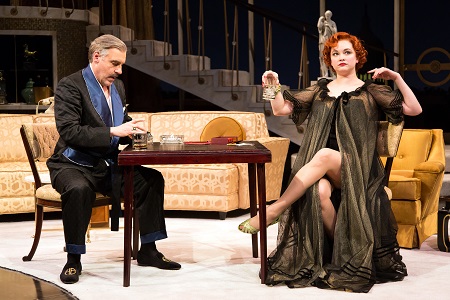
Alley Theatre-BornYesterday-_096-web

Stephen Pelinski as Harry Brock and Melissa Pritchett as Billie Dawn
in the Alley Theatre’s production of Born Yesterday. Photography By Lynn Lane.


“I haven’t left the theatre this spitting mad in a long time.”

That was the Tweet from me just minutes after seeing the Alley Theatre’s production of Garson Kanin’s 1946 play, Born Yesterday. I’ve taken a couple days to simmer down, collect my thoughts and most importantly see if my ire would abate. Perhaps I was just having one of those days when I saw the show. Maybe I was overly irritated. Possibly I wouldn’t be angry any longer.

No dice, I’m still pretty miffed. Here’s why:

Born Yesterday is the IKEA of stage comedies. It’s flimsy and utilitarian and sure it fills the room, but it’s the kind of show that you desperately want to replace with a better, more substantial and witty production once you have the time and money to do so. I say this not because the Alley, in their usual splendid design fashion, didn’t make the show look good. The upscale two story hotel room set looks plushly glorious. I say this because the plot itself is remarkably shallow and lacking.

Harry Brock is a bully, a boor and a billionaire who made his money in the scrap metal business. He and his ditsy girlfriend Billie arrive in Washington D.C so Brock can grease a Senator to help him arrange favorable circumstances for his junkyard business empire. Brock is concerned that Billie’s stupidity will make him look bad in front of the D.C. crowd, so he hires journalist Paul Verall to educate her. The teacher and student fall for each other and Billie gets half a brain outta the deal. With her new found smarts, she realizes how crooked and abusive Brock is and thwarts his shady business plans.

That’s it. That’s the whole show. No backstory. No insight. No twists or turns or tension or anything that would make this a remotely interesting comedy to partake in. Worst still, like the uber obvious plot, we see the low hanging fruit jokes coming a mile away. But this alone, while frustratingly disappointing, wouldn’t have been enough to tip me over to the rage side of town. That happened when I realized just how disrespectful those low handing fruit jokes are to a modern audience.

Born Yesterday is a show that asks us to laugh at how dumb a woman is. Over and over again. Billie is a floozy and happy to be that way. She doesn’t read the paper, or know anything about how the country runs and is quite sure that London and England are two different places on the map. With her squeaky baby voice that turns loud and raunchy when she’s pissed, Billie faux pas her way through most of the show and it’s our job to laugh AT her for it.

As for her acquired smarts by the end of the play, well she doesn’t start to get “learned” until she realizes she has a crush on Paul, her teacher. She herself even admits that the only reason she agreed to study is that she figured it was the one way to seduce him.

So yeah. She does it to bag a guy.

I have no doubt that this was hilarious in the 40’s when it hit the stage. But just like Canada’s new Prime Minister said when explaining why he made sure 50% of his Cabinet were females, it’s 2016. A year where rape culture and female victim blaming is front and centre in our news and minds. A year where Hollywood is being called to task on inequitable pay for woman artists. A year where the United States has its first female Presidential nominee.

And yet THIS is what the Alley Theatre thought would be a good programming choice? Look I know these decisions are made way in advance, but c’mon…who didn’t read the tea leaves over there? I don’t care if it was ten years ago, this type of misogyny without irony, substance or anything important to say to us has no business being produced. I don’t say it often, but I was offended. Worst still, I was offended that the Alley, who call themselves “one of America’s leading not-for-profit theatres” thought so little of their audience, male and female, that they would offer this up as a good time comedy.

Shame on them. They know better. We deserve better.
Some thoughts on Bedlam’s Saint Joan

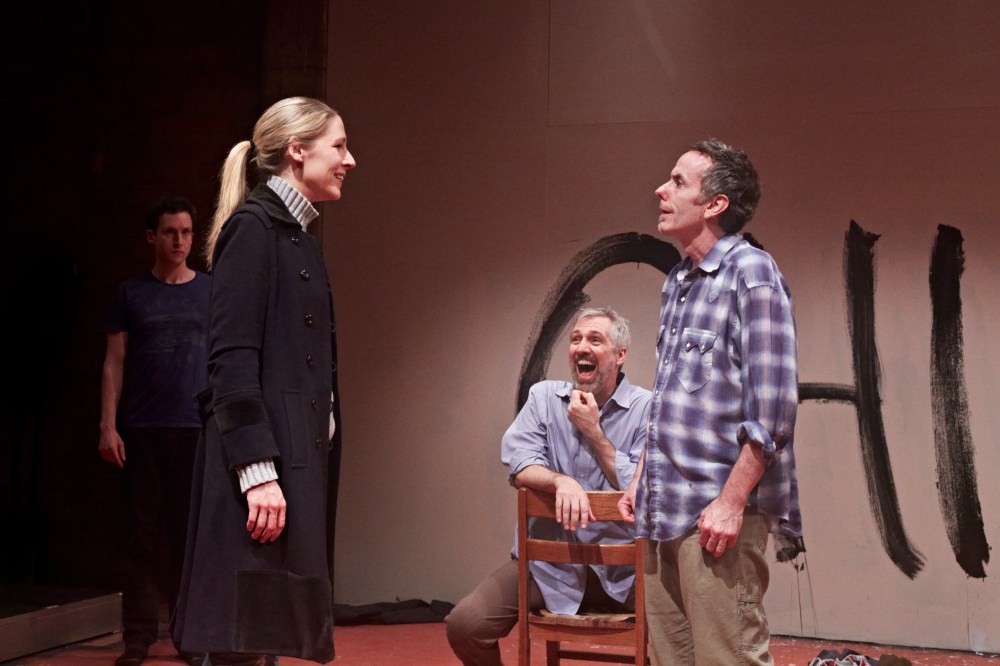
Saint Joan Dress Rehearsal Bedlam Theater Company Stark Naked Theatre Company Date: 5/31/2016 Photographer: Gabriella Nissen

L to R: John Russell, Samantha Steinmetz, Stephan Wolfert, Spencer Aste. Photo by Gabriella Nissen.


Saint Joan

Written by: George Bernard Shaw

Directed by: Eric Tucker

Company: Bedlam

Presented by: Stark Naked Theatre

Run dates: Through June 18, 2016

http://www.starknakedtheatre.com


Growing up in Toronto, just a short drive away from the venerable Shaw Festival, I had the fortune of being exposed to the deliciously wordy Irish playwright at an early age. Barely a summer passed where I didn’t sit in a dark theatre and chew on Shaw’s provoking ideas, witty quips and human commentary. And I loved every minute of it. Even when those minutes sometimes seemed endless under the weight of Shaw’s lengthy and often times stuffed just over the brim scripts.

So when I heard that we in Houston were to be treated to New York theatre company, Bedlam’s take on Shaw’s Saint Joan, I was cautiously optimistic. You see, this is a company that strips bare the padding of classic plays. No elaborate sets. No grand costumes. No huge cast. No large stage. Just a handful of actors, the playwright’s words and fairly simple staging in order to transport us. Could Shaw’s work stand up to this kind of Spartan treatment? Do we need the frills to help entertain us when things get overly verbose? Could we sit for 3.5 hours with nothing but four talented actors playing multiple roles in simple dress telling us the story of Joan of Arc?

The answer is resoundingly yes.

Not only yes, but to my delight, this bare bones treatment not only was eminently watchable, it was an exciting and utterly fresh experience that allowed us to engage with the work in a whole new manner. So, rather than review the play in traditional form – you can look up the synopsis for Saint Joan here if you want plot details https://en.wikipedia.org/wiki/Saint_Joan_(play) – I’ll instead make some observations about why Bedlam’s take was so successful.


Houselights

One of the first things that struck me was that the houselights remained on for the entire first act. With a tiny stage and an audience on three sides, this could have led to numerous distractions away from the actors and action. Instead, it brought us communally closer. We felt like a band of witnesses all together involved in this intimate thing being created.

We the audience were as exposed and bare as the actors on stage and it made us listen even more intently, almost as if in direct conversation with the dialogue. Unlike other viewings of Shaw, the words didn’t come at us, they were among us.


Actors

We all know that on stage great dialogue lives and dies with those that deliver it. In this case, the uniformly strong cast (with special mention to Spencer Aste) did Shaw’s dialogue justice and then some. But it was in a different way that we may be used to.

Director Eric Tucker has injected casualness into the delivery that while still voluptuous with Shaw’s erudite language, feels modern and relatable and devilishly funny in places. Most importantly, there is an ease to listening. Look, I won’t lie. There have been many Shaw productions where I’ve had to take a small mid show mental time out in order to recover from the bombardment of language. But not here. The ease with which the dialogue is delivered is equally rewarded by our pleasure in listening to it.


The Comedy of Switching Characters

All three men in the production play multiple characters (Steinmetz plays only Joan) and it makes for some great physical gags. Changing nothing but their expressions and stances and perhaps donning a hat or glasses or a robe, the actors provide us with a whirlwind of supporting roles, sometimes only seconds apart.

Shaw is often witty, but to see his work be physically funny as well was like a swish of sorbet cleansing the palate for the headier moments to come. My only quibble here is that amidst some of the whirlwind character changes, I was a bit lost at times as to who exactly some of the bit players were.


Moving stages

Anyone who has sat through Shaw knows that intermissions are a must. Bedlam knows this and goes one step further, not only giving us a break, but moving us to an entirely different space for Act 2 and then back again to our reconfigured original space for the final Act.

It reminded me of an interview I once read with Sting about his formula for writing a compelling pop song. Just when folks are getting used to the rhythm, he explained, you need to change it up dramatically to keep the listener’s brain engaged.

In Saint Joan, the physical move was not only a fun surprise; it went a great distance in keeping our brains interested and involved.


Scene that blew me away

And by best I mean not the best acted or the best written, but the moment that gave me shivers for just how cleverly it was realized.

Joan is on trial for heresy, her verdict is near. She stands alone on the stage in spotlight. Her many male accusers shout out questions, allegations, indictments offstage from the dark alleys in and behind the audience. We see them in shadow only as they run around to various places to hurl insult, all the while Joan looking out at the voices trying to respond.

The aural effect is of a crowd. We know there are only three actors out there, but the darkness, the tension; the surround sound effect makes the effort feel huge and Joan’s fate all the more dramatic. It’s a brilliant piece of staging that gets distinctly under our skin.


Final Thought

Saint Joan has never been my favorite Shaw play. Yes there are some great debates including one concerning miracle vs fraud and as per usual some wonderfully biting satire about the English. But I’ve never felt it has the same gravitas as other works. Plus there is the silly epilogue where a very dead Joan materializes in character’s dreams so we can catch up what became of them and learn of her beatifying.

None of which Bedlam and their terrific production can really do much about.

But what they can and did do was give us a Saint Joan like we’ve never seen it before. And in doing so, taken a good (if not altogether great) play and made it thrilling to watch.

Many thanks to Stark Naked for bringing this show to us here in Houston.


things missing/missed – Houston Press Review

201605100978

Philip Hays and Melissa Flower in things missing/missed at Obsidian Theatre. Photo by Pin Lim.


things missing/missed

Devised by: Philip Hays, Melissa Flower and Justin Locklear

Company: Obsidian Theatre

Run dates: Through May 28, 2016


Read my review of things missing/missed for Houston Press at:

http://www.houstonpress.com/arts/its-okay-to-miss-much-of-whats-being-shown-in-things-missing-missed-8399008

The Nether – Houston Press Review

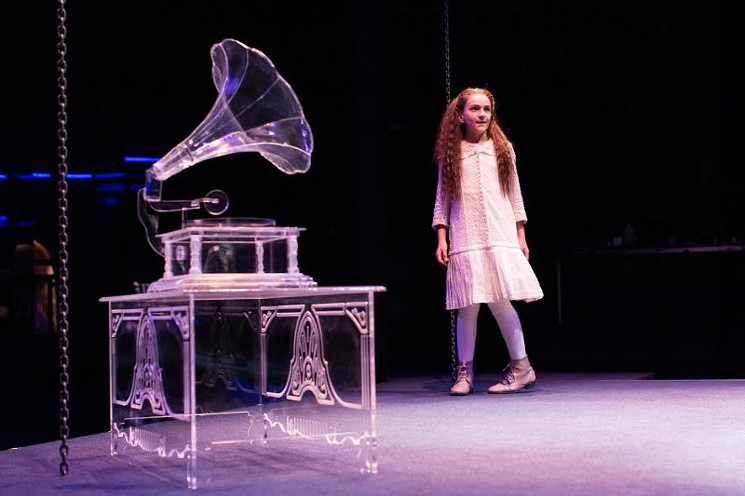
thenetherchild800

Jemma Kosanke plays Iris in The Nether. Photo by Lynne Lane.


The Nether

Written by: Jennifer Haley

Directed by: Gregory Boyd and James Black

Company: The Alley Theatre

Run dates: Through May 29, 2016

alleytheatre.org


Read my review of The Nether for Houston Press at

http://www.houstonpress.com/arts/come-to-the-nether-where-people-live-out-their-virtual-reality-fantasies-8398958

I and You – Houston Press Review

Tuesday, May 3, 2016, in Houston.  ( Jon Shapley / Houston Chronicle )

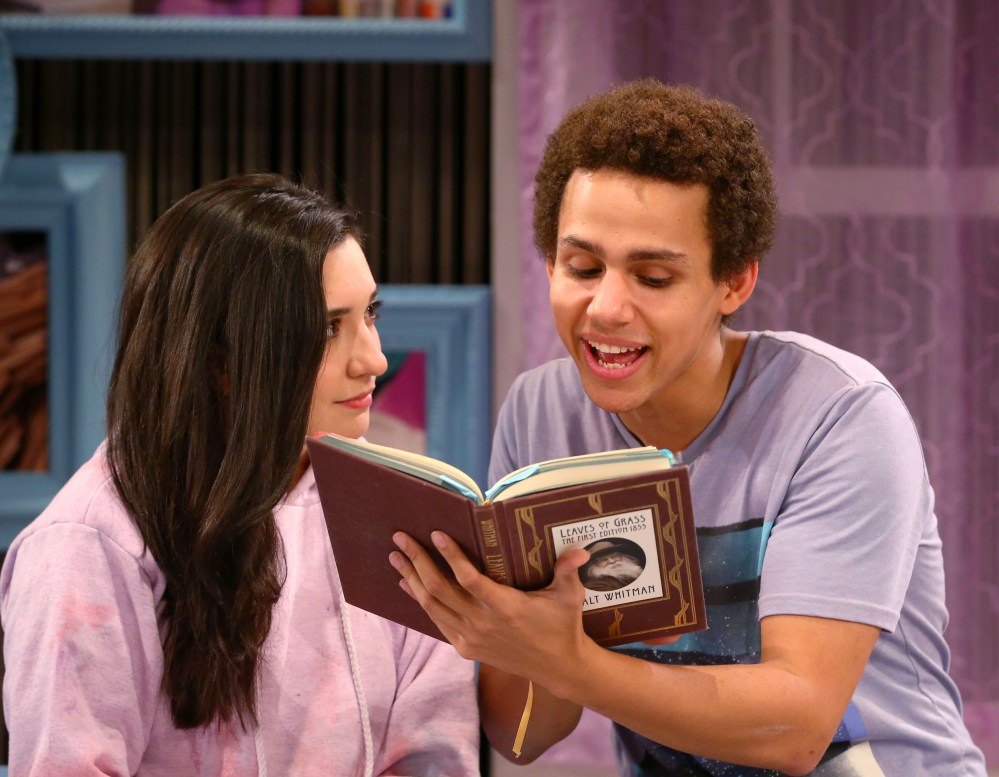
Melissa Molano and Mateo Mpinduzi-Mott in Stages Repertory Theatre’s production of I and You. Photo by John Shapley.


I and You

Written by: Lauren Gunderson

Directed by: Seth Gordon

Company: Stages Repertory Theatre

Run dates: Through May 22, 2016

 http://www.stagesthreatre.com


Read my review of I and You for Houston Press at

http://www.houstonpress.com/arts/the-ends-do-not-justify-the-means-in-i-and-you-8380096?utm_source=dlvr.it&utm_medium=twitter

A Gentleman’s Guide to Love and Murder – Houston Press review

GGLAM Tour 1

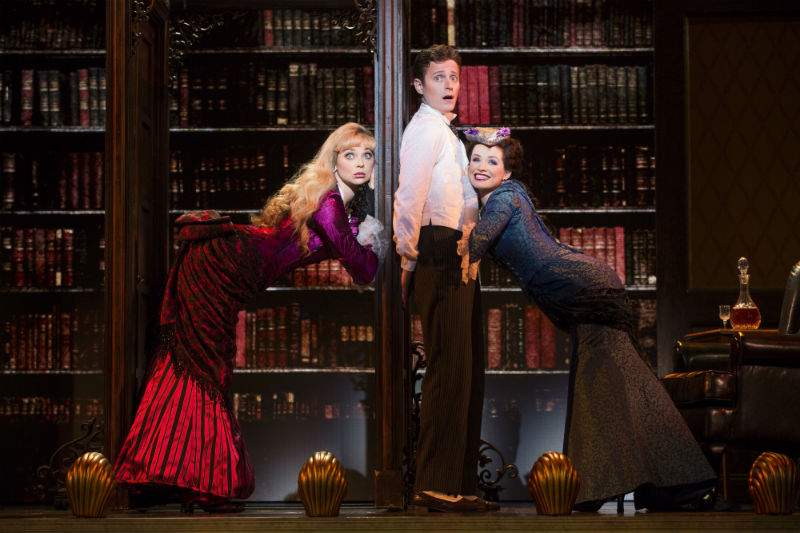
(L-R) Kristen Beth Williams as Sibella Hallward, Kevin Massey as Monty Navarro and Adrienne Eller as Phoebe D’Ysquith in A Gentleman’s Guide to Love and Murder. Photo by Joan Marcus.


A Gentleman’s Guide to Love and Murder

Book and Lyrics by:  Robert L. Freedman

Music and Lyrics by: Steven Lutvak

Directed by: Darko Tresnjak

Presented by: Theatre Under the Stars

Run dates: Through May 15, 2016

http://www.tuts.com


Read my review of A Gentleman’s Guide to Love and Murder for Houston Press at

http://www.houstonpress.com/arts/a-gentlemans-guide-to-love-and-murder-delivers-homicide-and-humor-love-and-lust-8380900


Heathers Houston Press Review

TUTS Underground - Heathers 25

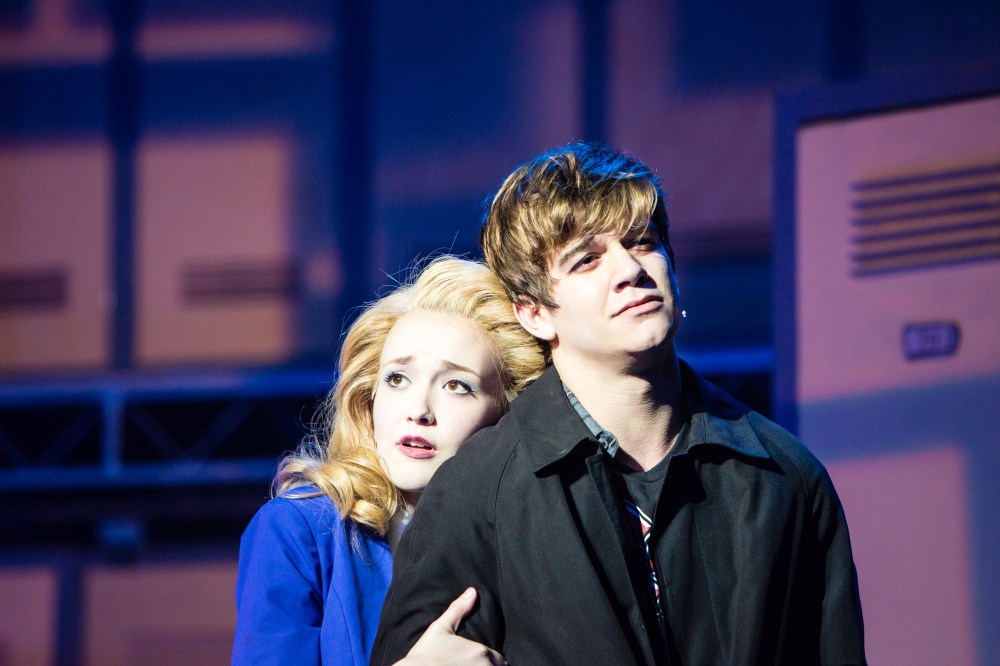
Mason Butler as J.D. and McKenna Marmolejo as Veronica in Heathers. Photo by Christian Brown.


Heathers

Book, Music and Lyrics:  Laurence O’Keefe and Kevin Murphy

Directed by: Marley Wisnoski

Choreography by: Shay Roger

Company: TUTS Underground

Run dates: Through May 8, 2016

http://www.tutsunderground.com


Read my review of Heathers for Houston Press at

http://www.houstonpress.com/arts/heathers-the-musical-goes-gleefully-into-the-politically-incorrect-8362261

Dollface – Houston Press Review

Dollface

Monique Holmes, Arianna Bermudez and Susan Ly in Dollface. Photo by Rod Todd.


Dollface

Written by: Katharine Sherman

Directed by: Jacey Little

Company: Mildred’s Umbrella

Run dates: April 28 – May 14, 2016


Read my review of Dollface for Houston Press at

http://www.houstonpress.com/arts/rape-mythology-meets-modern-issue-play-in-dollface-8363806


Remote Houston – Houston Press Review

Remote medium

“Remote Houston,” part of CounterCurrent16, is presented by Alley Theatre and the University of Houston Cynthia Woods Mitchell Center for the Arts. Photo by Jessica Goldman.


Remote Houston

Concept & Script / Direction: Stefan Kaegi

Co-Director: Jörg Karrenbauer

Sound Design: Nikolas Neecke

Company: Rimini Protokoll

Presented by: Alley Theatre and the University of Houston Cynthia Woods Mitchell Center for the Arts.

Run dates: Through May 12, 2016

countercurrentfestival.org or alleytheatre.org


Read my review of Remote Houston for Houston Press at http://www.houstonpress.com/arts/short-on-meaning-remote-houston-is-one-dandy-city-tour-8316390


For Peter Pan On Her 70th Birthday – Review


image

Kathleen Chalfant in For Peter Pan On Her 70th Birthday. Photo by Bill Brymer courtesy of Actors Theatre of Louisville.


For Peter Pan On Her 70th Birthday

Written by: Sarah Ruhl

Directed by: Les Waters

Comissioned by: Actors Theatre of Louisville, Humana Festival

Run dates: March 8 to April 10, 2016


Oh Ms. Ruhl. Your brand of personal truth-telling narrative interwoven with otherworldly insight delivers some of our most cherished contemporary theatre experiences. We’ve watched as you turned our heads comically, tragically, sociopolitically and sexually in a mishmash of realistic/magical narratives ranging from Greek myth (Eurydice) to sexual longing (Late, A Cowboy Song) to parental sacrifice (The Oldest Boy). In each of your efforts (fully successful or not) your ability to meld the world we live in with the world we dream of has burrowed your storytelling powers deep into the pits of our emotional hearts. So why then in perhaps your most personal play to date, do you exchange intellect for cliché and fantasy for silliness? Worse still, why do you abandon drop of a pin poignant intrigue to instead devolve into free for all folly? Why do you give us a play we can love so hard and yet dismiss so easily?

For Peter Pan on her 70th Birthday is a love letter railing against the loss of the anointed adults in our lives and our intrinsic need to step up and fill their places. Or not. Whether you are 7, 47 or 70, losing a parent (the ultimate grown up influencer in our lives) is a traumatic event. Who else (if you are lucky enough to be raised in familial health) will tell you to sit up straight, push you to try your hardest, love you no matter what and be the person you want to impress above all else? Who else will you try to emulate or perhaps try your hardest to be most unlike?

Ruhl drops us into this offspring place of sadness/decision in none other than a Clinton era Iowa hospital room as a family of grown, accomplished children with families of their own watch and wait for the final moments of their beloved father’s life. Three boys and two girls (ages 50 to 70 and already over their mother’s death some years earlier) navigate the dying room routine as their machine hooked up patriarch beeps and boops according to the various machines tasked with reporting his latest diminishing vital signs.

Ann (an instantly likable and warmly charming Kathleen Chalfant) the eldest and bookishly smartest of the siblings (now a lauded teacher) has narrated us into the story with an opening monologue fondly describing her turn on the boards as Peter Pan when she was just a teenager. A production her father did not miss despite his post depression era, grueling, ‘lift himself up by his bootstraps’ work ethic.

Now as she and her siblings John, Michael, Jim and Wendy (Barney O’Hanlon, Keith Reddin, David Chandler and Lisa Emery) gather by their father’s bedside, the only bootstraps to pull up are the emotional ones. These hospital room moments are perfectly painful in the slow death crawl of nothingness. Director Les Waters allows for lengthy uncomfortable silences to pass as the five siblings pace or remain static listening intently to their fathers every breath or lack there of. Occasionally they pass time humorously needling each other the way only close family can get away with. Death, Ruhl shows us, is not quick, dramatic or climatic in the slightest. It’s slow and boring and in the end quite pedantic. It’s what happens post death that matters and it’s what Ruhl and therefore we are interested in.

Shame then that the scene change that takes us from hospital room to pseudo wake at the family dining table is jarringly interrupted by a less than stellar “When the Saints Go Marching In” band of musicians. While the set change noisily goes on backstage, our curiously flat marching band (are they supposed to be playing at this diminished level?) snake through the audience under the glow of full wattage house lights, leaving us amused but perplexed and utterly broken of the spell so carefully crafted previously.

We let is go though because what we’re gifted with in the following scenes (executed with precise sensitivity by Waters) is pure Ruhl magic. Well half of it is at any rate. While the siblings gather at their family home, drinking, reminiscing and arguing over their political and religious divides (a surprisingly retread sit-comish discussion of right vs left and belief vs godlessness that disappoints in its mediocrity ) our attention is thankfully distracted by the supernatural. Quietly and without fanfare, the siblings’ father wanders in and out of the room in matter of fact ghostliness, going about his unnoticed but yet remarked upon activities. He uses the toilet and the siblings talk about how the pipes have always run. A family dog is mentioned and the father appears with the also deceased pet, brought in to clean up the food scraps from a bowl he has dropped. A bowl whose noise has fleetingly scared the siblings into thinking a sign is being sent their way. Is the father a visual metaphor for their memory or are we to believe that the deceased continue on whether we can see them or not? Ruhl teases us in both directions and we delight in the game no matter what our feeling on the afterlife are.

But Ruhl’s supremely satisfying subtle nods give way to bloated gestures after the topic of adulthood comes up at the table. When did each sibling feel that they became adults is the theme posited at near the end of the wake. All except Ann, express finding grown-upness at some stage in their lives. Ann, despite her more advanced age, single parenthood (a product of being widowed) and celebrated profession, claims that shedding the mindset of childhood is something she has never mastered nor wanted to. Like Peter Pan, she never wants to grow up and wishes to remain flying in Neverland. Always the spirit of a child and never afraid of death.

Of course we know that Ruhl can’t resist the fantasy that this conjures, and so she grants Ann her wish. After finding her old Peter Pan costume and trying it on for size, we are transported into J.M.Barrie’s story with Ann and her siblings filling in for Peter, the Darling characters and dastardly old Hook. We have fun with it for a while, this watching senior citizens with their aches and pains pretend to be a crowing Pan and his rambunctious followers. But it doesn’t take long watching the shadow searching, sword fighting, attempts at flying and farcical silliness before we are bored with the gimmick. The metaphor is lovely and Ruhl does eventually come to her senses and allow her characters something to say amongst all this foolishness. But by the time the siblings part ways with Ann choosing life over make believe, we can’t help but feel like we we’ve been watching a panto holiday extravaganza rather than one of Ruhl’s deeply meaningful mythic meditations.

Ruhl has said that she created For Peter Pan as a gift to her actor mother (who herself played Peter in her youth) and their big Iowa family. No doubt there is a labor of love in Ruhl’s examination of a family dealing with loss and wanting to stop and/or reverse time. Who in difficult times hasn’t wished they could go back to the simplistic joys of ever lasting childhood? But it’s as though this childishness got the better of Ruhl here, dumbing down potentially intriguing discussion into obvious sound bites and belaboring the fantastical into mere antics.It seems that even the best of our playwrights can get blinded by fairy dust.